


University of North Carolina Athletics
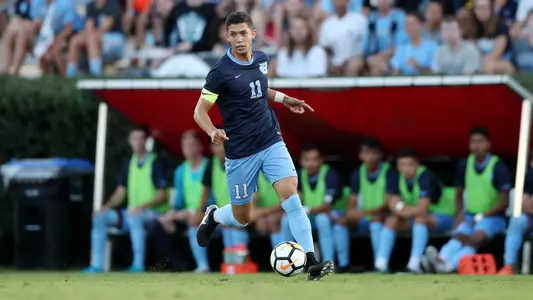
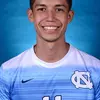
David October
Photo by: Andy Mead
November 19, 2017 | Men's Soccer, Featured Writers
by Pat James
David October, unlike many young players in England, understood the risks when he began his journey toward a professional soccer career.
He knew he'd be sacrificing a quality education. He realized he couldn't explore any outside interests. But perhaps above all else, he grasped that the odds of becoming a Premier League pro – which sports writer Michael Calvin determined to be just .012 percent for the 1.5 million boys playing organized youth football in England at any one time – were heavily stacked against him.
From 2010-14, October progressed through the youth academy at Ipswich Town, which is in the second-tier English soccer league. Signing a professional contract seemed like the next step.
But when he became cognizant that his time with the club was finite, he started exploring other opportunities in early 2014. He spoke with other teams in England. And he also uploaded a six-minute highlight reel on a personal YouTube channel.
Within days, October said, several sports agencies that match players with colleges contacted him. He corresponded with a few coaches, including North Carolina's Carlos Somoano. Then came a trip to the U.S. for a multi-school visit.
When October returned to England, he met with Ipswich Town manager Mick McCarthy. They weighed October's options.
"He thought it was a fantastic opportunity for me as a person and as a player," said October, now a senior midfielder for the Tar Heels, on Wednesday, "and that some of my strengths would sort of flourish out here as opposed to just being in the secluded sphere of football in England."
A few months later, he arrived in Chapel Hill. And the kind of lifestyle that once eluded him, one that stretched beyond the pitch, became one he embraced.
'No real support system'
October didn't play soccer competitively until he was 11. Before then, he preferred rugby.
He started playing rugby, the sport his father predominantly participated in as a child, when he was 5. An early developer, he ran circles around his opponents. But as they became bigger and stronger, his interest in soccer grew.
October eventually began training at Histon Academy. Around the same time, he became involved with track and field. He tried balancing both it and soccer for a few years. But when faced with the decision of choosing between them at 15, he said he nearly left soccer.
Then came a chance to go on trial at West Bromwich Albion. An opportunity with Ipswich Town's youth academy followed.
"When I saw a career in the game," he said, "that's when I decided to give up track and start football properly."
A year later, October, then 16, moved about 50 miles east from his home in Cambridge to Ipswich to train full time. Leaving his friends and family wasn't trying. Instead, he said placing his academics on hold proved to be the most challenging demand.
In England, October said, most young players disregard academics and anything else outside of soccer once they foresee a future in the sport. Thus, the academic infrastructure isn't the same as what's in the U.S., where most players spend at least some time in college before turning pro.
"I tried my hardest to understand if there was any way to compromise (with) the opportunity in Ipswich while still keeping the studying going," October said. "It was very, very difficult. There was no real support system."
But he found that in Chapel Hill.
'A certain mentality'
When October first contacted Somoano, it was around March 2014.
October had developed a keen interest in UNC through recommendations. He sought a scholarship, a difficult item to come by so late in the recruiting cycle. Yet the Tar Heels had room for him.
The coaching staff knew little about October, outside of his references and YouTube video. But his maturity immediately stood out.
"If you see somebody who is willing to come to a foreign country and stand on their own …" Somoano said, "I think that says a lot about someone's personality, that they're ambitious and willing to try something. And I think you have to have a certain mentality to put yourself out there like that."
One might figure that October's biggest adjustments during his freshman season, which he finished with two assists and five shots in 16 matches, related to American culture. But most of it revolved around the pitch.
After advancing through the academy process in England, where personal development reigned supreme, October said the team environment at UNC and throughout the NCAA varied greatly from what he was accustomed to. And he appreciated the competition it fostered.
He also respected the program's professionalism and core values, which he said mirrored Histon Academy's.
"I thought I hit the jackpot, really, with how amazing the culture was and how focused the coaches were to sort of embedding this culture in the team," October said. "Since I've been here, I've seen the development of the program. It seems like we've slowly but surely gone in this one direction.
"You can only attribute that to the coaching staff; they've helped push this program along."
Players like October also help.
Seeing the big picture
Entering Sunday's NCAA Tournament second-round game against UNCW, scheduled for 7 p.m. at Cary's WakeMed Soccer Park, October has played in 16 of 18 matches this season.
He started the first 12 and scored three goals, setting a career high for a season. But since missing the Wake Forest game on Oct. 6 because of an injury, he's averaged 31.25 minutes in four games off the bench.
October's role has constantly changed throughout his four seasons with the Tar Heels. Still, he accepts any lineup decisions Somoano makes.
"He is a program guy, a team guy," Somoano said. "Probably what makes him a little unique at his age is his ability to see the big picture, not just seeing it from his own little world."
For October, a captain this season, that entails looking beyond his soccer career.
October is a business administration major enrolled in the UNC Kenan-Flagler Business School. As a junior, he was a first-team Academic All-America selection. He earned third-team honors as a sophomore.
He's spent the past two summers serving as an investment banking summer analyst with Morgan Stanley, first in the Natural Resources Group and then the Global Power & Utilities Group (GPUG). Upon graduation, he'll return as a full-time investment banking analyst in the GPUG.
Later on, a few years into his career, October also plans on returning to England, where he hopes to teach others about the American soccer system and the benefits of it.
"Life is not about living until your 32 and you give up football," he said. "What are you going to do then?"
October might have seemed destined to face that question. But he mitigated his risks and discovered much more, outside of England and soccer.
David October, unlike many young players in England, understood the risks when he began his journey toward a professional soccer career.
He knew he'd be sacrificing a quality education. He realized he couldn't explore any outside interests. But perhaps above all else, he grasped that the odds of becoming a Premier League pro – which sports writer Michael Calvin determined to be just .012 percent for the 1.5 million boys playing organized youth football in England at any one time – were heavily stacked against him.
From 2010-14, October progressed through the youth academy at Ipswich Town, which is in the second-tier English soccer league. Signing a professional contract seemed like the next step.
But when he became cognizant that his time with the club was finite, he started exploring other opportunities in early 2014. He spoke with other teams in England. And he also uploaded a six-minute highlight reel on a personal YouTube channel.
Within days, October said, several sports agencies that match players with colleges contacted him. He corresponded with a few coaches, including North Carolina's Carlos Somoano. Then came a trip to the U.S. for a multi-school visit.
When October returned to England, he met with Ipswich Town manager Mick McCarthy. They weighed October's options.
"He thought it was a fantastic opportunity for me as a person and as a player," said October, now a senior midfielder for the Tar Heels, on Wednesday, "and that some of my strengths would sort of flourish out here as opposed to just being in the secluded sphere of football in England."
A few months later, he arrived in Chapel Hill. And the kind of lifestyle that once eluded him, one that stretched beyond the pitch, became one he embraced.
'No real support system'
October didn't play soccer competitively until he was 11. Before then, he preferred rugby.
He started playing rugby, the sport his father predominantly participated in as a child, when he was 5. An early developer, he ran circles around his opponents. But as they became bigger and stronger, his interest in soccer grew.
October eventually began training at Histon Academy. Around the same time, he became involved with track and field. He tried balancing both it and soccer for a few years. But when faced with the decision of choosing between them at 15, he said he nearly left soccer.
Then came a chance to go on trial at West Bromwich Albion. An opportunity with Ipswich Town's youth academy followed.
"When I saw a career in the game," he said, "that's when I decided to give up track and start football properly."
A year later, October, then 16, moved about 50 miles east from his home in Cambridge to Ipswich to train full time. Leaving his friends and family wasn't trying. Instead, he said placing his academics on hold proved to be the most challenging demand.
In England, October said, most young players disregard academics and anything else outside of soccer once they foresee a future in the sport. Thus, the academic infrastructure isn't the same as what's in the U.S., where most players spend at least some time in college before turning pro.
"I tried my hardest to understand if there was any way to compromise (with) the opportunity in Ipswich while still keeping the studying going," October said. "It was very, very difficult. There was no real support system."
But he found that in Chapel Hill.
'A certain mentality'
When October first contacted Somoano, it was around March 2014.
October had developed a keen interest in UNC through recommendations. He sought a scholarship, a difficult item to come by so late in the recruiting cycle. Yet the Tar Heels had room for him.
The coaching staff knew little about October, outside of his references and YouTube video. But his maturity immediately stood out.
"If you see somebody who is willing to come to a foreign country and stand on their own …" Somoano said, "I think that says a lot about someone's personality, that they're ambitious and willing to try something. And I think you have to have a certain mentality to put yourself out there like that."
One might figure that October's biggest adjustments during his freshman season, which he finished with two assists and five shots in 16 matches, related to American culture. But most of it revolved around the pitch.
After advancing through the academy process in England, where personal development reigned supreme, October said the team environment at UNC and throughout the NCAA varied greatly from what he was accustomed to. And he appreciated the competition it fostered.
He also respected the program's professionalism and core values, which he said mirrored Histon Academy's.
"I thought I hit the jackpot, really, with how amazing the culture was and how focused the coaches were to sort of embedding this culture in the team," October said. "Since I've been here, I've seen the development of the program. It seems like we've slowly but surely gone in this one direction.
"You can only attribute that to the coaching staff; they've helped push this program along."
Players like October also help.
Seeing the big picture
Entering Sunday's NCAA Tournament second-round game against UNCW, scheduled for 7 p.m. at Cary's WakeMed Soccer Park, October has played in 16 of 18 matches this season.
He started the first 12 and scored three goals, setting a career high for a season. But since missing the Wake Forest game on Oct. 6 because of an injury, he's averaged 31.25 minutes in four games off the bench.
October's role has constantly changed throughout his four seasons with the Tar Heels. Still, he accepts any lineup decisions Somoano makes.
"He is a program guy, a team guy," Somoano said. "Probably what makes him a little unique at his age is his ability to see the big picture, not just seeing it from his own little world."
For October, a captain this season, that entails looking beyond his soccer career.
October is a business administration major enrolled in the UNC Kenan-Flagler Business School. As a junior, he was a first-team Academic All-America selection. He earned third-team honors as a sophomore.
He's spent the past two summers serving as an investment banking summer analyst with Morgan Stanley, first in the Natural Resources Group and then the Global Power & Utilities Group (GPUG). Upon graduation, he'll return as a full-time investment banking analyst in the GPUG.
Later on, a few years into his career, October also plans on returning to England, where he hopes to teach others about the American soccer system and the benefits of it.
"Life is not about living until your 32 and you give up football," he said. "What are you going to do then?"
October might have seemed destined to face that question. But he mitigated his risks and discovered much more, outside of England and soccer.

Players Mentioned
Midfielder
/ Men's SoccerMonday, October 26
Monday, October 26
Monday, October 26
Monday, October 26