


University of North Carolina Athletics
Saturday, February 24
Chapel Hill
8:00 AM

North Carolina
vs
ACC Championships
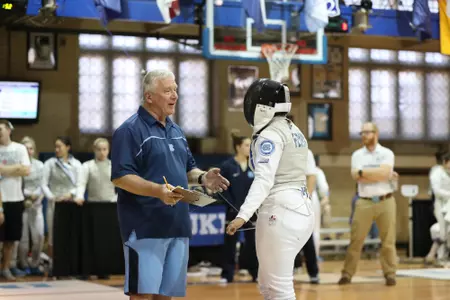
Ron Miller is in his 51st season of coaching Tar Heel fencers.
Photo by: Andy Mead
GoHeels Exclusive: Miller A Constant For Carolina Fencing
February 23, 2018 | Fencing, Featured Writers
By Pat James, GoHeels.com
No matter where Josh Webb goes, whether it's on campus, in Chapel Hill or in another state, the conversation typically begins and ends the same.
First, Webb reveals his title as North Carolina's associate head fencing coach. For almost two decades, he's been a part of the program, first as a student-athlete and then as a member of the coaching staff for the last 15 years.
If the person he's speaking with attended UNC, they'll often start reflecting on their time there and how, at some point in the late 1900s, they learned about fencing in a physical education class taught by Ron Miller, the fencing team's head coach. To that, Webb issues the same response.
"Yep, Coach Miller is still here."
And that's been the case for the last 51 years. The founder and only head coach of the fencing team, Miller – who was hired in 1967 as a physical education instructor and was tasked with developing a small fencing club into a varsity program – is the longest-tenured coach at a university accustomed to extended stays by its coaches.
He turned Carolina into the ACC's most dominant fencing force. And even after many schools stopped sponsoring fencing as an ACC championship sport after the 1980 ACC Tournament, he maintained the program and readied it for when the ACC Tournament was reinstated in 2015. This weekend, it returns to Carmichael Arena for the second time since its revival.
Along the way, Miller has served as an ambassador for the University and mentored thousands of collegiate student-athletes.
"His commitment to the student population is something that goes unnoticed, and he's not the only one," Webb said. "There are many professors across campus who day in and day out do a wonderful job of supporting their students, giving pep talks during office hours, being very understanding of personal things, giving compliments and living vicariously through the students' successes.
"Coach Miller is no different in that respect, especially when he was teaching classes. But I think having that sustained for 51 years is something that is rarely seen in this day and age. I think that's his greatest contribution, his positivity and his kind words and the uplifting of the students he was able to interact with while he's been here."
Fencing was a sport virtually unknown on the UNC campus before Miller's arrival. His initial teams were primarily composed of walk-ons, who he recruited from his fencing class and at pickup basketball games at Woollen Gym.
No matter one's skill level, he's always shared his knowledge of fencing with anyone who has shown interest in learning about the sport.
He's inspired others to do the same. Before becoming a four-year Tar Heel letterwinner and then a UNC assistant coach, a position he currently holds, Will Randolph learned about fencing from one of Miller's protégés.
"A lot of coaches want to work with the best and only the best, some coaches want to build their clubs and make a living on it," Randolph said. "But Coach Miller really wants to bring it to everyone. That's why he taught classes for 40-some of the years that he was here, that's why he took this job and stayed here, because he can teach classes to the general students, community members."
Miller has also taught his team how to win. In November, the Tar Heels helped him claim the 1,500th victory of his career.
But Webb said Miller has always ensured student-athletes and alumni have some sort of ownership in the program. That's lent itself to creating a family atmosphere. Junior foil Sydney Persing said Miller sustains that by seamlessly balancing his various roles.
"He's able to be a friend and like a father figure," Persing said. "I can go to him with my personal issues and talk to him about that. He has that personal relationship, but then he's still able to maintain such a strong figure of authority and have kids listen to him."
When her grandmother passed away in December, Persing said she called Miller. She wasn't even sure if she'd be able to get out of bed, but he convinced her to meet him before practice. For about 90 minutes, they talked and Miller attempted to comfort her.
"He was so honest about his own life and his own experiences, and he was concerned with mine," she said. "More in that conversation than anywhere else, it was so obvious how much he cared about me."
Watching student-athletes such as Persing mature is part of what's kept Miller going after all these years, he said. But for a long period of time, it felt like something was missing.
UNC started sponsoring fencing teams to compete in the ACC during the 1970-71 season. From then until 1980, the Tar Heels won eight of the 10 ACC championships, when the fencing teams were men only. But after the 1979-80 season, several ACC institutions dropped varsity fencing and the sport lost its championship certification.
Carolina continued competing. Finally, when Notre Dame officially joined the ACC in 2013 and gave the conference four varsity programs, the ACC granted fencing championship sport recognition, starting with the 2014-15 season.
A women's division was added this time. And to develop a format for the ACC Tournament, the conference turned to Miller for advice.
"We couldn't go back to the way we did it before because they wanted both an individual and a team event," he said. "And before, it was sort of a combination. It was a total round-robin of every fencer and each of the weapons. And at that time, we had seven schools with three fencers each. So a round-robin of 21 would take two days just for any one weapon."
Thus led to the current structure.
When UNC hosts the ACC Tournament this weekend – the first time it's done so since 2015 – the women's individual competition and men's team competition will be held Saturday. The men's individual competition and women's team competition will take place Sunday.
Miller said the team was composed of students from his physical education class when the Tar Heels won their first ACC Tournament in 1971. He recruited more student-athletes in ensuing years. But the roster's construction has varied since then, featuring 100 percent walk-ons at one point and now boasting 85 percent recruits.
After injuries forced the team to hold an open tryout earlier this year, the Tar Heels roster includes six walk-ons this season. Three of them will participate in the ACC Championship.
"It's that combination, that mix – which is ever-changing – that I think that makes our program unique," Miller said. "I think that's the thing I will always remember and probably be proudest of is the fact we are such a composite program."
And that comes from a man who has a lot to be proud of.
No matter where Josh Webb goes, whether it's on campus, in Chapel Hill or in another state, the conversation typically begins and ends the same.
First, Webb reveals his title as North Carolina's associate head fencing coach. For almost two decades, he's been a part of the program, first as a student-athlete and then as a member of the coaching staff for the last 15 years.
If the person he's speaking with attended UNC, they'll often start reflecting on their time there and how, at some point in the late 1900s, they learned about fencing in a physical education class taught by Ron Miller, the fencing team's head coach. To that, Webb issues the same response.
"Yep, Coach Miller is still here."
And that's been the case for the last 51 years. The founder and only head coach of the fencing team, Miller – who was hired in 1967 as a physical education instructor and was tasked with developing a small fencing club into a varsity program – is the longest-tenured coach at a university accustomed to extended stays by its coaches.
He turned Carolina into the ACC's most dominant fencing force. And even after many schools stopped sponsoring fencing as an ACC championship sport after the 1980 ACC Tournament, he maintained the program and readied it for when the ACC Tournament was reinstated in 2015. This weekend, it returns to Carmichael Arena for the second time since its revival.
Along the way, Miller has served as an ambassador for the University and mentored thousands of collegiate student-athletes.
"His commitment to the student population is something that goes unnoticed, and he's not the only one," Webb said. "There are many professors across campus who day in and day out do a wonderful job of supporting their students, giving pep talks during office hours, being very understanding of personal things, giving compliments and living vicariously through the students' successes.
"Coach Miller is no different in that respect, especially when he was teaching classes. But I think having that sustained for 51 years is something that is rarely seen in this day and age. I think that's his greatest contribution, his positivity and his kind words and the uplifting of the students he was able to interact with while he's been here."
Fencing was a sport virtually unknown on the UNC campus before Miller's arrival. His initial teams were primarily composed of walk-ons, who he recruited from his fencing class and at pickup basketball games at Woollen Gym.
No matter one's skill level, he's always shared his knowledge of fencing with anyone who has shown interest in learning about the sport.
He's inspired others to do the same. Before becoming a four-year Tar Heel letterwinner and then a UNC assistant coach, a position he currently holds, Will Randolph learned about fencing from one of Miller's protégés.
"A lot of coaches want to work with the best and only the best, some coaches want to build their clubs and make a living on it," Randolph said. "But Coach Miller really wants to bring it to everyone. That's why he taught classes for 40-some of the years that he was here, that's why he took this job and stayed here, because he can teach classes to the general students, community members."
Miller has also taught his team how to win. In November, the Tar Heels helped him claim the 1,500th victory of his career.
But Webb said Miller has always ensured student-athletes and alumni have some sort of ownership in the program. That's lent itself to creating a family atmosphere. Junior foil Sydney Persing said Miller sustains that by seamlessly balancing his various roles.
"He's able to be a friend and like a father figure," Persing said. "I can go to him with my personal issues and talk to him about that. He has that personal relationship, but then he's still able to maintain such a strong figure of authority and have kids listen to him."
When her grandmother passed away in December, Persing said she called Miller. She wasn't even sure if she'd be able to get out of bed, but he convinced her to meet him before practice. For about 90 minutes, they talked and Miller attempted to comfort her.
"He was so honest about his own life and his own experiences, and he was concerned with mine," she said. "More in that conversation than anywhere else, it was so obvious how much he cared about me."
Watching student-athletes such as Persing mature is part of what's kept Miller going after all these years, he said. But for a long period of time, it felt like something was missing.
UNC started sponsoring fencing teams to compete in the ACC during the 1970-71 season. From then until 1980, the Tar Heels won eight of the 10 ACC championships, when the fencing teams were men only. But after the 1979-80 season, several ACC institutions dropped varsity fencing and the sport lost its championship certification.
Carolina continued competing. Finally, when Notre Dame officially joined the ACC in 2013 and gave the conference four varsity programs, the ACC granted fencing championship sport recognition, starting with the 2014-15 season.
A women's division was added this time. And to develop a format for the ACC Tournament, the conference turned to Miller for advice.
"We couldn't go back to the way we did it before because they wanted both an individual and a team event," he said. "And before, it was sort of a combination. It was a total round-robin of every fencer and each of the weapons. And at that time, we had seven schools with three fencers each. So a round-robin of 21 would take two days just for any one weapon."
Thus led to the current structure.
When UNC hosts the ACC Tournament this weekend – the first time it's done so since 2015 – the women's individual competition and men's team competition will be held Saturday. The men's individual competition and women's team competition will take place Sunday.
Miller said the team was composed of students from his physical education class when the Tar Heels won their first ACC Tournament in 1971. He recruited more student-athletes in ensuing years. But the roster's construction has varied since then, featuring 100 percent walk-ons at one point and now boasting 85 percent recruits.
After injuries forced the team to hold an open tryout earlier this year, the Tar Heels roster includes six walk-ons this season. Three of them will participate in the ACC Championship.
"It's that combination, that mix – which is ever-changing – that I think that makes our program unique," Miller said. "I think that's the thing I will always remember and probably be proudest of is the fact we are such a composite program."
And that comes from a man who has a lot to be proud of.


Players Mentioned

Foil/Right Hand
/ FencingUNC Baseball: Tar Heels Take Game 2 at Notre Dame, 13-7
Sunday, March 29
UNC Softball: Tar Heels Handle Marist, 12-2
Saturday, March 28
UNC Baseball: DeCaro Ks 9 in Win at Notre Dame, 6-5
Saturday, March 28
UNC Women's Lacrosse: Tar Heels Sail Past Pirates, 23-3
Saturday, March 28