University of North Carolina Athletics
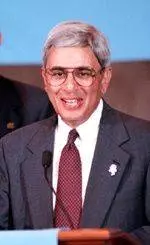
One on One With UNC Athletic Director Dick Baddour
February 19, 2001 | General
Feb. 19, 2001
Recently, UNC Athletic Director Dick Baddour sat down for an in-depth interview with TarHeelBlue.com. We will bring that interview to you this week in two parts. Be sure to check back tomorrow for Part II.
Forty years ago, what drew you to the University of North Carolina and do those things still draw you today?
DB: What drew me to North Carolina were two things. One was a sense of a quality institution with strong values and a place where I thought I could develop as a person. The other reason was I considered it to be the state's University, the University of the people. I felt like there would be diversity on the campus. Although, when I came, there wasn't much racial diversity. But, there was diversity in so many other areas. That's the way it was in my high school and I think that was very important. Also, my brother and many friends were enrolled here.
What draws me to it again are the values of the institution. Another is its impact on the state. It's very important that the University of North Carolina plays a dominant role in the development of the state of North Carolina, both as it relates to teaching its citizens, conducting research and service to the state.
We should be careful to maintain a balance. I think there was a time when we were not as focused on service to the state. That is important to me. I think athletics has a role in all of that, especially in teaching and service. That's what athletics is about. I think we provide a tremendous service, a source of pride in bringing attention to the state and to the institution.
As a high school baseball player in Goldsboro, did you ever imagine you would be the Athletic Director at UNC?
DB: No, I couldn't imagine that. I didn't see beyond finishing college. When I came to college and as I was finishing college, life was uncertain because the Vietnam War was going on and we had military obligations. Most of us were focused on what we would do after the military obligations. But I would say that I saw myself in the business world in some way. Most of my family had been independent business people, running retail stores or were in sales. When I had an opportunity to come back to Chapel Hill in the Dean of Men's Office, I jumped on that. I took a $500 pay decrease, from $6,500 to $6,000 a year, and thought I had a dream job working in the Dean of Men's Office. Then one opportunity led to another.
Having grown up in this state and gone to school here, having worked here, is there a higher sense of legacy that also guides the principles by which you manage?
DB: Very definitely. People ask me, `Do I feel pressure in my job?' The pressure that I feel the most is, in fact, the legacy that has been left by Frank Porter Graham, President Friday, Chancellor Aycock, Chancellor Fordham, Chancellor Hardin, Chancellor Taylor, Chancellor Hooker, Chancellor McCoy, the people who have given so much time and energy to make the institution what it is. I think the only criticism that I have taken personally or that maybe wounded me, is when a certain newspaper wrote in an editorial that I didn't understand some of the values of the institution. You can criticize my judgment, but I will not take lightly that someone would say I don't understand what the institution is about because I do understand that. I've had the wonderful opportunity to work with most of the gentlemen that I've mentioned plus some outstanding faculty and staff, male and female, and see their love and lives dedicated to this University. I've seen some outstanding students come through here.
That's the pressure I feel. I don't mind saying publicly that when a member of the faculty committee on athletics resigned over the decision on Carl Torbush, a member of the faculty that I respect and admire, that concerned me a great deal. An action I took caused someone to resign from service to the institution. That's very troubling to me, and yet I have the responsibility to run the program in the best way that I know how.
You have hired a number of coaches over the past four years. What is your philosophy when it comes to hiring a coach? What type of person are you looking for to lead your individual programs?
DB: Let's talk about two of the most recent hirings, John Bunting and Matt Doherty. In the interview process, I discussed the academic commitment. I discussed the integrity commitment as well as wanting to have a program that is competitive within our league. Fourth, providing the best possible experience for the student-athletes. This should be a place where people look back and know that they have done their best, achieved to their fullest. We must give them every opportunity to be successful, and this must be a place to which they want to return. I talked about values and relationships, with coaches and student-athletes, and with a commitment to excellence.
ut there is a fifth thing that is important, and that is an understanding Carolina has a 28-sport program, we are trying our best to be strong in everything that we do. If we build fences around programs and don't have a sense of cooperation among our programs it's harder for our programs to be successful. I want us to be known as a football school, a basketball school, a soccer school, a lacrosse school, etc... When you look at the University of North Carolina, I want people to think of all of our sport programs, and we've got to be together to do that. I think it's exciting to hear our high-profile coaches talk about the other sports. One of the first things that Coach Bunting mentioned was watching Carolina basketball and lacrosse. Matt Doherty expressed the same interests in our other sports. We're in this together and we can learn from and benefit each other.
Is it fair to say sometimes you have to make a decision that is in the better interest of the University than maybe the short-term goals of the athletic department or one sport in particular?
DB: Yes, I've made several of those. It's difficult for me to talk about those, because most of those deal with individuals and individual behavior.
The general public doesn't see that, like you said, because of personnel reasons, reasons you can't go into here?
DB: There are plenty of those, but I'll give you an overt one. It would clearly be in the best financial interest of the athletic department if we had signage in the Smith Center or Kenan Stadium. Financial resources are the biggest problems we face. Signage would go a long way to eliminating that as a problem. But signage may not be in the best interest of the University and it may not be in the best overall interest of the athletic department. I don't foresee that practice changing. Perhaps it could be done tastefully, but it's hard for me to envision such a practice. Clearly that's part of our culture. I think that's an institutional issue, not just an athletic department issue.
What's the biggest misconception about the recent coaching hirings in football and men's basketball? Is there anything the public should know for which either you or the University has gotten criticized unfairly?
DB: I acknowledge there is some perception out there that, `Baddour didn't do enough to seal a deal.' I can't say publicly what I did in the hiring process, but I can assure people I would never do anything to put our institution in a position to be embarrassed in any way and that every possible precaution and safeguard was put in place.
Why don't you just use this opportunity to give your side of the story?
DB: In my view, it's an integrity issue. When I went on a search, I do it with a definite understanding with individuals that our conversations and the things we do will be held in confidence. I think it's important that confidence is maintained, because if you don't do that, most of the people in whom you have interest would not willing to come forward and be part of the process. In essence, as we used to say down in Wayne County, I gave my word that if we have conversations, I will keep what is said in confidence, and that's what I intend to do. I understand that a full disclosure of certain conversations and events would be helpful to me. I could probably write a book and do quite well with it, but those aren't the only personnel decisions that I'm going to make. I deal with people every day in confidence. Unless the people whom I deal with--within the institution as well as outside the institution--can take me at my word, then I would lose all of my credibility.
Obviously, the public would like to know more and maybe I would gain some points with them, but I would lose credibility on the other side, and that would make me very ineffective leading the program. The chancellors knew, throughout the search processes, both in basketball and football, what was going on and, both chancellors were very comfortable with that. They know what happened. I'm going to take the high road on this issue, and understand some people may disagree with that decision, or that it will draw criticism toward me. I'm just going to have to be above that. I'm going to have to accept the downside and live with that.
Is it difficult for athletic directors at major Division I schools to keep all of his or her constituents happy?
DB: It's impossible to keep everyone happy. In some sense, that's my job, and in another sense it's not my job. It's my job to keep people connected in that they should want to come to Chapel Hill to support the sports programs. Our most valuable asset, besides the personnel in the department, is the personnel outside the department. The people who come to Kenan Stadium on rainy Saturdays, who travel from Asheville or the coast, the people who come from Gastonia on a Thursday night for nine o'clock basketball game when there's snow in the air and they can watch it on TV. It's my job to provide them with the best possible experience they can have, so they'll want to come back.
It's not my job, in the hiring process, to take polls, or, in the evaluation process, to take polls and assess what the public thinks and to make decisions based on perceived popular opinions. Which is not to say that I am not aware of what people think, or that what people think doesn't matter to me or I operate in a vacuum. That would not be true. My job is to take the best information that I have, both internal and external and evaluate it, assess it and make decisions. That's what I was hired to do.
Tuesday (Part II): Dick Baddour on the rewarding aspects of being the AD, the principles that guide his decision making and his challenges, priorities and goals for the UNC athletic department in 2001.