University of North Carolina Athletics
Tar Heel Monthly: Baddour On Hiring Quality Coaches
September 3, 2002 | General
Sept. 3, 2002
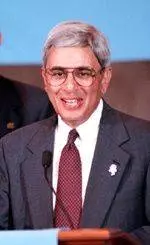
Athletic director Dick Baddour has made some well-publicized coaching hires during his tenure as AD, and he has also made some less-publicized ones. Despite the variance in media attention, all hirings of coaches wind up affecting the overall athletic department. Mr. Baddour sat down with Tar Heel Monthly to discuss the hiring process and evaluation of University coaches.
THM: What do you look for when you're trying to hire a coach?
DB: We really are blessed with an outstanding coaching staff. We wouldn't be able to finish in the Top 10 in the Sears Cup competition without having excellent coaches. When we look for a coach, as we just did with rowing and are in the process of with wrestling, we do a number of things.
The first thing we talk with people about is how they would fit into the mission of the University of North Carolina. Our number one commitment is to academic excellence. We want to hear them talk about their philosophy and how they make decisions on a day-to-day basis regarding academics, and how they balance academics with athletic issues.
The second thing we want them to talk about is their commitment to programs of integrity. That means adherence to NCAA, ACC, and University guidelines, with sportsmanship being one of the top priorities. Of course, you also have to have a good coach, a quality x's and o's person. We want a person who understands the game and can teach the game, and can surround him or her with an outstanding coaching staff and student-athletes. We want a coach who can win and compete for national championships. We want a person with strong people skills; a leader on and off the field or court.
Finally, it is very important that our coaches make sure our student-athletes enjoy their time here and that they develop as people. We want our student-athletes to want to always be a part of the Carolina family.
THM: What is the search process like when you're looking for a new coach?
DB: We have used different processes depending on what sort of time frame we're in and what the sport might be. There are several methods. One is when the Chancellor and I conduct a search and seek the advice of different people in the profession to get their expertise and advice. Good examples of that process were when Matt Doherty and John Bunting were hired.
We used an informal committee that advised us throughout the process when we hired Carl Torbush. Sometimes you 're in a situation where you use a more formal committee. A few years ago we were looking for three coaches at the same time - baseball, men's golf and women's tennis. In each of those cases we used members of the athletic administration, faculty, former athletes, alumni, and people who were familiar with that sport. Candidates came in for formal interviews and then we made a hire based upon those interviews and feedback from the committee.
With "high profile" coaches, it is difficult to get them to engage in a formal selection process because of their confidentiality concerns. Most "high profile" coaches will not get involved with a search unless they believe they will be offered the job. They do that because of the negative impact they may face at their current school from the administration, their students-athletes, fans and recruits if they do not get offered or turn down the job.
THM: Do you go into a search with certain people targeted?
DB: Sometimes you go into a search and know the person you are looking for. That comes from the everyday experience of directing an athletic department. When we hired a men's lacrosse coach, we knew if we could get John Haus, we wanted him. In the case of baseball, Mike Fox was a target for us. Both were high on our list and were people I had known and kept my eye on for a long time.
Other times, we might be in a situation where there are a handful of people we know about and if they're interested, then they will be in the mix. An example of that would be men's golf coach John Inman. We hoped he would be interested, but knew there would be other strong candidates as well. He rose to the top of that pool.
I didn't personally know John Bunting, but was very impressed by him when we visited on the phone. I told Chancellor Moeser he was someone I needed to meet with as soon as possible. The Chancellor had not known of John, but agreed I should go and meet with him. John was incredibly impressive in that interview. After his visit here, it was clear to both Chancellor Moeser and me that John had become our top choice.
There are situations where you simply do not know what the market will bring. We didn't have a particular candidate in mind to fill the recent women's tennis vacancy, but we were glad when Jen Callen was interested, because we had heard good things about her. In each of those situations you spend time on the phone trying to sort out who are or would be strong candidates.
A new factor in the "high profile" sports, particularly football and basketball, are the agents who represent coaches. An agent may contact you confidentially to express interest in your university on behalf of their client. Sometimes that can be helpful, and sometimes it can complicate matters.
THM: Is it important to hire someone from within the "Carolina family" ?
DB: We are always going to hire the best coach, regardless of where he or she went to school. You always have to get the best person and best fit for the job. There are and have been coaches here who understand the institution and have won or contended for national championships who are not Carolina grads. There are no better examples of that than Dean Smith and Bill Guthridge. And don't forget Frank Comfort, Bill Lam, Dennis Craddock, Karen Shelton, Willie Scroggs, or Mack Brown and Bill Dooley.
We also have coaches who are Carolina graduates. If somebody can meet the competition and be an alumnus, it's a real plus, but it is not a requirement. You always want to make the call in terms of the criteria mentioned earlier. I have hired a lot of Carolina people, but we also have coaches who are not alums who love and respect this institution and represent it well.
You also become a Carolina person through your deeds and actions on behalf of the University and your passion for UNC, not only because you attended school here.
THM: Is the fact that there are so many qualified coaches from within the family a testament to the strength in the overall coaching staff through the years?
DB: That's an excellent point. Anyone who is dealing with personnel matters knows the more you know about a person, the better off you are. In the case of John Haus, for example, we could talk with Willie Scroggs (his former coach and current UNC administrator) about him. That is extremely helpful.
That was helpful with Coach Smith on behalf of Coach Doherty. It was helpful with Coach Bunting in a different way. Not only was Coach Dooley helpful to us, but I also knew a number of people who had played with Coach Bunting whom I trusted to tell me the truth about him. That definitely worked to his advantage.
We also have a number of Carolina graduates on staff because of the quality individual this University attracts as an undergraduate.
THM: Once coaches are hired, are they reviewed every year?
DB: We have annual reviews with all our coaches. I am often asked by the media to evaluate coaches, but I will not do that publicly. I don't think it's fair to them or to the process.
ut we do have private reviews. We evaluate everything from leadership to budget management to recruiting to getting the most out of the program. We focus on the areas I mentioned earlier, including academics and the quality of the overall experience the student-athletes have.
We also have an academic database that allows us to monitor the academic progress of every student-athlete. We talk with the coach about the students they have recruited and how they have done academically. That sends a strong message to our coaches about this institution's commitment to academic and athletic success.
THM: What happens when another school is considering one of the UNC coaches?
DB: It may happen in one of two ways. A school may call and say that they would like to talk with one of the coaches. We often hear about "permission to contact," and that is more of a courtesy than a requirement. There is no NCAA rule on this matter. However, we would not keep anyone from talking with another school about a job.
A coach might also say he or she would like to talk with another school about an opening. After the selection process at that other school, the coach may tell us they have received an offer and asks if we can match or exceed that offer. We want stability within the department by retaining our coaches, but unfortunately we can't always accomplish that. Sometimes what it takes to retain one coach leads to equity issues that affect the entire department.
I don't think it is a good idea to publicly announce when our coaches have been contacted by other schools or release a list of candidates we have contacted when we have openings. I think it hurts the process. I know the media and our fans are interested in our program and I greatly appreciate that, but the hiring process is best served by keeping those names confidential. I know our coaches appreciate that and I think we can attract the best coaches for jobs we are hiring for by adhering to that policy. As I said in our conversation about the budget, I am very concerned that our Olympic sports coaches are underpaid. There is no question of that. We need to find ways to increase their salaries. That is a priority for me.
Adam Lucas is the publisher of Tar Heel Monthly and can be reached at alucas@tarheelmonthly.com. To subscribe to Tar Heel Monthly, click here.