University of North Carolina Athletics
Tar Heel Monthly: Baddour on Compliance
June 23, 2003 | General
Dec. 15, 2002
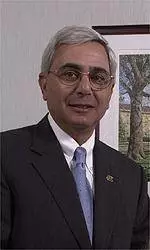
Everyone knows that Carolina's athletic department must follow NCAA guidelines, but exactly how is that done and who is responsible for making sure the rules are followed? Tar Heel Monthly sat down with Dick Baddour to find out the answer to those questions and several others involving the complicated issue of compliance.
Tar Heel Monthly: How important is NCAA compliance to the overall mission of the athletic department?
Dick Baddour: Playing by the rules is one of the athletic department's core values. The institution has a total commitment to the education, understanding and adherence to NCAA, ACC and University regulations. The most important part of an effective compliance program is hiring good people who share the same core values as that of your university and who would never intentionally violate an NCAA or institutional regulation.
THM: Who are those people responsible for compliance within the department?
DB: It's important to understand compliance is everyone's responsibility. It's not just assigned to a few people within the athletic director's office. There is no one in the athletic department who can say compliance isn't a part of their job. It's in every coach's, administrator's and staff member's job description. As athletic director, I have overall responsibility for compliance.
As Executive Associate Athletic Director, the job I held prior to becoming the Director of Athletics, I spent approximately half my time on compliance issues. Larry Gallo is in that role now, and he oversees the compliance program.
Reporting to Larry are Lisa Deibler, Director of Compliance; Amy Schaeperkoetter, Assistant Compliance Director; Susan Maloy, Director of Eligibility; and John Brunner, an intern in the sports management graduate program.
Everyone in the compliance office deals with interpreting NCAA rules. What typically happens is a coach or assistant coach has a question about an NCAA rule. The coach brings it to calls the compliance office and gets an interpretation from Lisa or Amy. If there is any grey area involved in the interpretation, our staff double-checks with Shane Lyons or Amy Huchthausen at the ACC.
The compliance office does not deal simply with NCAA rules interpretations. Similar to most universities, over time we have installed a number of procedures designed to bolster and document our compliance with the rules. Lisa Deibler, as Director of Compliance, spends a great deal of her time dealing with financial aid questions, including scholarships (grants-in-aid), institutional aid and financial aid from outside sources. Lisa also works with transfers (to and from the University), the National Letter of Intent program, squad lists, student-athlete employment, outside competition, NCAA reports and violations, and the NCAA legislative process.
Amy Schaperkoetter tracks playing and practice schedules to make sure we don't compete or practice on an excessive number of allowable dates, keeps record of countable hours of practice and meeting times, maintains telephone and evaluation logs which document how often we have contact with high school prospects. Amy also works with summer camps, hardship waivers, the coaches certification exam and NCAA reports and violations.
Our graduate intern tracks official visits, the special assistance fund, the student-athlete council, student-athlete handbook and newsletter, ACC automobile and summer employment forms, and prepares a monthly staff compliance newsletter.
Susan Maloy, who also is an academic counselor, works with initial eligibility issues and continuing eligibility. Those rules are extremely complicated. She makes certain high school students who our coaches are recruiting would be academically eligible and then certified by the NCAA Clearinghouse. Susan also determines if a student-athlete who wishes to transfer to UNC would be eligible to compete.
In addition to the athletic department staff, there are also a number of University staff who are committed to assisting us in compliance-related matters. Chief among those is Jack Evans, former dean of the business school, who is our faculty representative for athletics. Jack is involved in compliance matters and provides exceptional counsel in those cases. The admissions office, the office of scholarships and financial aid and the university's registrar office also play a major role at various times in compliance matters.
As you can see, compliance is massive undertaking, especially when you have 28 varsity programs and more than 800 student-athletes and 250 staff members.
THM: Are there preventive programs in place to make sure compliance issues don't arise?
DB: We're fortunate we spend a great deal of our time in prevention and education. We have formal training programs for our coaches, student-athletes, staff and University personnel. We produce a monthly newsletter for our student-athletes, coaches and staff. We also have an educational program for our supporters. If you look across the nation, where there have been major violations, it has typically occurred when supporters of your athletic interest have gotten too involved. Our fans and supporters do a great job of being aware of the rules. We get phone calls all the time from alumni asking for our guidance.
As I detailed before, we have systems in place for our coaches to monitor recruiting and financial aid matters. Proper documentation is required in these areas. We get questions every day from our coaches. We hope we have created an environment in which people don't hesitate to ask questions. We don't want our coaches or staff to hope they are doing the right thing. We want them to be absolutely certain they know what they are doing is correct.
THM: There's a perception that the NCAA is out to get people in a negative way. What is the University's contact with that organization usually like?
DB: We work with the NCAA in two ways. First, is to get an understanding of the rules. Second, if we have an eligibility issue or a secondary violation, the remedy process is through the NCAA. The NCAA is made up of member institutions, so it doesn't make the rules. The members make the rules and the NCAA staff interprets and applies them. At the first level of appeal, you work with the NCAA staff. Beyond that, you're dealing with committees and the representatives on those committees are people from schools just like ours. They hear cases and make decisions.
THM: What's the difference between a secondary violation and a major violation?
DB: It's a difference of degree and intent. One example of a secondary violation is the situation that arose when men's basketball players Will Johnson and Jonathan Holmes participated in a fundraising event for cancer research on campus. There's an NCAA rule specific to men's basketball about participating in outside competition. Will and Jon didn't think they had done anything wrong because the event was so informal and for charity. They had not even asked for permission to play in the event, even though they knew the outside competition rule. The compliance staff became aware of their participation after the fact by seeing a Daily Tar Heel photo of one of them playing in the event.
The NCAA requires a school to self-report violations; the worst thing you can do is cover-up a violation you know occurred. So we reported the violation, declared them ineligible and asked for immediate restoration of their eligibility. We were granted that, but with a one-game suspension. We thought the penalty was inappropriate. We asked the staff to review their ruling, but the NCAA staff thought it was appropriate based on precedent. The University then requested a hearing. Many of the compliance staff I mentioned earlier were involved in preparing for that hearing. The NCAA committee met with us on a conference call, which included Will and Jon and Coach Doherty. The committee agreed the penalty didn't fit this specific case and lifted the one-game suspension.
That situation is a good example of a one in which a rule was broken, but there was no intent on anyone's part to break a rule and the violation did not provide a competitive or recruiting advantage.
A major violation is one in which a university, a coach or staff member, or someone representing the university's interests, knowingly breaks a rule that gives a school an edge on the playing field or in determining where a recruit chooses to enroll.
THM: Is there a book that you can just take off the shelf and use to find the rules?
DB: There is. (Turning to his desk to pull out a thick, blue-covered book) This is the 2002-03 NCAA Division I Manual. It has 460 pages worth of rules. It's an enormous task for everyone in the athletic department to stay current with the rules changes, which occur each year. The book is broken down into sections dealing with such things as amateurism, recruiting, eligibility, financial aid, awards, benefits and expenses for enrolled students, and playing and practice seasons.
THM: Do coaches have to pass a test on that book?
DB: Any coach who goes off-campus to recruit has to pass an annual test. At Carolina, we ask the ACC to administer the test annually. If we need to test a new coach after the initial exam is offered, Jack Evans, the faculty athletics representative, administers it. The topics on that test come from the sections I mentioned previously, with a strong emphasis on recruiting, financial aid and extra benefits.
THM: How long has it been since Carolina has had a major violation?
DB: We had a violation under Coach Frank McGuire in the men's basketball program in the early 1960s that under today's terminology may be considered a major violation. An investigation was done that questioned some extra benefits for recruiting purposes.
THM: There's a perception out there that everybody cheats, it's just that only some get caught. What would be your reaction to that sentiment?
DB: I don't believe that. I do believe every school has secondary violations. I think it is reasonable to expect secondary violations may occur, because it's difficult to have everybody who is involved in a department to completely understand all the rules and make the right application of those rules in all cases. On average, we probably have 10 to 15 secondary violations per year. However, our goal will always be to not have a single violation. We should never accept even a secondary violation as the norm.
Nationally, I think it's quite the opposite from what you say is the perception, even though you might not believe it when you read the paper. For the most part, people in college athletics have honest intentions and want to compete and succeed within the rules.