University of North Carolina Athletics
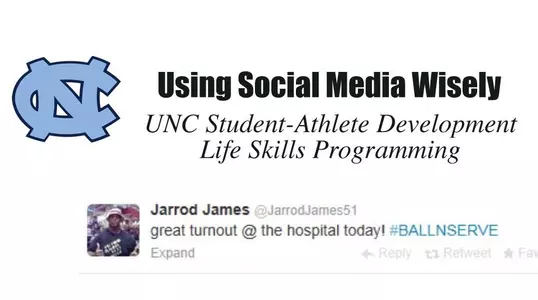
Life Skills Programming Examines Social Media Usage
November 1, 2013 | General
UNC student-athletes gathered Wednesday night for a program called "Social media, college students, and their online brands," by attorney Janet Judge, president of Sports Law Associates and an expert on a range of topics, including social media use by student-athletes.
The hour-long seminar offered strategies for using social media wisely, and examples of those who have failed - at times spectacularly so - to use social media in a positive way. At stake for student-athletes can be their reputation, eligibility and perhaps even future opportunities. Judge told the group that employers believe that an online profile is an unfiltered glimpse of an applicant and at times a more accurate representation than letters of recommendation. She asked the group to think about this: Are you willing to take a chance at losing your dream job, dream admission, or opportunity to be drafted because of one amusing thing you want to post today?
"It opened our eyes to the consequences of some of the posts we may think are OK," said junior rower Emma Aspell. "This will definitely make us think twice when we post something to any social media site."
At the beginning of the presentation, Judge urged the student-athletes to think about three words with which they'd want their teammates to describe them, then later to think about whether their social media footprint is conveying that same reputation.
"As part of our comprehensive Life Skills training, we want to make sure that student-athletes are always looking toward the future," said Cricket Lane, Associate A.D. for Student-Athlete Development. "The ways that they use social media now, as college students, can have a huge impact on their future job prospects. We want to make sure they're using social media in a positive and responsible way."
Judge, herself a student-athlete during her undergraduate days at Harvard, also spoke of the reach that student-athletes have in social media and the potential that holds. With hundreds and sometimes thousands of Twitter followers, student-athletes have the ability to influence opinions and drive attention to positive actions and campaigns. An example would be recent successful campaigns by the rowing and men's lacrosse teams to raise funds for the fight against cancer. Social media messages were crucial in both efforts.
Another example is the use of Twitter to promote Carolina Outreach activities using the hashtags #iservilead (UNC student-athlete outreach) in addition to sport-specific hashtags, such as football's #ballnserve, women's basketball's #weshoot2serve and men's soccer's #kicks4cause. From a recent visit to the UNC Children's Hospital, Shakeel Rashad, a sophomore on the football team, tweeted, "I think we enjoyed today's hospital visit more than the kids did."
For UNC's social media policy, click here.