University of North Carolina Athletics
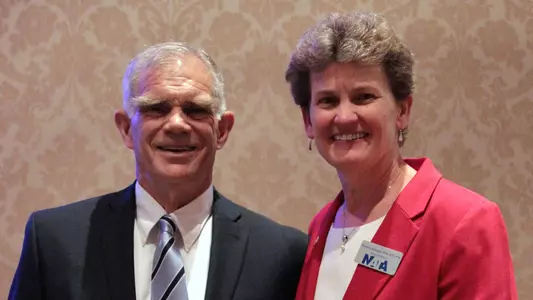
Hooker Named To MAATA Hall Of Fame
June 5, 2014 | General
VIRGINIA BEACH, Va. — The Mid-Atlantic Athletic Trainers Association selected Dan Hooker of the University of North Carolina as a member of its Hall of Fame during its annual meeting in Wrightsville Beach in May.
He was inducted along with Nancy Burke, athletic trainer for Fairfax County Police Department and the Fairfax County Criminal Justice Academy, Steven Cole, athletic trainer with the College of William and Mary and Pat Lamboni, athletic trainer at Salisbury State University.
Hooker has served UNC as an athletic trainer and physical therapist since 1972. He has provided athletic training coverage for most of the Tar Heel sports teams and was the program director for the Graduate Athletic Training curriculum from 1975-79.
Hooker earned his Bachelor of Science in Physical Therapy from Medical College of Virginia in 1967, Master of Science in Education from the University of Southern California in 1971 and his Doctorate in Education from the University of North Carolina in 1981.
He has been an American Board of Physical Therapy Certified Sports Physical therapy Specialist since 1987 and has served the Atlantic Coast Conference Sports Medicine Association as President and as Secretary. He has contributed to several textbooks, providing chapters on the rehabilitation of the spine, electrical modalities, compression devices and traction.
Hooker is involved in the research activities of the Exercise and Sports Science department providing consultation and data collection on a study of back pain in retired NFL players and consultation on several studies on concussions in football athletes. He received the NATA Most Distinguished Athletic Trainer Award in 2002.
Hooker had a vision. He had a vision to be a trendsetter in the field of athletic training and college athletics. UNC was starting a new program to come up with comprehensive plan about how to change a university and athletic department's direction in the backlash from a football player's death. During his time, the university transitioned the oversight of health care of the athletes from the university to the hospital, with the athletic training staff now reporting to and working for the hospital. "I was very pleased and honored to have been selected to that first group of people to work there. I think they're doing it the right way. I think I've taken on the idealism that the committee that put together our structure had and I've held us accountable to that vision."
His first mentor at the University of Richmond, Charles Smith, encouraged him to attend the Medical College of Virginia. He was admitted into school and noted that he finished last in his class. "For those of you who are students out there, you don't necessarily have to score the best in your class, but you really have to put your heart into it as you develop yourself as an athletic trainer in this world. You can't let up."