University of North Carolina Athletics
CAR-O-LINES
April 10, 2000 | Football
April 10, 2000
By Rick Brewer
Football scheduling has always been a very unscientific art.
With the expansion of various conferences in the last few years, finding outside opposition has become even more difficult. That's why Carolina's schedules for the last couple of years have seemed so unusual to many fans.
Like just about everyone else in the country the Tar Heels had much of their schedule set through the mid-2000's until expansion hit. That caused a domino effect with teams having to cancel games to add new opponents in their own leagues.
For example, Tennessee and Ohio State were supposed to return to Carolina's schedule in recent years. However, those two schools had to drop games because of the addition of South Carolina and Arkansas to the Southeastern Conference and Penn State to the Big Ten.
A series with Virginia Tech also had to be cancelled because of its entry into the Big East. Of course, Florida State joining the Atlantic Coast Conference caused Carolina to have to drop an outside opponent.
In the last few years when UNC administrators have been looking for games, they've turned to the old Southwest Conference. The departure of Arkansas from that league left several of its schools looking for someone to play. The further breakup of that conference and the formation of the Big 12 and expansion of the Western Athletic Conference has caused additional problems for many schools.
Carolina had a major problem just last spring when Kent backed out of a game. Furman was found as a last-minute replacement.
Future Tar Heel schedules appear to include a diverse, entertaining and competitive cross-section of teams from across the country. They shape up as a challenging slate of opponents for Carolina players and will give fans an opportunity to see some of the finest programs in the country. These schedules are indicative of the confidence that lies in the future of football here, despite last fall's 3-8 record.
The list includes Michigan, which has won more football games than any school in history, Texas, which ranks fourth in all-time victories, Wisconsin, which has enjoyed great success under Coach Barry Alvarez, Colorado, which has been a contender for the national championship in recent years, Arizona State, who has generally contended for the Pac-10 championship, and Syracuse, with whom Carolina recently concluded an exciting series.
Work is continuing on filling out the few open spots the school has left for non-conference teams up through 2010. The process is not a simple one.
Can Carolina get a home-and-home arrangement or perhaps just get an opponent to visit Chapel Hill? Do the two schools' schedules mesh so both are available on dates when each has an open spot? Can the games be arranged so the Tar Heels will have six home games every year?
As mentioned earlier, scheduling is an unscientific art. You want to play good opponents, but you also don't want to put your team in an impossible position. Your non-conference schedule can't be made up completely of Top 10 teams.
It would not be fair to the players or coaches to ask them to play Tennessee, Texas and Michigan plus eight ACC opponents all in one year. This league is just getting too tough for a schedule like that.
But while you usually know those teams are going to be very good, you don't know who else on your schedule is going to become a difficult opponent. A few years ago an athletic director might have scheduled Virginia Tech last season. The thinking would be to get a team that has had football success, but has not been a major powerhouse. Suddenly, the pieces fell together for that program and your team would have been playing one of the two top teams in the country.
Carolina seems to have an excellent beginning to its future schedules. All of these teams are either perennial national powers or have pulled major upsets in recent years.
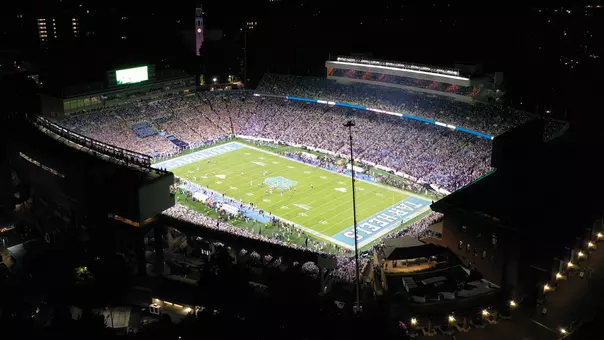
With the recent expansion of Kenan Stadium, it's important to bring top opponents into Chapel Hill. Football and men's basketball help fund Carolina's highly successful Olympic sport program. Those two teams need to be successful so budgets can be met in other areas.
Plus, the people who contributed to the stadium expansion, students, Tar Heel fans in general and, most importantly, the players deserve to see the type of opponents administrators are trying to bring to Chapel Hill.