University of North Carolina Athletics

Car-O-Lines: Judging Crucial To More Than Just Figure Skating
February 18, 2002 | Women's Gymnastics
Feb. 18, 2002
By Rick Brewer, SID Emritus
The spirit of athletic competition that is supposed to be embodied in the Olympic Games took another jolt this month.
As usual, figure skating was the culprit. One of the most beautiful of all sports has produced more controversy than vote counting in Florida.
Judging in the pairs competition, the first figure skating event, was so heavily criticized by former world champions, other judges, the media and the general public that it cast a shadow over the rest of the skating and perhaps even the entire Games.
For years there has been a strong suspicion of collusion among some judges to "fix" various skating competitions in the Olympics. The most controversy may have erupted in 1980, 1994 and 1998.
Until now.
The victory by Russia's Elena Berezhnaya and Anton Sikharulidze over world champions Jamie Sale and David Pelletier of Canada may be regarded as the biggest injustice the sport has seen.
At least, until the next Olympic Games.
Tamara Moskvina, coach of the Russian pair, is incredibly knowledgeable about her sport. But, she completely misunderstands how television has changed the Olympics if she truly believed complaints about the judging "would blow over in a couple of days."
That was proven within a week when the International Skating Union, under heavy pressure from the International Olympic Committee, awarded a second set of Gold Medals to the Canadian pair.
Still, with perhaps a billion people around the world watching what is considered the premier event of the Winter Games, this competition will be discussed forever. These backroom deals not only harm the team predetermined to lose, but the winners, too.
Sale and Pelletier may actually emerge as the Games' biggest heroes. The original scoring made them household names and their story became bigger than that of the men's and women's singles competition, always the sport's highlight events.
Figure skating is to the Winter Olympics what gymnastics is to the Summer Games.
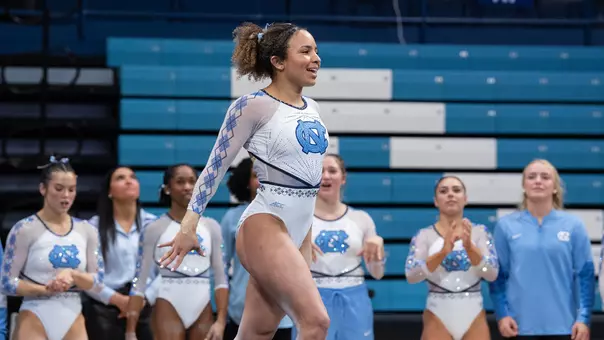
That's one of the reasons Derek Galvin, coach of the Carolina gymnastics team, was especially interested in the skating.
"I don't know much about figure skating, but I do know about bio-mechanics," said Galvin following the pairs competition. "There is no question the Canadian couple should have won the Gold Medal.
"They got the crowd into their performance. The audience never got involved with what the Russians were doing. They simply were not as passionate. Technically, even I could tell the Russians were not as efficient.
"The Canadians really had their act together in their follow-up interviews, despite the unbelievable disappointment they had to be feeling. They did an incredible job of being great ambassadors for their sport."
Officials, of course, can have an effect on the outcome of almost any athletic event. Exceptions might include swimming and track, where athletes complete against a clock, and golf.
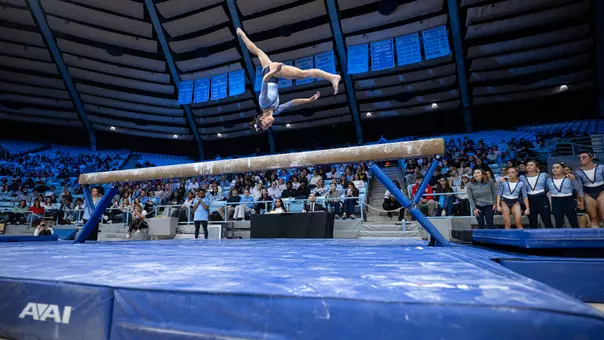
But, gymnastics and skating are the two most obvious examples where the outcome can rest solely with a judge. That's what makes coaching those athletes so difficult.
"In gymnastics, we train our athletes to understand that a judge's score is not always indicative of an individual's performance," said Galvin. "We want them to know each judge has a different interpretation of what a performance should be. A lot of that simply has to do with style.
"Scoring in sports like gymnastics, figure skating, dancing and diving is so subjective. In gymnastics we have deductions in scores for failure to complete certain required elements, much like skating."
Judges in dancing generally get to see six or eight couples for eight to ten seconds each. Many times intercollegiate diving is judged by the competing teams' own coaches.
"Figure skating cannot continue to accept the things that have happened in the sport," said Galvin. "The ISU has to come up with a better judging system or the problems won't change. Then you have a beautiful sport irreparably tarnished.
"I know some people say figure skaters, gymnasts, dancers and divers aren't true athletes. But, they don't understand the hours of work individuals take in preparing to compete or the bio-mechanical skill required to perform at a high level."
Galvin tries to stress to his athletes to be more concerned with their improvement than if they win or lose in competition. Dean Smith drilled that same concept into his teams for years.
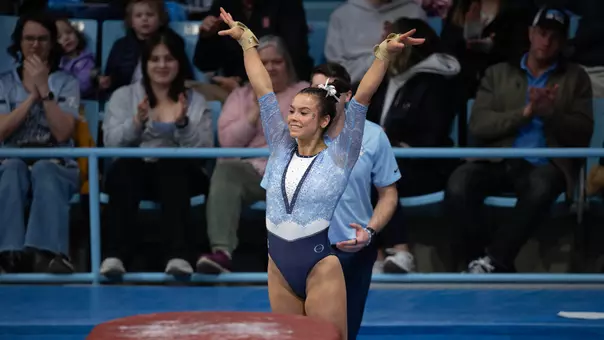
"I want our gymnasts to concentrate more on the individual progress they make as opposed to the actual scores they receive," said Galvin.
"A few weeks ago in a meet at Maryland, we had really good scores in the vault. The very next week in a meet here, our vault scores were lower. But, I knew we had performed better. It goes back to what various judges feel a good performance should be. The judges here scored much tougher on the vault and the balance beam, too. But, our kids were able to accept that because they knew they had performed better.
"Whatever a judge does can't take away the satisfaction from an athlete who performs at his or her best. They can take away championships or Gold Medals, but the personal sense of accomplishment will still be there."
Galvin doesn't have a problem with most judges in his sport. Generally they're impartial and are involved simply because they love gymnastics.
"But, I have been at some NCAA events where I believe if we had been wearing different colored leotards, we would have gotten higher scores," he admitted.
In subjective sports like gymnastics and figure skating, there are no easy answers to judging problems. However, Galvin did tackle a major discrepancy in his sport a couple of years ago.
"I thought Brooke Wilson, one of our gymnasts, should have gone to the NCAA Championships on the vault," he said. "But, at the time the NCAA combined the results from all our regional meets and the athletes with the highest scores advanced to the national championships.
"All the gymnasts in our region got lower scores on the vault because we had judges who scored that event tougher than that judges in other regions. The problem was gymnasts in different regions were being judged by differing criteria."
Galvin led a push from coaches to get the NCAA qualifying rule changed. Now each region sends its top two gymnasts in each event to the national championships.
Still, it's impossible to take the human element out of judging. Any official in any team sport will admit they've made mistakes. Just like the competitors, they're not perfect.
But incorrect scoring is most damaging in sports like gymnastics, skating, dancing and diving where a .05 point deduction from one judge can determine the winner.
"We've had meets where we've walked in the gym, seen who the judges were going to be and immediately changed our routines," said Galvin. "I knew what those judges were looking for in a performance. That's not the way it should be. It takes away the substance of the sport.
"As coaches, we'd like to make the judging as objective as possible. We've even joked about a computer system that would cover all the elements and the deductions that should be made. A videotape of each performance would then be fed into it for a score.
"But, even if that was somehow possible, you would be taking away from the actual performance itself, the passion the athlete has for what he or she is doing. Do that and you lose the essence of what sports are all about."
Unfortunately, that's what some people in figure skating have already done to their sport.