University of North Carolina Athletics
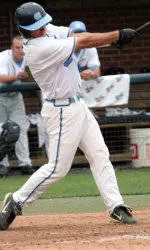
Lucas: A Different Picture
June 9, 2007 | Baseball
June 8, 2007
By Adam Lucas
This is the picture of the 2007 Diamond Heels we've grown to expect.
Up 9-6 in the eighth inning after a mighty comeback, with closer Andrew Carignan having walked the leadoff batter, there's Josh Horton out there with a thin smile hiding behind his glove.
He looked at his partner in the middle of the infield, second baseman Garrett Gore, and this is what he said:
"Here comes a 4-6-3."
With nobody out and the titanic-hitting Gamecocks at the plate, Horton somehow finds a way to smile.
Sure, Mike Fox said he wanted his team to play a little happier this weekend in the super-regionals. But right now? In the eighth inning? With a packed Boshamer Stadium and a national television audience watching?
Well, of course the Tar Heels would be smiling. Because they are a bunch of good guys. They say, "Yes, sir." They don't wear their hats off to the side and they don't wear their pants down over their shoes and they don't have crazy goatees.
Which is all the more reason why you might have missed this very important fact about the 2007 Carolina baseball team:
These guys are tough.
"We're a resilient group," Fox said in the glow of the 9-6 win that gave the Tar Heels a 1-0 lead in the best-of-three series. "We're a hardened group. The end of the season last year and the way everything ended really toughened us. This is not a group that's going to give up."
Not when they were down 10-8 in the ninth inning to East Carolina. Not when they trailed 5-4 to Western Carolina in the ninth. And certainly not when South Carolina, on the strength of a couple of moon shots, took a 6-0 lead into the sixth inning.
Down by a half-dozen runs, Gore turned to pitching coach Scott Forbes in the dugout.
"We can't get into a home run-hitting contest with them," the sophomore said.
"Nope," Forbes replied. "Just base hit `em to death."
That's exactly what happened. The Tar Heels haven't hit a home run in 20 days, but they haven't needed to. They dig themselves these daunting holes and then start chipping away, waiting for the opposition to open the door and then storming through it.
It is not always the tremendous blasts that determine a game. Gore, for example, had a couple of huge at-bats in the sixth and seventh, and all he did was drive an opposite-field RBI single and work a run-scoring walk. Those have a way of adding up.
Oh, and about that situation in the South Carolina eighth. Andrew Crisp was the Gamecock batter, Trent Kline was on first. Carignan had issued a leadoff walk to Kline--a leadoff walk in the sixth had eventually turned into a Gamecock grand slam.
Crisp battled. He worked the count full and then fouled off three pitches. During the sequence, Horton looked at Gore and made his prediction. Remember, he called a 4-6-3 double play.
He was wrong. It was a 6-4-3, a biting grounder that took an in-between hop and handcuffed the Tar Heel shortstop. But he smothered the ball, shoveled it to Gore, and Carolina suddenly had a pair of outs.
"I don't know that we're necessarily good at rolling double plays," the Wilmington native said. "We just have fun out there, and we try not to let the pressure get to us."
Yes, yes. We know. Fun-loving, straight-laced, hard-working. We know all that. But there is something else. There is this:
"There is something about this team," Gore continued. "We keep fighting. It's different than any team I've ever played on. I think it's the kind of people we are. We're really tough. You can't teach that or tell somebody how to do it."
Tough, perhaps, is not the most common adjective to describe Carolina baseball.
But it might be the most fitting.
Adam Lucas's third book on Carolina basketball, The Best Game Ever, chronicles the 1957 national championship season and is available now. His previous books include Going Home Again, focusing on Roy Williams's return to Carolina, and Led By Their Dreams, a collaboration with Steve Kirschner and Matt Bowers on the 2005 championship team.