University of North Carolina Athletics
Blitzing Offers High Risk, High Reward
September 19, 2007 | Football
Sept. 19, 2007
By Turner Walston
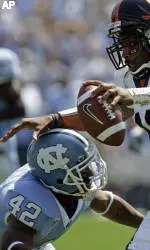
It's a football fan's tradition: whether at home in front of a television, listening on the radio, or in the stands at the game, "Send the blitz!" is a constant rallying cry. It's no mystery: sacks and tackles for loss are glory plays. They result in lost yards for an offense and can swing momentum for a defense. A sack or a tackle for loss are, short of interceptions or fumble recoveries, the biggest plays a defense can make.
But it's not always a good idea to send the blitz. If an offense can beat the rush of oncoming defenders, it can find holes for big gains. A rushing defensive back often means a lineman or linebacker will have to drop into coverage, often creating a mismatch. A lineman can run right past a shifty tailback. An eager linebacker playing out of position can create holes in the middle for short passes. Linebacker Mark Paschal said coaches must be mindful of the risks and rewards of sending the blitz. "Whenever you send the blitz, you're susceptible to screens, you're susceptible to quick slants that you don't have anybody back deep, you're susceptible to a lot of things. If people don't hit the right spots they can gash you with the run," he said.
Paschal said the game plan changes depending on the type of quarterback. "Whenever you have a mobile quarterback you want to keep him in the pocket, because they can kill you with their feet," he said. "It's going to alter your game plan; when you have somebody that can't move and is going to stay in the pocket then you're going to probably bring a little bit more pressure. When you don't, and he's a running quarterback, he can get flushed out of the pocket and make plays that other people can't."
"The risks of a blitz are a great quarterback reading it and making the right throw for positive yards and potentially a big play," defensive coordinator Chuck Pagano said.
The trick is to balance the blitz with coverage, and disguising that blitz if you can. That's not always easy, according to defensive end Tavares Brown. "When you've got quarterbacks checking at the line, you know a good quarterback can read a defense, so it's hard to disguise a blitz," he said.
Through their first three games, the Tar Heels have 23 tackles for loss, with a total of 80 yards lost by opponents, and six sacks for 44 yards lost. Four sacks came in Saturday's loss against Virginia.
The Tar Heels would love to continue to put up those kinds of numbers. But Butch Davis and his staff must also be mindful of the personnel on the roster when devising game plans. "We want to be aggressive, and Coach Davis and I have had that mentality dating back to our time at Miami," Pagano said. Good players can recognize what defenses do in attempt to disguise the blitz, he said. "You can move people in different places to disguise blitzes or send a corner off the edge. There are a number of things, but good offenses and good quarterbacks can see those things as well."
It may be that Butch Davis doesn't yet have all the pieces in place to make the plays he wants to. In the meantime, there's a season to play. "We're trying to take who we are and put together the best opportunities in all three phases, to give us a chance to win the game," he said. And what those players do well might run into an opponent's strength. "You try to devise things that not only the kids can do well, but also give you a chance to be successful against the other team," Davis said. "It's always kind of like a chess match."
Fans still want to see the defense make big plays, but coaches and players, the ones that must execute those big plays, don't want to give up one, either. "Everybody wants to blitz," Paschal said. "It's fun and that's where you get a lot of excitement, so it's kind of a risk-reward type thing."