University of North Carolina Athletics
Climb Starts With Responsibility
September 27, 2007 | Football
Sept. 27, 2007
By Turner Walston
"Every game presents new challenges." That's what Butch Davis has emphasized following each game of the 2007 season. Last weekend's game at South Florida presented T.J. Yates with a talented secondary to try to throw against. A record-setting quarterback challenged the Tar Heel defense. The result was a 27-point loss. Clearly, there is work to be done.
Davis is still learning the strengths, weaknesses and tendencies of his players. Spring practice, training camp and scrimmages are not nearly as revelatory as full-speed games against Division I competition. "We learn a lot about our football team every time we play," he said.
At Monday's press conference, Davis was asked what he had learned from the 1989 Dallas Cowboys, as a defensive assistant to Jimmy Johnson. That team won one game and lost 15. "I don't wish it on anybody," Davis said. "It was probably one of the best learning experiences I think, because you find out exactly what you believe in, you find out exactly who believes in you, and who believes in the process."
That Cowboy team finished last in the NFL with 204 points scored, but it featured some familiar names: a rookie named Troy Aikman. Second-year players named Michael Irvin and Ken Norton, Jr. Emmitt Smith would join that team in 1990, when the team went 7-9. That franchise won three out of four Super Bowls in the 1992-95 seasons. "There [were] a lot of guys who went through those trials and tribulations, who were there to celebrate the three Super Bowls," Davis said. "I think they learned a lot of lessons about perseverance."
Davis is hoping his Tar Heels will learn those lessons as well. It hasn't been easy. "One of our biggest challenges right now is creating the culture and the environment about preparation," he said. "There is absolutely zero way that you can snap your fingers and expect to play well on Saturday unless you prepare well during the course of the week." That preparation doesn't begin and end on the practice field, he said. It involves film work, playbook study and meetings with teammates. "There's just a whole mentality and a whole culture that young kids have to learn," Davis said.
The Tar Heels must admit their mistakes and learn from them. "We will never be any good at North Carolina until the players take ownership for their own preparation and their performance," he said. Leaders within program set the atmosphere of a locker room to create a culture of winning. One of the challenges on a young football team is finding those leaders. "If we had nine juniors and seniors starting on defense, you'd probably have guys that would readily step up and take that responsibility," he said. "We just don't have that many seniors, we don't have that many juniors on the football team."
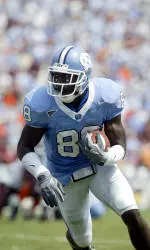
The 2007 Tar Heels' labor may not bear fruit this year, or next. But the players are slowly buying into their coach's message of personal responsibility. "If everybody's doing their one job better than what they've been doing it, then we'll come out on top," Hakeem Nicks said.
The future of the program lies in young players like Nicks, a sophomore, and freshmen like Marvin Austin and Deunta Williams.
"Most of it is mental preparation," Austin said. "You can't take 700 reps in practice, but you can take 700 mental reps."
"We've just got to find a certain amount of guys that want to do whatever it takes, and are just going to give it up for the greater good of the team," Williams said. "I think that we have the people that want to win and have the desire to win, but I think we all just need to re-focus and dedicate more."
Even the eldest members of this team can see their young teammates begin to `get it.' "I think they're starting to understand now," senior Kentwan Balmer said. "Before, you had three guys in the meeting room watching extra film. Maybe you have ten guys now, 13 guys now, so I think the message is coming down and guys are starting to understand, because guys want to be great."
Starting to understand. The job isn't finished, Davis has stressed. "Just like the `89 team in Dallas, they think they're preparing enough. Enough's not enough," Davis said. "When you think that you've done enough, you've probably only done about half enough."
"You've got to put in the time, you know, paying your dues," Williams said "The sooner we do that and the sooner people start buying in, the sooner we'll start winning."
After the team buys in and the culture is created, success happens, Davis said. "When kids are really truly committed and they are in the boat, and they are drinking the Kool-Aid, and they know that this is the right thing, and...they start buying in 100 percent, and they grow up and they mature and they start playing...then it starts to happen."