University of North Carolina Athletics

May 28, 2008 | Baseball, Featured Writers, Adam Lucas
May 28, 2008
By Adam Lucas
With just four practice days left until his team begins another quest for a national championship, Mike Fox knew exactly how he wanted to spend Monday afternoon's practice session.
Not with an intense round of batting practice or any of the broad facets that make up the game of baseball. Instead, he wanted to devote the afternoon to the more subtle details that few fans notice--but that often determine which teams eat whiskey filets at The Drover in Omaha and which teams get an early start on their summer vacations.
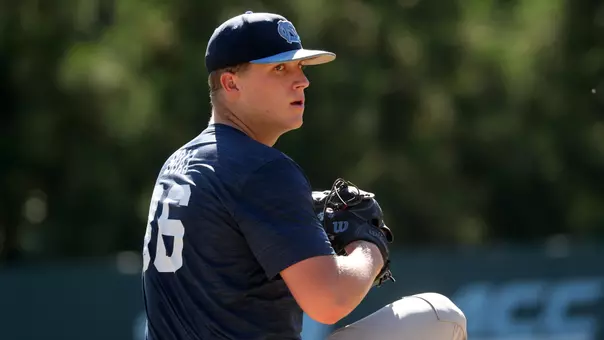
"We're going to work a little bit on some bunt defenses and a little bit on some baserunning," Fox said Monday afternoon after watching his team earn the number-two national seed in the NCAA Tournament. "We'll let our pitchers field some bunts. It will come down to a play here or there, something like fielding a bunt or getting a bunt down. You can take that to the bank. It always comes down to a play no one thinks about and those are the little things that help you make it to the next game."
Ah, the bunt. There may not be a play in the sport of baseball with a more inverse relationship between appreciation and importance.
It's popular to ask these Tar Heels what they've learned from their postseason experiences over the past two seasons. Playing on the nation's biggest stage hasn't taught anyone a better way to hit a three-run homer or strike out good hitters. But it has taught the 2008 veterans something about the subtleties of the game.
"At this time of year, being able to bunt is huge," says Chad Flack. "We really focus on it. The hit that comes after a bunt is big, but in the dugout we notice the bunt more than the hit because the bunt puts us in that situation. As a dugout, we know what it means to get it down and what it can mean to an inning and the game."
Continuing a trend from the last two years, the Tar Heels haven't been particularly frequent bunters this season. Through the ACC Tournament, Carolina had just 23 sacrifices, the third-lowest total in the Atlantic Coast Conference. Somewhat surprisingly, a team with the reputation as power-hitting boomers--Miami--has led the league in that category for the past three seasons by a wide margin.
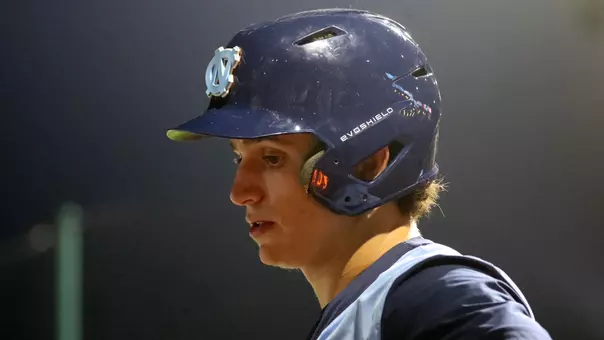
But as the games get tighter, the sacrifices increase in frequency. Three different Tar Heels--Kyle Seager, Garrett Gore, and Ryan Graepel--dropped down bunts that led to runs in the three games in Jacksonville. That Seager, who ranks second in the ACC in RBI with 67, would be on that list is the perfect illustration of how games tighten in the postseason. He's spent all season getting key hits (the Kannapolis native leads the league in doubles with 27) but even a team's best hitters aren't immune from the need to advance runners in late-inning situations in tournament play.
Ordinarily, baseball is a game of unpredictability. The quirk about a successful bunt--especially a sacrifice bunt--is that it's executed when everyone knows what's coming. There is no element of surprise, especially for hitters near the bottom of the order who are trying to set up the big hitters at the top.
"The coaches always tell us there are three keys," says Graepel, who has worked hard to improve his bunting. "Get up to the front of the box, make sure to get it down, and make sure to bunt a strike. For the most part, you want to keep your hands level and let your legs do the work."
While the hitter is focusing on his mechanics in the box, Fox is down in the third base coach's box trying to look several batters ahead. It's not unusual for the Tar Heel head coach to give the bunt sign on one pitch and then switch to swing away on the next offering.
As he freely admits, it's not a science.
"I try to look at the other team first to see how they might handle it," Fox says. "Then I look at who we've got up there, the pitcher, what pitch is coming, and whether we're in a hitter's count. Then I want to look at who is coming up next and whether they might walk him with a base open. I always try to look at who is in the hole rather than on deck because that's the person who might come up with the bases loaded. I try not to take the bat out of the hands of someone I want to hit."
Pondering this thought progression, Fox smiles.
"That's a lot of thoughts in 15 seconds," he says.
And does he ever begin his series of signs with one intention and then change his mind halfway into his sequence?
"Oh yes," he says. "That's why we have the wipeoff sign. I just keep giving signs until it hits me what I want to do."
When he does decide to issue the bunt sign, however, his team is well aware of the importance.
"The little things come out at this time of year," Graepel says. "From this point on, everyone we play will be good. That makes the playing field level, so the small things are going to be important."
Adam Lucas is the publisher of Tar Heel Monthly. He is also the author or co-author of four books on Carolina basketball.