University of North Carolina Athletics
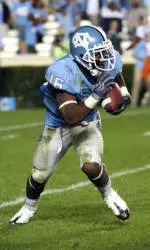
Extra Points: Bonds To The Defensive Past
April 12, 2010 | Football, Featured Writers, Lee Pace
April 12, 2010
by Lee Pace, Extra Points
Two links to Carolina's grandest era of defensive football were clearly visible to the incumbent Tar Heels this spring. For one there was Ebenezer Ekuban, a first-team All-ACC end in 1998 and later a menacing pass rusher for a decade in the NFL. For another there was Dre Bly, a three-time All-America cornerback who became wealthy and decorated snatching opposing aerials across the pro football landscape.
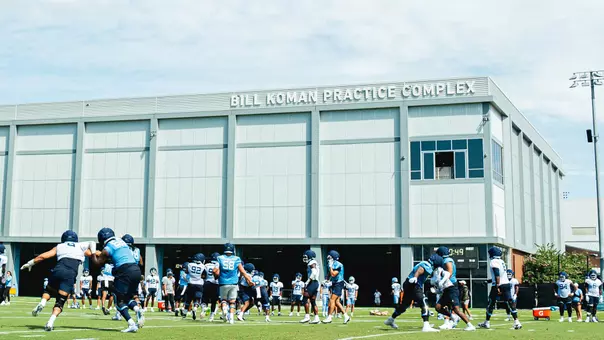
Ekuban, today a high school coach in the Denver suburbs, visited Chapel Hill twice during March and April to reconnect with the program he so ably served from 1995-98 and observe the proceedings as the Tar Heels took to Navy Field for 14 practice sessions and to Kenan Stadium for one exhibition game. After playing two years at tight end, Ekuban moved to defense and was a back-up to Greg Ellis in 1997 and a starter in 1998--the former year when the Tar Heels squashed opponents to a paltry 209 yards total offense and 13 points a game.
"This talent level here is awesome," Ekuban says. "I tell you, they have more talent I think than we had, specifically as it applies to team speed. I look at when we were here, our D-linemen were bigger, chestier players. But I think these guys run better. They are smaller, quicker, a little faster."
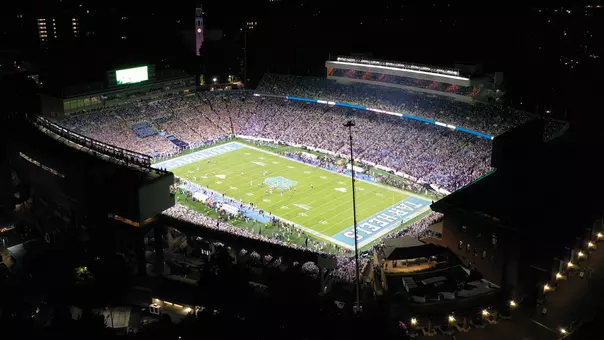
Hold on, the chirpy Bly retorts. He's not yet willing to yield his era's brilliance to the promise of what the 2010 defense could accomplish, but he sees a wealth of potential. Saturday as the Tar Heels played a mock game for the benefit of ESPN's cameras and nearly 30,000 Tar Heel fans on a sun-splashed afternoon, Bly cavorted with the Tar Heels on the sidelines and marveled at the riches the Tar Heels have along defensive line and at linebacker.
"I got a lot of interceptions when I was here on tipped balls, deflections, overthrown balls," Bly told Kendric Burney.
Burney understood the point. Bly, who played with San Francisco in the NFL last season, played behind the likes of Ellis, Ekuban, Vonnie Holliday and Brian Simmons. Burney has Robert Quinn, Marvin Austin, Quan Sturdivant and Bruce Carter manning the fortress up front.

"With the D-line and linebackers we've got, there are a lot of things we can do in the secondary," Burney said. "If Dre Bly tells me about the kind of season he had playing with a D-line like that, I'm definitely looking forward to it."
Burney's not the only one looking forward to the 2010 season and the Tar Heels' opener Sept. 4 in Atlanta against LSU. Five juniors flirted with the idea of availing themselves to the NFL Draft but decided to remain in Chapel Hill. Quinn, a sophomore in 2009, will be one of the most dominant defensive players in college football. This unit has been excellent at times over the last two seasons, porous and prone to yielding the big play at others. The anticipation is palpable around Butch Davis's fourth Carolina team on the issue of whether this defense can kick it into high gear and begin sniffing the standards set by Bly, Ekuban et al more than a decade ago.
"Success breeds success, it creates an attitude of expectation," Davis says. "For the first time, we have a pretty significant group of seniors and juniors. These guys are on a mission. They think they have something potentially unique and special and don't want to lose that opportunity."
It didn't take long following the Tar Heels' narrow bowl loss to Pittsburgh in late December for the Tar Heels to re-up for their senior seasons.
"We had a goal in mind--to win a national championship," says Carter, the Tar Heels' strongside linebacker. "We basically came back for that reason. To go out on top is the ultimate goal. We came in together, we might as well go out together and do this thing right."

"This class is a real special piece to this program and its history," Burney adds. "This class has been the one to pretty much turn the program around and get it back to where it used to be--talked about on a national level. I think we can be really good this year and to not have seen that through--I wouldn't have missed that for anything."
The key to the 2010 season, though, is not the players everyone knows about--it's the ones you've not seen and heard about as much. It's the red-shirt freshmen, it's the second- and third-year players who have bided their time in complimentary and reserve capacities who'll now be on stage when heat, injuries and special situations mandate they perform at high levels.
Cornerback Mywan Jackson is one example. The rising sophomore from Tampa played a limited role last year on special teams and as a special weapon receiver, but Saturday he had two interceptions, one break-up and six tackles. Ends Quinton Coples and Michael McAdoo are two more. Both are juniors and now are physically and mentally seasoned enough to assume significant loads. Coples is wider and thicker up top and is slated to start at left end in the slot vacated by E.J. Wilson's graduation, and McAdoo's lithe and rangy frame and burst off the ball make him a pass-rushing terror. McAdoo had four sacks Saturday.
Kevin Reddick assumes the full-time middle linebacker job after a solid initiation last year. He's a smart player and has learned over one year to play with his pads low and his arms tucked tight--the better to leverage his speed and strength. Zach Brown, Herman Davidson and Dion Guy give linebackers coach Art Kaufman a back-up roster he says he's comfortable going to at any time.
"I think we can be a lot better," says safety Matt Merletti, who returns to the field in 2010 after a season-ending knee injury last August. "Our goal is to be the best defense in the country. That's a reasonable goal. The biggest different is our football IQ. It's very, very high. We're a lot better. We've gotten smarter. And it's not just the starters. Our depth has improved a lot since last year."
"This year we're going to be even better swarming to the ball, getting seven or eight hats around the ball every play," Burney adds. "We're going to be stout at every position. The big thing this spring is we've created real depth. We have two guys at every position. We can have an injury, put a new guy in and not miss a beat."
The Tar Heels certainly had that depth during their back-to-back Top 10 seasons in 1996-97. There's another similarity Ekuban notes as well: Those teams had few off-the-field problems and enjoyed a tight bond of camaraderie on and off the field. "I don't see any knuckleheads around here," Ekuban says. "They are yes-sir, no-sir kind of kids. They are humble and hungry. You can go a long way on that."
Free-lance writer Lee Pace chronicles Tar Heel football throughout the fall and periodically throughout the year with "Extra Points."