University of North Carolina Athletics

Lucas: The Art Of The Double Play
June 22, 2011 | Baseball, Featured Writers, Adam Lucas
June 22, 2011
By Adam Lucas
Over the course of the 2011 season, Carolina seems to have perfected a wide range of ways to turn a double play. They've turned it via the conventional methods, going shortstop-to-second-to-first or second-to-shortstop-to-first. On occasion, they've gone third-to-second-to-first. They turned a pitcher-to-home-to-first version. Catcher Jacob Stallings ignited a strike-him-out-throw-him-out double play by gunning down a runner at second.
In Omaha, they've even gotten creative, getting an unusual left field-to-first base double play and a right field-to-second base double play in the same game against Texas.
That's seven different ways to turn a double play, and there are still plenty more possibilities. But no matter how it's done, the twin killings seem to have one common theme:
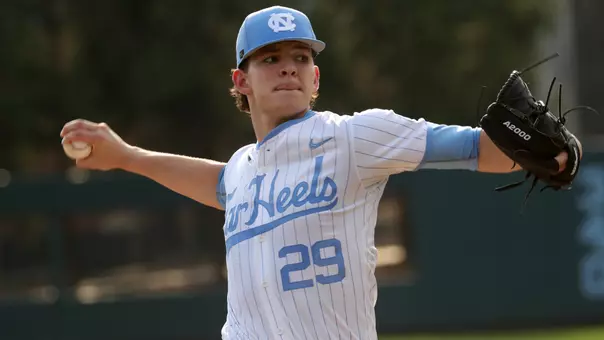
"Those plays shift a game," said pitcher Greg Holt, who will start on the mound tonight against Vanderbilt in the College World Series. "It feels like any time you get a double play it's a big situation. It changes the whole complexion of the game with one defensive play."
Holt should know, as he coaxed Stanford into an important double play in the seventh inning of the second game of the super regional. But even he knows forcing a double play to happen is as fruitless as watching a toaster and forcing it to spit out that perfectly crispy piece of bread.
Sure, Holt says he might pitch a little differently when a double play is in order--working more on the corners to try and force a hitter to roll over the ball--but there are just too many variables involved in a double play to allow one player to dictate what happens.
In fact, the preparation for a double play actually begins before the ball is ever pitched.
"Coach (Scott) Jackson gives us signs for the speed of the runner at first or the speed of the hitter," says second baseman Tommy Coyle. "We know before the pitch how much time we have when we're trying to turn it."
The answer is that the timing must always be precise. A half-second late on the throw, and shortstop Levi Michael could expose Coyle to the baserunner. Likewise, if Coyle is late delivering the ball to Michael coming across the bag, the shortstop could have already moved off the bag as he tries to come across, receive the ball and make the throw all in the same motion. Maybe that's why double plays are so much fun to watch--done right, they're simply pretty plays.
The Tar Heels have done it 46 times this season, and the frequency has increased as the season has progressed and Michael and Coyle have developed timing and chemistry.
"That's because we worked hard in the offseason," Michael says. "We know what to expect from each other. We can anticipate each other's moves, and we communicate so well."
Of course, Michael also spent time at second base during his Carolina career, so he has an appreciation for both ends of a 6-4-3 and 4-6-3 double play.
At shortstop, on a 4-6-3 double play, he has the runner and the throw in front of him as he comes across the bag. The turn at second base is more complicated; on a 6-4-3 double play, the second baseman must get to the bag, wait for the throw while the runner is bearing down on him, and then complete the catch-and-throw with only minimal vision of the target at first base.
"The biggest key is getting to the bag early," Coyle said. "If you're rushing, you may have to make an off-balance throw and there's a chance something goes wrong. You can't do that, because when you turn a double play, you get that momentum going for your team and you get the pitcher out of a jam. It's fun to watch."
Adam Lucas is the publisher of Tar Heel Monthly. He is also the author or co-author of six books on Carolina basketball, including the official chronicle of the first 100 years of Tar Heel hoops, A Century of Excellence, which is available now. Get real-time UNC sports updates from the THM staff on Twitter.