University of North Carolina Athletics
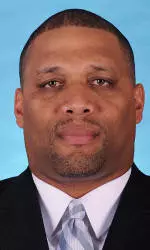
Meet Coach Deke Adams
January 3, 2012 | Football, Featured Writers, Turner Walston
Jan. 3, 2012
Deke Adams comes to Carolina after three seasons on Larry Fedora's staff at Southern Miss. Prior to his arrival in Hattiesburg, Adams served on the coaching staffs at Louisiana-Monroe and North Carolina A&T. Tar Heel Monthly's Turner Walston sat down with Adams after his introduction on Tuesday.
Turner Walston: What have the last 48 hours been like?
Deke Adams: It's been a whirlwind. We hit the ground running. We came in Sunday night. All day Monday we watched tape and kind of got up to date on some things and got a little orientation, then all day today (Tuesday), and we're hitting the road this evening, getting ready to go.
TW: With the spring season and training camp, what do the current players need to show you on the practice field and in the weight room to prove they can contribute in 2012?
DA: The biggest thing for me is work ethic. I don't get into what they've done in the past. A lot of times, when I go into different situations I rarely even watch film, because I want to form my own opinion, and so when guys come in, we'll sit down and have a lot of one-on-one conversations, and we'll talk as a group, and I'll let them know, 'Hey, this is what I'm expecting of you. I expect you to play your behinds off, I expect you to go to class, I expect you to do the right things off the field.' And if they do those, then all the other things will fall into place.
TW: The battles are fought in the trenches, as the cliche goes. How do you empower your guys to dictate the tempo of a game?
DA: I always put the pressure on my guys. Everywhere I've been, whatever position I've coached, it's always been, we want to be the strength of the group. I tell my guys that how well this defense plays depends on how good we are up front. If we're not very successful up front, and we don't play hard up front, we're not going to be very good. But the harder we play up front then the better we become up front, the better this defense will be, because the defense goes as we go, and that's what I want them to understand.
TW: Coach Fedora is an offensive-minded guy. How do the defensive coaches play off of what the offense is going to do?
DA: He's a great offensive mind, and along with a lot of our other coaches, they've done a great job. We talk to our kids all the time about not worrying about what our offense does. Our job is to go out and get the ball back to them. We want to give them as many possessions as we can. With today's style of offense, all the spread offenses and all that, your possessions are cut down if you're playing a team that's going to run the ball. But if you're playing all these spread teams, you have chances to get more possessions. If we can get off the field and give our offense maybe three or four more possessions a game, that'll equal up to points down the road.
TW: Every fan wants to see their team blitz more. How do you balance what you show and what you don't show to your opponents?
DA: I think Coach (Dan) Disch and Coach (Vic) Koenning have done a great job. I've been with Coach Disch this past year. He did a great job of mixing things up. I think we'll all work well together. In certain situations, we want to do this, but a lot of times, certain offenses dictate that you can't blitz as much. It depends on the situation, on who you're playing and different things that you're seeing. I feel really good about the system we're in. To me, it'll be just as exciting as our offense.
TW: The transition from Hattiesburg to Chapel Hill has been fast. Has it hit you yet that you're in a new place and a different situation?
DA: It's hit me already, because I'm married with two kids. I'm a big family person. I have two boys that are 15 and 12, and I take a lot of pride in spending a lot of time with my boys. It's hit me, because I haven't been able to see them, but that's part of the business. They understand that. My wife was a college athlete, so she understands the business. I look forward to getting them here as quickly as we can, but right now, we have a job to do, and we're going to get it done.