University of North Carolina Athletics

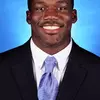
Turner's Take: Otis Ready
September 26, 2013 | Football, Featured Writers, Turner Walston
Back in August, Larry Fedora was often asked about players who were making significant strides during football training camp. Who was standing out during preseason training? Two names seemed to come up most often. Offensively, it was wide receiver Sean Tapley, who had become a major contributor from the line of scrimmage in 2012 and stood to take another step in his junior season. On the defensive side of the ball, Fedora pointed to junior bandit Norkeithus Otis.
Coming in to 2013, Otis had tallied just seven total tackles through two seasons. Last year, still feeling out the new defensive scheme implemented by Dan Disch and Vic Koenning, Otis appeared in ten games as a reserve bandit and on special teams. “I wasn't really a player,” Otis said. “I didn't really know the system.”
Following the season, a talk with Fedora inspired him to take charge. “He kind of told me, 'Otis, it's your time to step up. I see you as a leader, but you've got to do the things to be a leader.' So, at that point, I kind of stepped up. He was right.”
Otis spent the off-season working with fellow bandits Darius Lipford and Shakeel Rashad. Lipford had missed the entire 2012 season with a torn ACL, and Otis dealt with injuries of his own. So it was the rising sophomore Rashad, who appeared in 11 games as a true freshman, who brought back the most experience. “I looked up to him as a leader,” Otis said of Rashad. “He's a great role model. He's a guy that works hard on and off the field, and I kind of picked up on that.”
Lipford, Rashad and Otis were in the weight room together, talking about how together, the three of them would be the best bandits in college football. But it wasn't to be. On the first day of training camp, Rashad himself suffered a knee injury and was lost for the season. It was a devastating blow, as in one day the Tar Heel defense had lost one of their most exciting players. “It was tough,” Otis said of the injury. “But, he was still trying to help us out, help the people that didn't know the plays run the plays. If you need any extra help, he'll come in and watch film with you.”
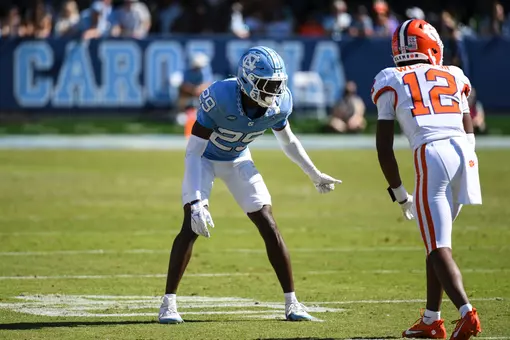
The bandit position, or the hybrid defensive end/linebacker by any name, is somewhat en vogue in college football around the nation, but it's relatively new to Carolina, a program that for many years had relied on more the traditional 4-3 defensive front. In the Tar Heels' 4-2-5 scheme (the bandit being the fourth of that '4'), the bandit must be a player that is big and strong enough to battle huge offensive tackles but also quick enough to drop into pass coverage when necessary. Though he was a defensive end in high school, as one of the premier athletes on the field, Otis said he was a player who just “let it loose.” Now a year into Lou Hernandez's strength program, he has put on 15 pounds over the last year to step between the lines at 6'1 and 240 pounds.
Through three games, Otis's added strength and increased leadership role have shown up for the Tar Heels. Otis has 17 total tackles and leads the team with 4.5 tackles for loss and three sacks. He's displayed an innate ability to sniff out a play and get to the ball. “This year, I was able to focus more on what was important at the bandit position,” he said. “The certain techniques, when I rush, when I drop . . . so I've kind of got it down now.”
Fedora famously wants his team to play the game of football smart, fast and physical. While Otis has displayed all three, the physicality got away from him a bit on Saturday at Georgia Tech. On a Yellow Jacket punt play in the first quarter, Otis blocked the deep snapper to the ground and wouldn't let him up. “I just kept blocking him, holding him down,” he said. “I guess the ref didn't like something and threw the flag.” The resulting personal foul allowed the Yellow Jackets to keep the ball in a game that was defined by time of possession.
“Can't do it,” Fedora said of the play. “Personal fouls are basically just being selfish, is all they are, so you've got to think about the team. You've got to do what's best for the team, and then you've got to pay the price on Sunday.”
“He disciplined me for it,” Otis said of Fedora. “He told me once he's down, let him up and then block him again. That's it.”
It was a mistake of over-aggression within a defense that calls for aggression. But one gets the feeling that Otis will learn from his mistake and be a better player for it. After practice on Wednesday, Fedora appeared to consider the matter closed and praised the energy that Otis brings to the field. “When those six seconds are ticking off on that play, he will go as hard as he can possibly go, and then he's lining up and getting ready for the next six seconds,” he said. “He brings a lot of energy, a lot of enthusiasm, a lot of just intensity to the defense.”
Four weeks into the season, Otis continues to display the attitude that helped him stand out during training camp. Having hit the playbook and the weight room, he is playing with confidence. Training camp is long over, and the Tar Heels are in the grind of preparing for a different opponent from week to week. “Just being able to know the system and being able to maintain what you know and your work ethic,” Otis said of making the transition from camp to the season. “I feel like if you can do that, then I feel like I'm still one of the guys that's one of the hardest workers, just as I was in the summer, just as the coaches called me a leader.”
Follow Turner Walston on Twitter.