University of North Carolina Athletics
Saturday's Pillars of Leadership
November 18, 2014 | Football, Featured Writers, Turner Walston
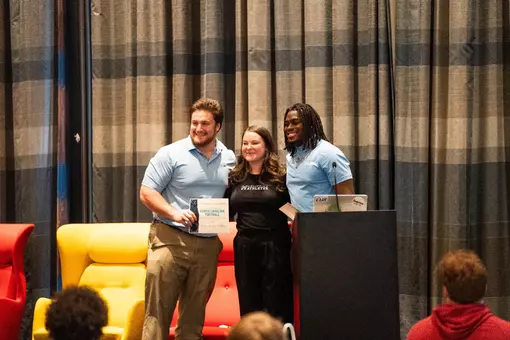
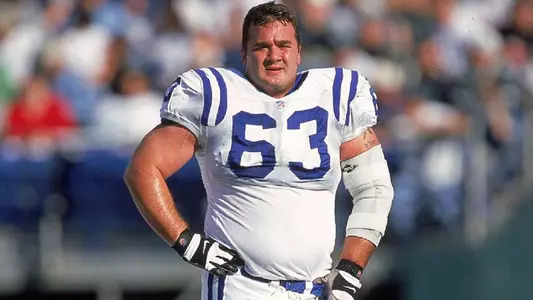
In addition to working as a football analyst for ESPN, Jeff Saturday speaks to corporations and church groups around the country. Before he spoke at UNC Kenan-Flagler Business School on Monday, Saturday shared his four pillars of leadership with GoHeels.com and CAROLINA.
•Attainable Goals
“Good leaders re-evaluate themselves early and often, and so you don't set goals that are always ten years out or five years out. There are goals that you need to be looking at on a weekly basis, and being able to judge yourself according to that is really what directs your path. I learned that from Tony Dungy, and it was a really good lesson that I use in a bunch of different areas.”
•Consistent Communication
“I can almost tell you which teams in the NFL are going to be good based on the leadership of their team. When you hear Chuck Pagano speak and then you hear Andrew Luck speak and you hear Reggie Wayne speak, they all say the same thing. That doesn't happen very often. When you hear (Bill) Belichick speak, you hear (Tom) Brady, it's the same thing. A lot of leaders can give you a vision, but in their leadership they can't communicate it effectively to everybody so that everybody says the same thing and follows it the same way.”
•Teamwork
“The greatest thing about the game of football is you've got 53 guys, and every guy's got a role and if you don't follow your role your'e really irrelevant to this football team. The quarterback can't be the center and the center can't be the quarterback. You may have goals and aspirations of a different role, but the role that you're in in that moment, that's what you're called to be effective in.”
•Surviving Storms
“Whether it's personal, financial . . . we all go through tough times. We do a terrible job right now letting people live within failure. We think that defines you as a person, but really it's just an act. I've gotten kicked in the teeth a number of times. I've been put on my back. I've been embarrassed. I've had great business deals, I've had terrible business deals, but what I have learned from my failures is often what propels me to my next success. You have to learn to survive the storms, and that's really where you're forged as a person, man or a woman, is in your failure, that you don't let it define you as a person, but just as a single act.”