University of North Carolina Athletics
1951: Ryder Cup Takes Break For UNC Football
September 25, 2014 | Football
By Lee Pace, GoHeels.com
Consider the cacophony surrounding the biennial Ryder Cup Matches of the last three decades-galleries swelling to 45,000, a press building with desks for 400 writers, wall-to-wall television coverage, frayed nerves and guttural rally cries and bombastic fist pumps. In that context it's most amusing to revisit the quaint little event held at Pinehurst nearly six decades ago.
The PGA of America brought the 1951 Ryder Cup to Pinehurst No. 2 for the ninth rendition of the event launched in 1927 and originally sponsored by English seed merchant and entrepreneur Samuel Ryder. There was a modest media delegation of some 30 correspondents, including at least three from London and three from Scotland.
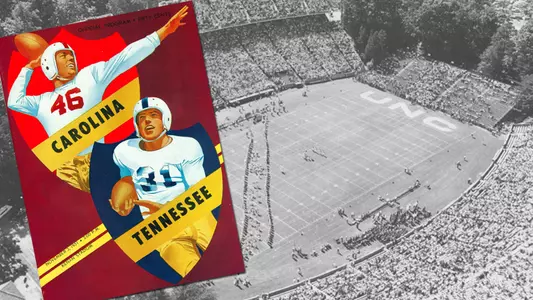
And what's most amazing is that the PGA scheduled a day off from competition on Saturday, Nov. 3, for golfers on both teams, VIPs and media to travel 70 miles north to Chapel Hill for the University of North Carolina vs. Tennessee football game, won 27-0 by the Volunteers. American team captain Sam Snead said no thanks to the football, instead driving to Florence, S.C., for an exhibition.
"They tried to tell me that this was a tough-guy game, a piece of legalized mayhem that made bullfighting look sissy," wrote Desmond Hackett of the London Daily Express. "No sir. Any professional rugby club in England could eliminate the heavily armored characters who amble in and out of this game."
The British team was captained by Arthur Lacey and led by incumbent British Open champion Max Faulkner and nine-time Ryder Cup competitor Dai Rees. The golfers sailed from Southampton on Oct. 16 and had been together for two weeks practicing and, according to Rees, were "happy and confident" that they had the best chance ever of winning on American soil. The personality of Pinehurst No. 2, designed by Scotsman Donald Ross with a nod toward the great links of Caledonia, was friendly to the visitors' eyes and psyches.
But the U.S. team, captained by Sam Snead and led by Ben Hogan and Jimmy Demaret, was way too strong for the Brits and cruised to a 9.5 to 2.5 win. The Americans barely broke stride or a sweat in winning nine matches, losing two and halving one. Foursome matches were played in cold and wind and rain on Friday, Nov. 2, with the Americans jumping to a 3-1 lead. The Americans won six matches, lost one and halved one in the singles competitions on Sunday, and only two of 12 matches reached the final hole.
The No. 2 course designed by Donald Ross played 7,007 yards, monstrously long for the day, and the media handout included a hole-by-hole description of the No. 2 course. Consider the clubs commonly used for approach shots into the greens: 3 or 4-iron to No. 1 and 3-wood to 1-iron on No. 2.
That Martin Kaymer hit a wedge and 7-iron on those opening holes during his 2014 U.S. Open victory lends more substance to the quaintness of the 1951 Ryder Cup.