


University of North Carolina Athletics
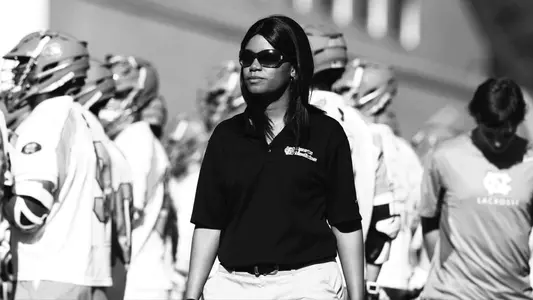
Black History Month Spotlight: Nina Walker
February 5, 2024 | Women's Gymnastics
February marks Black History Month, an important time to remember and recognize the generations who have meant so much to our history while we also continue to have conversations about our present and future. Throughout the month, Carolina Gymnastics will be celebrating its staff members who play a critical role in supporting the team each day.
Nina Walker is the Associate Head Athletic Trainer at UNC. She has been in Chapel Hill since 2006, and this is her second year working with the gymnastics team. In Nina's own words, learn about what Black History Month means to her and what motivates her to continue pioneering a path for others.
What is your favorite memory of working with Carolina Gymnastics?
There are so many amazing memories, but one of my favorites was the 2023 EAGL Championships in New Hampshire. It was great being able to spend time with the team and getting to do fun things together in Boston. It was a bit of a longer trip, so I really felt like I got to know them by the end of it.
What's something you've accomplished in your career that you're really proud of?
The thing I'm most proud of is becoming president of the North Carolina Athletic Trainers' Association. It's something that I had been working on for a while, as I had been vice president and on the board of directors. Being the first female and the first Black person that has been named president has been an amazing accomplishment. To be able to change the way the association looks has also been awesome.
What inspired you to pursue a career in college athletics?
I've always had a love of athletics and medicine. Doing them both together and being part of student-athletes' journeys has been something that I've wanted to do since I was young. I knew I wanted to be a "doctor," but being an athletic trainer has been a far better fit for me because of the relationships I get to build with student-athletes.
What does Black History Month mean to you?
Black History Month is a really special month to me because it's a time to actually learn. One of the biggest things for me is learning about my history, as well as having others learn about the history that Black people have in this country and the accomplishments they've had. I think it's a way to highlight a lot of positive accomplishments and things we've done as a culture.
Why is it important to use Black History Month as an opportunity to celebrate Black history and culture?
I think a lot of times people think about Black history as slavery and racism, but it's so important to celebrate all the things that African American culture has brought to the U.S. in terms of music, art, science, medicine and so much more. This is an opportunity to learn about it. There's a lot I hadn't been able to learn as a student, so as an adult, being able to learn those things has been really eye-opening for me.
Who are some Black leaders who have inspired you?
My ultimate inspiration is Michelle Obama, because she's a Black woman who has brought so much to our country while really showing herself as a leader in spite of all the obstacles that have been put in her way. She's my No. 1 inspiration in looking at my own leadership as president of the North Carolina Athletic Trainers' Association. In the athletic training realm, there have been so many women who have pioneered for us. René Shingles is the first Black female elected into the National Athletic Trainers Association Hall of Fame, and to see the way she has really carried the torch for us and created an opening for all athletic trainers, particularly women, has been really inspiring.
Specifically in athletics, why is representation important?
In terms of athletics, we have such a mix of cultures of different people from different walks of life. To have staff that reflects that diversity is really important. There are certain things that we learn and know about individuals that maybe someone from a different culture wouldn't. I think representation is one of the most important things. Particularly in healthcare, representation matters in terms of having trust in the people taking care of you, and knowing that they understand you as a person and as a culture. I think that's why athletic departments should be intentional about being diverse when it comes to racial equity and having different types of leadership. If you don't have people from different backgrounds, you'll never learn about them and you'll never understand what those individuals are going through or what they have contributed. If we have blinders on and just stay in one lane, we're never going to benefit from what others have been able to contribute to our workplace and community.
What does it mean to show up authentically in the workplace?
For me personally, showing up authentically in the workplace means that although I've had the luxury of being the first in a lot of different environments, making sure I'm not the last. Showing up authentically means sharing that pathway with students who could potentially become the same thing and showing them that it is possible and attainable. When you see it, you can be it. Showing up authentically in the workplace is showing others they can do it, too.
For additional resources and stories about Black History Month from UNC Athletics, click here.
Stay up to date with Carolina Gymnastics by following the Tar Heels on Twitter, Instagram and Facebook.
Nina Walker is the Associate Head Athletic Trainer at UNC. She has been in Chapel Hill since 2006, and this is her second year working with the gymnastics team. In Nina's own words, learn about what Black History Month means to her and what motivates her to continue pioneering a path for others.
What is your favorite memory of working with Carolina Gymnastics?
There are so many amazing memories, but one of my favorites was the 2023 EAGL Championships in New Hampshire. It was great being able to spend time with the team and getting to do fun things together in Boston. It was a bit of a longer trip, so I really felt like I got to know them by the end of it.
What's something you've accomplished in your career that you're really proud of?
The thing I'm most proud of is becoming president of the North Carolina Athletic Trainers' Association. It's something that I had been working on for a while, as I had been vice president and on the board of directors. Being the first female and the first Black person that has been named president has been an amazing accomplishment. To be able to change the way the association looks has also been awesome.
What inspired you to pursue a career in college athletics?
I've always had a love of athletics and medicine. Doing them both together and being part of student-athletes' journeys has been something that I've wanted to do since I was young. I knew I wanted to be a "doctor," but being an athletic trainer has been a far better fit for me because of the relationships I get to build with student-athletes.
What does Black History Month mean to you?
Black History Month is a really special month to me because it's a time to actually learn. One of the biggest things for me is learning about my history, as well as having others learn about the history that Black people have in this country and the accomplishments they've had. I think it's a way to highlight a lot of positive accomplishments and things we've done as a culture.
Why is it important to use Black History Month as an opportunity to celebrate Black history and culture?
I think a lot of times people think about Black history as slavery and racism, but it's so important to celebrate all the things that African American culture has brought to the U.S. in terms of music, art, science, medicine and so much more. This is an opportunity to learn about it. There's a lot I hadn't been able to learn as a student, so as an adult, being able to learn those things has been really eye-opening for me.
Who are some Black leaders who have inspired you?
My ultimate inspiration is Michelle Obama, because she's a Black woman who has brought so much to our country while really showing herself as a leader in spite of all the obstacles that have been put in her way. She's my No. 1 inspiration in looking at my own leadership as president of the North Carolina Athletic Trainers' Association. In the athletic training realm, there have been so many women who have pioneered for us. René Shingles is the first Black female elected into the National Athletic Trainers Association Hall of Fame, and to see the way she has really carried the torch for us and created an opening for all athletic trainers, particularly women, has been really inspiring.
Specifically in athletics, why is representation important?
In terms of athletics, we have such a mix of cultures of different people from different walks of life. To have staff that reflects that diversity is really important. There are certain things that we learn and know about individuals that maybe someone from a different culture wouldn't. I think representation is one of the most important things. Particularly in healthcare, representation matters in terms of having trust in the people taking care of you, and knowing that they understand you as a person and as a culture. I think that's why athletic departments should be intentional about being diverse when it comes to racial equity and having different types of leadership. If you don't have people from different backgrounds, you'll never learn about them and you'll never understand what those individuals are going through or what they have contributed. If we have blinders on and just stay in one lane, we're never going to benefit from what others have been able to contribute to our workplace and community.
What does it mean to show up authentically in the workplace?
For me personally, showing up authentically in the workplace means that although I've had the luxury of being the first in a lot of different environments, making sure I'm not the last. Showing up authentically means sharing that pathway with students who could potentially become the same thing and showing them that it is possible and attainable. When you see it, you can be it. Showing up authentically in the workplace is showing others they can do it, too.
For additional resources and stories about Black History Month from UNC Athletics, click here.
Stay up to date with Carolina Gymnastics by following the Tar Heels on Twitter, Instagram and Facebook.
WLAX: Post-Maryland Press Conference
Friday, May 22
WLAX: Addison Pattillo Post-Maryland Interview
Friday, May 22
UNC Women's Lacrosse: Tar Heels Race Past Maryland into NCAA Final, 16-6
Friday, May 22
UNC Baseball: Tar Heels Advance in ACCT with 10-4 Win vs Hokies
Friday, May 22