University of North Carolina Athletics
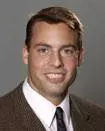
THM: Basketball Staff Profile: Jerod Haase
June 20, 2003 | Men's Basketball
June 20, 2003
Tar Heel Monthly is the premier magazine devoted to the stories and personalities behind UNC athletics. Click here for subscription information.
The following is a story from the most recent issue of the magazine.
By Adam Lucas
Everyone associated with Carolina basketball has fond memories of the 1993 NCAA Tournament.
New assistant coach Jerod Haase is no different, it's just that his fond memories came about two weeks earlier than most Tar Heels--but it's still something that should endear him to anyone who loves light blue.
Haase was a member of the sixth-seeded California team that upset third-seeded Duke in the second round of the '93 NCAA Tournament. He played 22 minutes in that game, hitting five of six field goal attempts for 13 points and adding two assists. That contest, an 82-77 Bears victory, dethroned the two-time defending national champion Blue Devils and sparked numerous smiles in Chapel Hill and around Tar Heel nation.
"I was coming off the bench at that time," Haase says. "A couple of guys were having trouble guarding Bobby Hurley, so I gave it a try. I think he ended up having about 35 points in that game but at least I challenged him on a couple of shots."
For the record, Hurley--and if you're of a certain age, you can't read that name without hearing "Hur-ley" echo in your brain--scored 32, but only made 9-of-22 field goal attempts.
Cal's trip to the Sweet 16 was a nice bonus for Haase's freshman season, during which he averaged just over seven points a game. But he treasures the win over Duke for another reason.
"It was so great for me because Coach Williams looked at that tape, which eventually led to me going to Kansas," Haase says. "That's the reason I look at that game so fondly."
Williams got a first-hand look at Haase in the next round, as Kansas eliminated Cal in the Midwest Region semifinals. But the 6-foot-3 shooting guard made enough of an impression that when he began looking for opportunities to leave the Bears, a program undergoing an extremely turbulent time period, the Jayhawks were interested. Haase sat out the 1994 season due to NCAA transfer guidelines and then played his final three seasons for Williams, posting a scoring average in double figures each of those years.
Despite his reliable three-point shooting stroke, it wasn't his scoring that made the biggest impression in Lawrence. Instead, it was his competitiveness and willingness to sacrifice his body that made him a fan favorite.
"I was almost like a kamikaze," Haase says. "I had no regard for my body." That disregard for his person eventually ended his playing career. Haase played the final two months of his senior season with a broken wrist that he still can't fully bend today, which limited him in the 1997 NCAA Tournament, as KU--which had spent much of the season ranked number one--was upset by Arizona.
After a brief time period of playing overseas in Macedonia, the South Lake Tahoe, California, native decided to try coaching.
"After I played overseas I came to the realization that I wanted to be a part of a basketball program, but not necessarily playing," he says. "Once I left Kansas I felt like I had already reached the pinnacle of my career playing-wise. Rather than trying to hold on for five or ten years, I thought I'd jump right into coaching and it worked out really well."
Haase found an opening on Williams's staff at Kansas, reuniting him with the man he calls "the best in the business."
It's a mutual admiration society. The Tar Heel head coach admired Haase's all-out playing style as a player and his versatility and competitiveness as both a player and a coach.
"There's nothing you can give him that he can't do," Williams says. "If you put him in charge of camp, he'll do a great job. If you put him in the gym with a six-year-old, he'll do a great job. Our players love him, and he's as competitive a kid as I've ever been around. He's the only player I've ever coached who I thought hurt as badly as I did when we lost, and that includes ten years as an assistant here."
Haase has actually tempered that competitiveness in recent years.
"I think I've grown as a person," he says. "When I was young, I'd be miserable no matter what game it was if I lost. I was so competitive that it was destructive. Now, I'm just competitive in the things that I work at. If I go play ping-pong right now and lose, I'm pretty low key. But if I put a lot of work into something, like this basketball team, I take it hard. The more you invest in it the more it feels good if you win and the more you hurt if you lose."
Haase may be invested in two teams this fall. Although job responsibilities haven't officially been determined yet, Williams is likely to delegate the head coaching position with the junior varsity team to his youngest assistant. As Williams well knows--he served as JV coach when he was an assistant coach at Carolina under Dean Smith--it's a useful position that allows an assistant coach his first chance to sit on the Smith Center bench and run his own team.
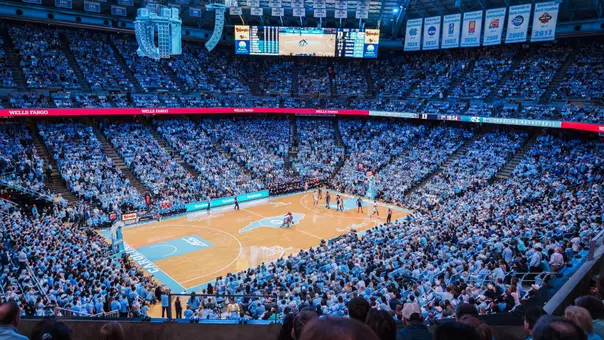
Almost immediately upon arriving in Chapel Hill, Haase made sure to get acquainted with his new place of employment. Allen Field House in Lawrence is cut out of the Carmichael Auditorium mold--a historical monument that doesn't always feature the latest in amenities. So, the transition to the Smith Center was noticeable.
"It's unbelievable," Haase says. "The Smith Center itself is so impressive, with the size of it and all the Carolina blue. But to me, the banners are the most significant thing. You look around and you have to turn 360 degrees to take in all the banners and all the success that has been here."
Adam Lucas is the publisher of Tar Heel Monthly and can be reached at alucas@tarheelmonthly.com. To subscribe to Tar Heel Monthly, click here.