University of North Carolina Athletics
Connecticut Game Guide
October 2, 2008 | Football
Oct. 2, 2008
By Lauren Brownlow
Every Thursday, check TarHeelBlue.com for the latest edition of the Game Guide, which provides all the information you need to get ready for gameday.
The Basics
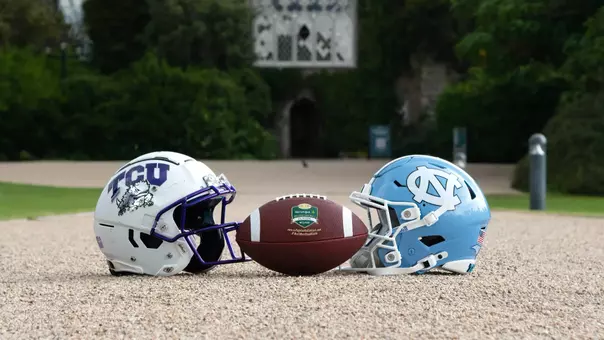
Carolina (3-1, 1-1) will host No. 24/23 Connecticut (5-0) in the first game of home-and-home series with the Huskies. Carolina is coming off of a 28-24 come-from-behind win at Miami last weekend. The Huskies are in the poll for the first time this season after a come-from-behind victory of their own at Louisville, rallying from a 21-10 third-quarter deficit. Carolina holds a 1-0 edge in the all-time series; it will be the first meeting between the two schools since Connecticut joined the FBS in 2002.
Carolina has already won two games outside the state for the first time since 2002. The last time Carolina won two road games in a season, inside or outside the state, was 2004. The Tar Heels are also seeking their best start since 1997 when Carolina won eight straight games. Carolina has lost nine straight games against ranked teams; the last win was over No. 19 Boston College in 2005 at home. Carolina's win over Rutgers snapped a seven-game losing streak to the Big East. Connecticut has won 14 of its last 17 games since the beginning of 2007.Connecticut is 1-0 against the ACC this season after defeating Virginia 45-10; the Huskies are 4-8 all-time against the ACC. Connecticut is 33-14 against regular-season non-conference opponents since making the jump to Division I-A in 2002. The Huskies have won eight of their last nine non-conference games; the only loss was a one-point defeat at Virginia last season.
Game Time: Connecticut at North Carolina, 7:00 PM, ESPN2
Carolina's game notes can be found here and Connecticut's official football site is here.
Last Time: Carolina leads the all-time series with Connecticut 1-0, winning the only meeting between the two schools 48-21 on September 15, 1990 in Chapel Hill. Connecticut was still an I-AA school. Carolina's standout tailback Natrone Means had 11 carries for 71 yards to lead the Tar Heels. Three members of the athletic department played a big role in Carolina's victory; linebacker coach Tommy Thigpen started at outside linebacker and had eight tackles (3.0 for loss). Associate athletic director for football Corey Holliday, former Tar Heel wideout, had his first career touchdown on a 58-yard reception. Associate athletic director for tickets Clint Gwaltney, the former Tar Heel placekicker, had 12 points in the game - two field goals and six extra points. Connecticut's Kevin Wesley had 109 yards on the ground. Three members of the Connecticut staff either played or were on staff for the game - assistant coach Lyndon Johnson played on the offense line, head athletic trainer Bob Howard and strength and conditioning coach Jerry Martin were each in their first years at Connecticut. The two traditional basketball powerhouses have met six times with Carolina holding a 5-1 advantage.
Gameday Weather: Check the local weather forecast before heading for the game.
Radio Coverage: Tar Heel Sports Network coverage begins at 6:00 PM. The radio broadcast is also available on XM Channel 191 at 7:00 PM. Since it's a home game, the Tar Heel Sports Network broadcast can be heard on XM.
TV Coverage: The game will be shown nationally on ESPN2.
Game week TV/radio coverage: "Butch Davis Live", Coach Davis' weekly radio show, will be broadcast live from the Top of the Hill restaurant on Franklin Street every Wednesday at 7:00. Inside the Huddle with Butch Davis airs Saturday morning at 9 a.m. on FOX Sports South. Inside the Huddle with Butch Davis will air on Sunday at 11 a.m. on WTVD ABC 11 in the Triangle and will review Saturday's game. The Tar Heel Football Review show featuring highlights of the previous week's games will air Tuesday's at 7 p.m. and Thursday's at 8 p.m. in the Triangle and Fayetteville on the local Time Warner Cable station.
Storylines
Consistent play from Carolina's front seven: When Miami's Graig Cooper began the game last weekend with runs of 20, 9 and 31 yards, it appeared that it would be a long day for the Tar Heel defense. After allowing 62 yards on four carries on the first drive alone and 11 rushes for 86 yards in the entire first quarter (7.8 yards per carry), the defense held Miami to 49 yards on their next 22 carries (2.2 yards per carry). In the first quarter, the Miami offensive linemen were consistently getting to the second level and blocking the Tar Heel linebackers. Of Carolina's 13 first-quarter tackles, eight were by the secondary (including eight of the first ten tackles) and just three by Carolina defensive linemen.
"Probably the biggest area that we need to make some improvements is knowing where to fit on certain runs," Davis said. "The other thing is that you've got to get off the blocks. You cannot stay on blocks. You've got to use your hands, you've got to shed, you've got to escape, you've got to get off blocks. Our secondary did an outstanding job of tackling, and had it not been for the play of the corners then Miami would have probably had more success running the football and would have potentially scored more points .... But we've got to do a better job with our front seven defensive guys of being in the right place."
Carolina's rushing defense is eighth in the ACC, allowing 138.5 yards per game. It will face its biggest challenge of the season in a Connecticut team that is ninth in the country in rushing offense, averaging 255 yards per game. The rushing offense features the nation's leading rusher in Donald Brown, averaging 181 yards a game. It's not a team that passes a lot; Connecticut's leading receivers have nine catches apiece (Carolina's third-leading receiver Brooks Foster has ten catches and the top three combined have 45 grabs). The Connecticut offense has stuck with the run because it has worked behind an offensive line that features two redshirt seniors and a redshirt junior. Even though Connecticut lost quarterback Tyler Lorenzen in the game, backup Zack Frazer came in and did a solid job, taking care of the ball and even throwing for a touchdown last week. The Huskies are 22nd in the country in sacks allowed at 1.0 per game while Carolina's defense is tied for last in the ACC in sacks at 1.25 per game.
It has been the Carolina secondary and, for the most part, linebackers that have led the way on this defense. Mark Paschal is leading Carolina in sacks with 2.0 and in tackles for loss with 4.5. Carolina's linebackers and secondary have 10 of Carolina's 24 tackles for loss. Carolina's collection of talented freshmen defensive linemen have really shined this season in limited playing time. Of Carolina's five sacks this season, 2.0 have come from true freshmen linemen (0.5 each for Quinton Coples and Michael McAdoo and one solo sack for Robert Quinn) and one from a redshirt freshman (Tydreke Powell). Only two of the four are on the two-deep depth chart (Quinn is starting at one of the end spots and Powell is backing up Marvin Austin), but the four have combined for 18 total tackles (11 solo) and 10.0 tackles for loss. The entire Carolina team has 24 tackles for loss and the other five defensive linemen have just five combined tackles for loss.
"(Quinn) and McAdoo and Coples, the three freshmen ends that are playing for us and giving us some significant playing time," Davis said. "The only chance they have to play well right now until they gain all that experience is just giving great effort, just doing the fundamental things right, lining up right and playing hard. As they gain some experience and they start to appreciate blocking schemes and protections, then their God-given athletic ability will allow them to make more plays. But right now, they're making plays because they're playing hard."
Special Teams: Carolina's special teams have been solid most of the season except for the Miami game. Special teams committed a number of gaffes, including a kickoff sailing out of bounds, a botched snap on a punt leading to a turnover on downs at the Carolina 11-yard line and a roughing the kicker penalty on a Miami punt. The Carolina kicking game gave the ball to Miami, for one reason or another, at the Miami 40-yard line or closer on six out of ten kicks and inside of Carolina territory twice. Jay Wooten didn't kick as far as he has been; he booted a 70-yarder on the opening kickoff but had another out-of-bounds kick (his third of the season) and three of his five kicks were shorter than 50 yards. The Carolina coverage unit allowed two returns for 36 yards. Carolina is second in the ACC in kickoff coverage this season, averaging 46.5 net yards per kickoff. Even though Jay Wooten's 59.7 yards per kick is third-worst in the league, the coverage team is holding opponents to 13.25 yards per return.
Terrence Brown has 18 punts this season; of those, two have been touchbacks and seven have been downed inside the 20. Carolina has had eight punts returned for 146 yards and one touchdown this season, or 8.1 yards per return. It is the highest average allowed in the league, despite Terrence Brown averaging 40.9 yards per kick (seventh-highest in the league). As a result, Carolina is dead last in net punting at just 30.6 net yards per punt. After allowing McNeese State to return three punts for 71 yards and a touchdown (a season-high 25.2 yards per return), Carolina held its next two opponents to two returns for 19 yards (though Virginia Tech's punt return and personal foul ended up being the difference in the game). Against Miami, the Tar Heel cover unit allowed 56 return yards on three punt returns, or 18.7 yards per return.
The Miami kicker and punter kept the Hurricanes in the game until a boot out of bounds set Carolina up for a touchdown drive. But he had four punts and all were downed, three inside Carolina's 20-yard line and two at or inside the Carolina 7-yard line. Connecticut is 33rd in the country in net punting (37.0 yards per punt), but while punter Desi Cullen is averaging 40.7 yards per kick on 17 punts, the return unit is holding opponents to just 2.6 yards on nine punt returns. The longest return it has allowed is 14 yards.
As usual, it is the Carolina return units that have kept the Tar Heels in good field position in every game this season, particularly Brandon Tate. Against Miami, he was limited in some other areas like running the ball and he did not get to return a punt, but he returned three kickoffs for 67 yards, allowing Carolina to start at its own 34, 42 and 21-yard line. It has been that way all season - of the 50 drives Carolina has started, only eight have begun inside its own 20-yard line and the average starting field position has been the Carolina 36-yard line. Carolina ranks in the top 30 in four categories nationally; two of those are the return units. Carolina is No. 2 in the nation in punt returns at 23.2 yards per return and 27th in kickoff returns at 24.0 yards per return. Connecticut's kick cover unit has not been as strong as its punt cover team, allowing 24.1 yards per return and a long of 56 yards.
Despite that, one of the biggest mistakes did come on Carolina's return unit. With Carolina down just 14-7 in the second quarter after Carolina had scored its first points of the game, it appeared the defense had held Miami to a three-and-out. But as Matt Bosher punted, Carolina sent the house to block it and ended up being flagged for roughing the passer. That mistake gave Miami a 17-7 lead on a field goal. It was a risky move that didn't end up hurting the Tar Heels too much, but one that Davis blamed himself for backfiring. It was a risk that paid off last year when Carolina blocked a Miami punt that it converted into a touchdown. Davis emphasizes special teams enormously and although he criticized some of the kicking mistakes, he took full responsibility for this one. Special teams' errors against a team like Connecticut could be costly and perhaps Davis will keep it safe and simple this weekend.
"I almost cost us the game, being greedy and a 4th down and four-and-a-half and going after a punt pressure in a punt block situation and roughing the kicker, allowing them to drive down and it gave them three points on just a foolish call on my behalf," Davis said. "We blocked a kick on them last year and that was such an enormously big play for us last year. It swung momentum. We were able to get a touchdown. Sometimes, the better part of valor is to be a little cautious about some of the things that you try to do."
The Huskies will also pose a serious threat in returning, particularly punt returning. They are 17th in the country in punt returns, averaging 16.83 yards per return. The Huskies average 19.25 yards per kickoff return but have some speedy returners that have the potential to do damage. "We didn't kick the ball particularly well and we didn't cover particularly well (against Miami)," Davis said. "That's something that there are some guys on this team have got to step up. We've got to get better performances than what we're getting out of both areas of that - from the kicking aspect of it, and certainly from the coverage aspect of it. You're not going to want to give the University of Connecticut great field position. You can't let them play on the short end of the field. It's asking too much for your defense to go out there."
Not trying to do too much: Offensively and defensively, Carolina was able to win last week's game against Miami because despite some early adversity, it didn't panic. The team trusted each other enough to continue playing the way it needed to play, and that's why it got back in the game. It was a lesson learned perhaps a week too late after the team surrendered a 14-point lead to Virginia Tech through impatience and trying to overcompensate for mistakes, particularly on defense. But it was still a lesson learned and one that Carolina will have to continue to apply this weekend. "When you can take it one play at a time then that's all that counts," Sexton said. "I think that you just keep doing what you do. You don't change because you're down. You don't change because you're up. We didn't do that. We have some experience to know that's how we're going to play and we did."
Carolina got down 14-0 when Miami gained 127 yards on just 19 plays in the first quarter (6.7 yards per play), including an 8-play, 89-yard drive for a touchdown on the first Miami possession. The second touchdown came when the Miami offense had a short field after a muffed punt. After that, the entire team trusted each other, and with good reason - the Carolina defense held Miami to 182 yards on 47 plays in the next three quarters (3.9 yards per play). The Carolina offense gained just 26 yards in 13 plays in the first quarter (2.0 yards per play) and followed that up with 275 yards on 44 plays in the net three quarters (6.3 yards per play), including 8.4 yards per play in the fourth quarter.
It happened against Virginia Tech and in the first quarter against Miami - when the team starts to get down and frustrated early, the discipline begins to wane and everyone is trying to do everyone else's job. "A lot of times, it's just a matter of one guy made a mistake and got reached or one guy was out of his gap. Then they pop a run and it's a 40-yard run," Davis said. "Then everybody is like, `Oh, well I've got to lean this way or I've got to move my alignment over there to try to help him.' You didn't need to. He's just got to play better the next snap and the fire is out. You don't have to make any kind of major, catastrophic adjustments."
Davis also praised Goddard, whose interceptions came as a result of playing fundamentally sound football instead of trying to make a play on his own. The Carolina defense has forced turnovers well this season and if the offense can continue to hold the giveaways down, the team should be in good shape to win even without Yates. As Pat Forde points out in his Forde-Yard Dash column on ESPN.com, turnovers are the most important stat. The top 11 teams in the country in turnover margin have a 37-11 record; the bottom ten are 10-32.He noted that last weekend in ACC and SEC games, the teams that won the turnover battle were 10-1. Carolina was one of those winners, picking off two passes and not committing any turnovers against Miami.
Carolina is 20th in the country in turnover margin at +1.0 per game, forcing ten turnovers and committing six. Four of those turnovers came in the loss to Virginia Tech; Carolina forced two in that game but it was the first game this season that Carolina lost the turnover battle. Carolina was even at two forced and two lost against McNeese State; in its two road wins this season, Carolina has forced six turnovers and lost zero. Carolina has not finished with a positive turnover margin since 1999. The Tar Heels are +6 in turnover margin in three wins and -2 in its one loss. Connecticut has an even turnover margin, forcing ten turnovers and committing ten. The Huskies have thrown six interceptions and lost four fumbles while picking off eight passes and recovering two fumbles. The Connecticut defense set a season high in passes defended (7) and forced fumbles (2) against Louisville. The two picks in a game tied a season-high. Carolina has thrown three picks, lost four fumbles; the defense has picked off nine passes and recovered one fumble. Carolina already has nine interceptions this season after picking off just 11 passes all of last season.
Cam Sexton has a lot to do with Carolina's win because he took care of the football. He has thrown eight interceptions in his Carolina career but had just his second interception-free game against the Hurricanes. Knowing this team is without its quarterback, all the defense wants the Tar Heel offense to do is avoid turnovers and it will do the rest.
"We've got a lot of confidence in him. We've got playmakers at receiver and we have a lot of talent on the team," Trimane Goddard, responsible for both of Carolina's take-away's against Miami, said. "He just minimized turnovers. We win the turnover margin then we knew we would win the game."
Sexton also knows that he has a wealth of talent at wide receiver and doesn't need to try to fit balls into tight spaces when he has plenty of options out there. Six of Carolina's 15 first downs came on third-down conversions; of those, two were third-and-ten's. In fact, two of Carolina's biggest plays of the game (a 37-yard return and a 74-yard return) came on 3rd and 10.
"One thing after watching it is really our rushing statistic was not indicative of how we ran the football," Sexton said. "We've always known that those guys have the speed, have the moves, but I think what they really showed is they can lower their shoulder and get the tough yards. You watch the film - we had so many third and short conversions, 2nd and 2, 2nd and 3 conversions that just kept drives going and that will demoralize a defense. You see the momentum we carried to keep us out there and keep us driving. We got in third and long a couple times and made some plays, but you go watch some film - we ran some tough plays up the middle and got those yards for the conversions."
Of Carolina's seven third-down conversions, four were by the Tar Heel running backs. Carolina's only fourth-down conversion was also by a running back. The group took charge in the third quarter; even though 21 yards on 13 carries doesn't sound impressive, take out an 11-yard sack and it was 32 yards on 12 carries. Plus, the backs picked up three of Carolina's four third-quarter first downs, including a touchdown. "I think it was a step forward. I think that we still have areas that we need to improve, but I thought our running backs, the thing that I thought that they did was they ran hard," Davis said."That's the first step for all running backs is you've got to really challenge the line of scrimmage and you've got to run reckless and you've got to run physical and you've got to run hard. I thought that they did that."
It helped that the running backs were setting up short yardage on third down. In fact, the average distance Carolina faced on third down was 7.1 yards, the fewest since it faced an average of 6.9 against McNeese State on third downs. Still, Carolina is last in the ACC in first downs with just 15.2 per game but sixth in third-down conversions at 42.6 percent. In fact, 23 of Carolina's 61 first downs have come on third-down conversions; another three have come on fourth-down conversions. So 26 of Carolina's 61 first downs have come on third down. It's dangerous territory to get into against a team like Connecticut, a team that is first in the Big East in scoring defense allowing 14.2 points per game. Carolina also can't flirt with third and long or fourth down against Connecticut, a team that has held opponents to 9 of 33 on third and 7 yards or more and 0 of 7 on fourth downs.
At The Game
Listening to the Tar Heel Sports Network at the game: WCHL 1360 is the local affiliate.
Parking/construction update: For the latest information, click here.
Pregame activities: Tar Heel Town will open at 4:00 PM on Saturday and the Countdown to Kickoff radio show will broadcast live there beginning at 5:00 PM. The Old Well Walk will be at 4:45 PM and then the Marching Tar Heels will perform on the steps of Wilson Library at 6:00 PM before heading to the stadium. Then at 6:15, start making your way to Kenan Stadium and make sure you're in your seats early. For more information, see the new <"http: tarheelblue.cstv.com/auto_pdf/p_hotos/s_chools/unc/sports/m-footbl/auto_pdf/2008fanguide"="">2008 Fan Guide on TarHeelBlue.com.
Postgame activities: See the Fan Guide on TarHeelBlue.com for the latest information on postgame parking and activities.
Watching At Home
Turn down the sound: If you're watching at home while listening to the radio or over the computer via Carolina All-Access, there will inevitably be some delay. For the reason - and a possible solution - click here.
A full list of THSN affiliates can be found here.
ESPN2 coverage: The game will be shown nationally on ESPN2. Bob Wischusen will handle the play-by-play while Brock Huard will be the color announcer. Brock Huard is the older brother of former Carolina quarterback Luke Huard.
Names To Know
Cam Sexton: The redshirt junior quarterback never dreamed that he would have been here, getting another chance at the starting job after being thrust into the position as a redshirt freshman who was certainly not ready for all that entailed. He has spent the last two seasons preparing as if he were a starter, enduring the hard times and giving this team everything he has. It paid off against Miami - Sexton completed 11 of 19 passes for 242 yards and two touchdowns. His efficiency rating of 199.62 is now higher than Yates' was before the injury. He was able to stay calm and use his experience to make good decisions. It didn't hurt that when Sexton came into the game, he completed his first pass to Zack Pianalto, an 18-yard strike for a first down. He was 2-of-2 for 32 yards, helping to march Carolina down the field for its first touchdown.
"We talk about the game slowing down, but for me, it's being able to see the field well and seeing what they're doing on defense and see how we're reacting to it as an offense," Sexton said. "I felt like I was seeing it well. My confidence went through the roof then. I felt like, `Hey, you're here, you're ready, this is all going to work out for you.'"
Sexton was even better in the fourth quarter, completing 6 of 9 passes for 148 yards and two touchdowns in the final three drives of the game. Davis repeatedly said that he admired Sexton's poise and even-keeled approach, but Sexton does bring something that the other quarterbacks don't have as much of - mobility in the pocket. Carolina's pass blocking has actually been pretty good all season, allowing nine sacks this season (four to Virginia Tech). But Sexton's elusiveness can allow Carolina's speedy wide receivers more time to get open and make it easier for the linemen to protect him.
"The thing that you love about good quarterbacks is that their eyes never come from down the field. They never start down the field and then they start looking at the rush," Davis said. "His eyes were just always looking down the field, trying to find somebody coming open - first read, second read, third read - because a couple of the plays that he went to were clearly not the number-one read. He got to the two or he got to the three. That shows that he wasn't so enamored with the pressure that he lost his composure."
Sexton came to Carolina as a highly-touted recruit and has been sidelined with everything from injuries to demotions. So when he finally got another shot, Sexton approached the Miami game as if he had nothing to lose when his number was called. "If I went out there and stunk, nobody around here would be too worried about it and probably wouldn't be surprised, either. So I just felt like this may be my last shot. I'm going to make the best of it. I'm going to go out there and play loose and play confident," Sexton said.
If he can maintain that attitude, taking care of the ball but making plays when they're there, Carolina will be fine without T.J. Yates.
Hakeem Nicks: When Cam Sexton came into the game last weekend, he might have panicked. But he remembered an exchange he had with Hakeem Nicks after the junior wideout hauled in a bad pass by Sexton in practice. "I said, `Man, you saved me right there. I appreciate it.' He said, `Cam, I'm here to bring you back to life,' and he did it," Sexton said. "That kind of confidence, that time we've spent together, that displays how we can go out and be fluid on offense and execute well."
The duo have experience playing with each other in 2006, and they certainly rekindled their relationship against Miami. Sexton targeted Nicks six times, completing four passes. Brandon Tate also completed a 12-yarder to Nicks on a trick play. He caught five passes for 133 yards and a touchdown against the Hurricanes, marking his seventh career 100-yard game (tied with Octavus Barnes). With 25 more receiving yards, he will become the sixth Carolina wide receiver to have 2,000 yards in a career. He has four catches of 70 or more yards in his career; two have come this year (including the 74-yard touchdown grab against Miami). He is fourth in the league in receptions per game with 5.2 and first in that group in yards per reception (17.0). he is second behind Brandon Tate in receiving yards per game with 89.2 and ninth in the league in all-purpose yards (102.2). He has led the team in targets in all four games this season and has caught 21 of the 30 balls thrown his way. Of his 21 catches, three have been for touchdowns and 12 for first downs.
He has been a security blanket for Carolina quarterbacks for the last there seasons, but now he has help. With Tate able to get outside on some reverses and emerging as a wide receiver threat, teams are having trouble deciding which of the two to cover. Now that Foster is re-emerging, the teams are going to have to pick their poison. But even when Nicks was one of Carolina's only wide receivers, he still managed to get open. Connecticut has two very good cornerbacks and Nicks will have perhaps a tougher time than he has all season long getting open.
Tydreke Powell: The 6-3, 310-pound redshirt freshman defensive tackle made his presence felt against Miami. He is behind standout sophomore Marvin Austin on the depth chart at the left defensive tackle spot and in his first three games, he had just three solo tackles and one tackle for loss. Against Miami, Powell had three solo tackles, one assist and three tackles for loss, including one sack. It marks the most tackles for loss in a single game by a Tar Heel defensive lineman since E.J. Wilson had three in the season-opener. He is tied for 14th in the ACC with 1.0 per game.
His first tackle of the Miami game was a sack for a four-yard loss in the second quarter. In the third quarter, he had a stop for -2 yards on 3rd and 6 that forced a Miami punt. In the fourth quarter, he had an assisted tackle for just a one-yard gain on first down and two plays later, he stopped Cooper yet again for a two-yard loss, forcing a 4th and 14 and a punt. Carolina took the football and scored the game-winning touchdown after that. Graig Cooper absolutely torched the Tar Heels. But on three attempts, Powell managed to push him backwards for a total of -3 yards. On his other 16 carries, he gained 113 yards (7.1 yards per carry).
Powell has seven tackles this season, one apiece in the first three games. On Carolina's only forced turnover on a fumble, Powell was the one who recovered it against McNeese state. Out of his seven tackles, four have been for loss. His one sack this season is tied for the most by a defensive lineman; Robert Quinn also has a solo sack. He is a part of a defensive line that has struggled to assert its will this season; with Powell playing the way he did against a mammoth Miami offensive line, it is a good sign for both the depth and the future of this talented group.
Donald Brown: The 5-10, 210-pound redshirt junior tailback is leading the nation in rushing with 181.2 yards per game. His 11 touchdowns (all on the ground) put him at third in the country in scoring with 13.2 points per game and he is seventh in all-purpose yards with 191.2 per game. His 66 points this season are 31 more points than his next-closest teammate has scored and that is kicker Tony Ciaravino who has hit six field goals and 17 extra points. He is tied for first on the team in receiving with nine catches for 50 yards. Brown has been ridiculous this season, rushing for 906 yards on 146 carries, or a whopping 6.2 yards per carry. He already has two 200-yard games this season (against Temple and Virginia) and came close against Louisville with 190 yards on 33 carries and a touchdown. He was an All-Big East selection in 2006, stepping in for an injured running back and notching 896 yards and 5.6 per carry. Last season, he led the team with eight touchdowns and ran 170 times for 821 yards (4.8 per carry). With the graduation of fellow tailback and offensive MVP Andre Dixon, he is now the main threat in the Huskies' backfield and has been phenomenal.
"He's got great vision," Davis said. "You can just see his ability, that he'll run the hole when the hole is there and the designed blocking scheme at the point of attack and he'll make yards out of that. But like all great running backs, if there's not anything there, he can visually see where everybody is. You'll see him make cuts, cut back, bounce outside, so he's got excellent vision.
"The other thing that is very apparent is he's got outstanding balance. You see guys hit him on the thighs; you see guys hit him down on his legs and they don't knock him down. He'll spin. He'll jump. He'll bounce off of guys. He is a very talented running back."
Darius Butler: The redshirt senior cornerback has started 40 games, the leading returning starter on the defense. Last season against Louisville, he held standout receiver Harry Douglas (who is now playing for the Falcons) to just 19 yards, his lowest total since 2005. This season, he is seventh in tackles with 21 and 2.0 tackles for loss. He also returns kickoffs this season, averaging 23.5 yards per return the last two games on four returns. He returned kickoffs as a sophomore as well, including a 90-yard return for a touchdown against South Florida. He has nine returns for 207 yards.
But now the 5-10, 187-pound cornerback and return man is playing a role in all three phases of the game, lining up a wide receiver on offense. He scored a rushing touchdown against Virginia on his only rushing attempt this season of 13 yards. He also had two catches for 40 yards, two kickoff returns for 49 yards and six solo tackles. On the season, he has caught 7 balls for 104 yards and has one of only two Connecticut receiving touchdowns. He nabbed his first touchdown reception last week against Louisville. He earned the offensive game ball in that game with three catches for 40 yards; he also had four solo tackles and 47 yards on two kickoff returns. The two-time team captain is now one of the more important members of the team and is tied for third in scoring on the team with 12 points, also ranking second in all-purpose yards with 64.8 per game.
Cody Brown: Senior defensive end Cody Brown serves as team captain and looks to pick up where he left off last season, notching 16.5 tackles for loss and 7.5 sacks. He has done that this year, already tallying 4.0 sacks and 5.0 tackles for loss in five games, leading his team in both categories and ranking 18th in the nation in sacks. The 6-2, 248-pound Brown is the second-leading returning starter on the defense with 25 starts and he is the only senior in the top six in tackles on the team (12 solo, 10 assists). He also has a pass breakup and a forced fumble. Against Louisville, he had perhaps his best game of the season with a season-high six tackles (all solo), 2.0 tackles for loss and one sack. He also forced a fumble on his sack that was ultimately recovered by Louisville after a ten-yard loss. The senior leads a young but talented Connecticut defensive line that is already wreaking havoc, leading the Big East with 15 sacks this season (3.0 per game).
Lauren Brownlow is the managing editor of Tar Heel Monthly.