University of North Carolina Athletics
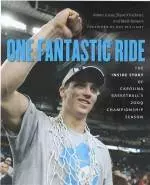
Book Excerpt: One Fantastic Ride
October 2, 2009 | Men's Basketball
Oct. 2, 2009
Download Complete Chapter in PDF Format 
CHAPEL HILL - The upcoming book One Fantastic Ride is the ultimate insiders' account of Carolina's 2008-09 NCAA championship season. Written by Adam Lucas, Steve Kirschner and Matt Bowers and set to be available in bookstores on October 16, the 246-page book features behind-the-scenes photos, stories, the team's Thoughts of the Day and more.
Below is chapter 17 of the book, which focuses on the day between games at the Final Four in Detroit and the long wait for Monday night's championship game.
Chapter 17
Waiting
What do you do when you reach the point in your life that you've always dreamed about, the moment that will -- for better or worse -- shape the perception people have of you for years and decades to come?
You wait.
By the time the Tar Heels left Ford Field on Saturday night, it was after midnight. That left approximately 45 hours until the tip-off of the national championship game. For the players, the first 10 of those hours were spent sleeping. For the coaches, there was game tape to watch, scouting reports to finalize, and game plans to formulate. As soon as the Tar Heels finished dispatching Villanova, Michigan State held a team meeting at their hotel to go over UNC personnel and tendencies. Carolina didn't have that luxury, although everyone remembered the first meeting of the year between the two teams.
Most of the players had a lazy Sunday morning. The coaches were already going over their Michigan State game plans. C.B. McGrath had the Spartan scouting assignment, just as he had in the first meeting in December. MSU wasn't exactly the same team; this time they would have Goran Suton, who sat out the December matchup with an injury. But the rest of the personnel was the same, and McGrath relayed his observations on the April version of the Spartans to the coaching staff.
"Their toughness concerns me," he said. "All their tough wins, like Louisville, UConn, and Kansas, were close games until Michigan State refused to be denied. They execute their offense, they play great defensively, and they get the rebounds they needed to get. I hope our guys don't overlook them or think it will happen easily because we beat them so badly the first time.
"They were a more confident team than the one we played in December," he continued. "Suton gave them confidence, something that made them believe, `Hey, we're a different team.' And they were a different team. You don't beat Louisville and UConn and not be a better, more confident team."
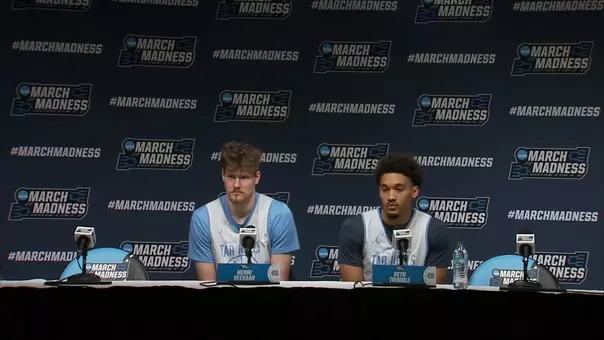
After breakfast, the first scheduled events for the players were early-afternoon media obligations back at Ford Field. At those press conferences, while the Spartan players entertained the eager local press, the Tar Heels looked, quite frankly, like a team that had been playing basketball until midnight the night before.
After the press conferences, the team went through a light practice, made even lighter by the injury to Danny Green. He had strained an oblique muscle in the previous night's victory, an injury that hadn't concerned him at the time. But it grew sorer as the night progressed, even when he iced it on Saturday night. By Sunday, Green couldn't run, jump, or even laugh.
"If we played the game today, could you play?" Roy Williams asked him.
"I don't think so," Green said.
"Wow -- not even for the national championship?"
"Coach, I really can't move much at all."
Green became Chris Hirth's new project, with a constant mix of ice and heat to try and enable the senior to play. In public, the injury was never mentioned. Most fans never knew how close Green came to missing the title game.
Two key points were reviewed at the afternoon practice: the importance of rebounding and the importance of getting back on defense. Carolina had the well-earned reputation as a transition team, but Michigan State also liked to run, usually by taking advantage of a team lazily retreating on defense. Because the Spartans weren't overwhelming offensively, getting easy baskets in transition was a key part of their offense.
An evening meeting back at the hotel showed the typical personality of the 2009 Tar Heels. With just over 24 hours until they played for a national championship, most of the players were more concerned with a phenomenon they called the "Soggy Booty Boys." No one knew exactly where it had started, but it had become a highlight of most team functions.
The goal was simple: at a team meeting or meal, one or two players would try to soak the chair of an unsuspecting teammate--sometimes even a coach. If that player or coach sat down in the wet chair, he would immediately be greeted with raucous shouts of "Soggy Booty Boy!"
"It just shows how immature we are," Bobby Frasor said. "We're college students. It's something we had fun with all year."
All year, including the night before the national title game.
"Ty got me the night before the game," Mike Copeland said. "I wasn't even thinking about it. He got me good, because he had soaked the whole chair. I sat down, and I didn't feel it at first. Then I realized the whole thing was soaked."
Eric Hoots was also a victim in Detroit. To a passerby hearing the shrieks of glee from inside the team meeting room, you might have thought Williams had asked the players to visualize their excitement if they won a national championship. Instead, they were just delighting in yet another member of the Soggy Booty Boys.
A very long 24 hours remained until game time.
* * *
Roy Williams's game-day tradition, like most of his traditions, hadn't changed much during his coaching career. As usual, he woke up early and went walking--it used to be a jog--with a few friends. And, as usual, he hoped one of them would fall down.
That particular superstition was created in 1991, when a member of his coaching staff slipped and fell while jogging through the streets of Louisville before an NCAA Tournament game against Pittsburgh. "That's paying the price," Williams said. "That's a really good sign." The Jayhawks played well against the Panthers, and a superstition was born. From that point forward, any time a member of Williams's group fell on game day, it was considered a good omen.
The morning of the championship game dawned gray with a light snow. Williams rounded up his group of walkers and, well, he couldn't help but smile as he recounted the story.
"Everybody's cold, and we're bundled up with the toboggans, the gloves, the towels, and everything," Williams said. "[Ticket manager] Clint Gwaltney ran head first into a stop sign. It knocked his hat off, he stumbled a little bit, and I was so concerned that I was right there shouting, `That's as good as falling! It's the same thing!' His head could've been bleeding, I didn't care. Coach Holladay and I were cheering so hard, we thought it was the greatest thing."
Williams had amended his tradition in Memphis, where he supplemented the group walk with a 30-minute walk by himself. He used it to clear his head and make sure he was focused on the most important facets of the day. He ate a quick meal, then accompanied the team to a light shootaround at Ford Field, which by now was starting to feel like a second home. The streets were already filling with Michigan State fans. On one side of Brush Street, the road that connected the hotel with Ford Field, a group of fans would shout, "Go Green!" They would be answered almost immediately by a group responding, "Go White!" The players barely noticed.
At shootaround, Danny Green gauged his mobility. He definitely couldn't dunk, but he could fire jump shots. He couldn't pass the ball across his body, which eliminated the cross-court and no-look passes he loved. But he could shoot, and he could pass, and he could slide his feet enough to capably defend.
"Okay," Green said. "I can do this."
Back at the hotel, Williams dismissed his players with these words: "This is what we practiced for. This is why we ran in the fall. This is why we hurt so badly after the Kansas game last year. This is what you've put yourself in position to do. Let's enjoy it. Don't try to win the game at 3:00 in the afternoon. Get your rest, we'll eat a pregame meal, we'll go to the game, we'll talk about it, and then we'll go play."
As the players soon learned, Williams made it sound easier than it actually was. Most of the players and coaches had family members in Detroit to watch the game, and most hung out with their families at least a little bit on Monday afternoon.
Steve Robinson eventually banished most of his family to an adjoining room. That left him free to ponder the upcoming evening, and he decided he wanted to do one important thing differently in 2009 than he had done in 2005. "This time, I wanted to get some confetti," he said of the brightly colored streamers that would be released from the ceiling when the final seconds elapsed. In 2005 he'd been so caught up in the moment he failed to recover any souvenirs. This time, he wanted to be prepared.
Down the hall, Tyler Hansbrough was submitting to a secret vice: VH1.
"Most people don't know it, but I'm a huge VH1 fan," he said of the music television channel. "Bobby makes fun of me all the time. I watched a lot of VH1 that afternoon."
It was one of the rare times, however, that even Frasor couldn't crack a joke. He was sitting on the bed in his room flipping through channels repeatedly, never stopping for more than a few seconds on any one show. Asked later, he couldn't even remember any of the shows he had seen. It was pure nervous energy, the desire to occupy himself with anything, even something as mundane as scanning through channels. No one wanted to watch ESPN, which was filled with pregame title talk.
Even the team's most unlikely candidate for nerves found he was affected. Ty Lawson traditionally was a prime candidate for a pregame nap, even in the minutes before tip-off. There had been times during his freshman season when he had to be reminded to tie his shoes before entering the game. But now, so close to a championship, nerves hit him hard.
As usual, the team ate their pregame meal four hours before tip. Lawson turned to Copeland and said, "I can't eat. I don't know why, but I can't eat."
"You're excited," Copeland said.
"Yeah, man," Lawson said, pushing his plate away. "I just can't eat right now."
At Ford Field, with the roar of 72,922 fans audible even inside the locker room deep within the hallways of the arena, Williams reviewed the game plan with his team before he sent them onto the court for the last time. "
We've got to get back on defense," he told them. "We've got to build a wall to stop their penetration. And I want you to box out, and I don't want you to let us down on one single possession with that. It's not okay to say, `My bad, Coach, I didn't box him out.' That crap is gone. Don't look over at the bench and say, `My fault.' I expect you to play well. I expect you to run back. I expect you to box out."
Then he ended with a message that still gave goose bumps to some team members a month later.
"Somebody's going to win the game tonight," he said. "Somebody is going to win a national championship. Why not let it be us?"
From ONE FANTASTIC RIDE: THE INSIDE STORY OF CAROLINA BASKETBALL'S 2009 CHAMPIONSHIP SEASON by Adam Lucas, Steve Kirschner, and Matt Bowers. Foreword by TarHeelBlue.com or wherever books are sold.