University of North Carolina Athletics
Tar Heels Look To Reverse Course
March 19, 2014 | Men's Basketball
By Lauren Brownlow
In March, it's about what you do as much as it's about your opponents. And right now, the Tar Heels aren't doing some of the things that led them to be successful during their winning streak.
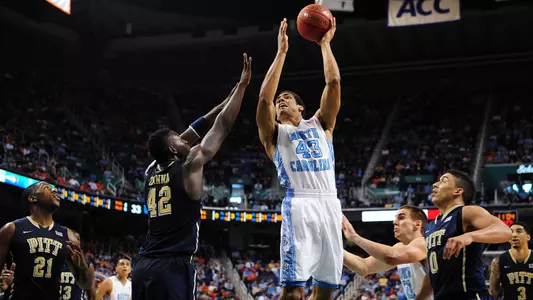
For three straight games now, an opponent has shot at least 50 percent in at least one half of basketball. And it's generally been the second half: Notre Dame, Duke and Pittsburgh combined to make 40-of-75 second-half shots against the Tar Heels (53.3 percent).
The real problem is that UNC has been putting itself in a hole. Yes, everyone is expecting #SecondHalfPaige to kick in and everything to be right with the world, but in three of its last five games (NC State, Duke and Pittsburgh), the Tar Heels have faced double-digit deficits in the first half and had to claw their way back into games, often running out of energy.
But whether a decisive opponent run comes in the first half or the second half, there's one thing those runs have in common--a lot of jump shots by the Tar Heels, a lot of made shots (and/or offensive rebounds) by opponents and some shaky defense.
In the last three games, UNC has allowed a 19-2 run (to Pittsburgh in the first half), a 15-5 run to Duke when the deficit had been cut to 11 and a 22-5 run to Notre Dame in the second half. Carolina has shot a combined 4-of-22 in that span and scored a total of 12 points over 19:02 of game action. Opponents have shot 20-of-40 (6-of-10 from three) and scored 56.
And what's worse is that Tar Heel opponents retrieved 50 percent of their missed shots. Pittsburgh and Duke rebounded six of eight misses during their decisive runs in the last two games. All the while, UNC got four of a possible 16 misses.
That's a big stat to watch for UNC going forward--rebounding. A strength of the Tar Heels for most of the season, Carolina couldn't get its missed shots in those decisive stretches either, retrieving just four of their missed shots (and just one in the last two games against Pittsburgh and Duke).
Overall, two of UNC's four lowest offensive rebounding percentages all season have come in the last two games. Oh, and opponents have posted two of the three highest eFG% against UNC all year. UNC has been outscored on second-chance points 73-55 in the last five games and 42-18 in the last two. That's a 24-point swing combined, and that's certainly not going to work in the NCAA Tournament.
Carolina can't afford stretches like that where they take bad shots, don't get the rebound and then play bad defense on the other end. Hardly breaking news, but in March, those stretches are almost too much to overcome.
The Tar Heels' first round opponent in the NCAA Tournament is a Providence team that doesn't shoot all that well from the field (48.1 eFG%) but has the No. 22 offense in the country on the strength of hitting 78.1 percent of its free throws (second-most nationally) and rebounding 35.5 percent of its missed shots (44th). Not to mention the Friars don't turn it over a ton, either (104th at 17.3 percent) and get to the foul line a good amount (41.9 free-throw rate).
It's a disciplined group that is used to playing in tough games and will make the Tar Heels work for what they get on both ends.
Another thing to watch for the Tar Heels is who is ending possessions during these runs. The ball needs to be in the hands of their best players. Of the 29 possessions UNC had during those runs, just five ended with something Marcus Paige did and six with James Michael McAdoo, with just four for a surging Brice Johnson.
By comparison, six ended with Leslie McDonald. Nothing against McDonald, but UNC's best offensive players need to have the ball in their hands when things start to get a bit hairy. That's what Tournament time is all about, after all.