University of North Carolina Athletics
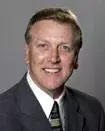
THM: Basketball Staff Profile: Joe Holladay
August 1, 2003 | Men's Basketball
Aug. 1, 2003
Tar Heel Monthly is the premier magazine devoted to the stories and personalities behind UNC athletics. Click here for subscription information.
The following is a story from the most recent issue of the magazine.
Other assistant coach profiles:
By Adam Lucas
New Carolina assistant coach Joe Holladay has been on the receiving end of virtually every possible kind of recruiting pitch. Only one of them changed his life.
As a teenager, he was wooed by several major league baseball teams and eventually selected by the Chicago White Sox in the fifth round of the 1965 professional draft. He declined to sign with the Sox, instead choosing to attend the University of Oklahoma, where he played baseball and basketball.
A talented point guard and shortstop, Holladay gravitated to coaching, spending time as a volunteer Little League coach in his hometown of Duncan, OK, during summer break from OU. One semester of law school couldn't hold his interest, and he left graduate school to pursue a teaching and coaching career with the Norman school system.
Eventually, coaching put him back on the receiving end of recruiting pitches, this time as the coach of a versatile guard named Steve Hale. Numerous colleges came and went in Jenks, all trying to sell Hale on a career in their colors.
But one school didn't seem to be using the hard sell.
"It was just a different type of recruiting than he got from other schools," Holladay says. "Carolina had the stamp of, 'We know what we're doing.' They really didn't have to sell it, because it showed. Whatever they said they were going to do, they did it. If Coach Smith said he would call on Sunday at 6:00, he called Sunday at 6. And they did all this while coaching their team to a national championship."
Hale picked the Tar Heels and became a key member of several Carolina teams during one of the golden eras of UNC hoops (1983-86). Holladay, meanwhile, was also benefiting from the experience. He got to see his pupil play in person only twice during Hale's four-year career--once in a road game at Tulsa, and another road contest at Arkansas--but studied the Heels intently from afar.
After 15 years as a coach, Holladay decided it was time to implement a new coaching philosophy.
"Once they recruited Steve Hale, I really started following Carolina basketball. I changed everything I did to the way that North Carolina did it. I tried to play exactly like they did, because I figured most people in the Midwest weren't familiar with it and I could get by with it for a few years. I did it for quite a few years before people caught on."
Hale's matriculation also led to an invitation for Holladay to work at the summer Carolina Basketball School. Six of Holladay's nine years as an instructor at the camp coincided with Roy Williams's assistant coaching tenure in Chapel Hill, and when a slot on Williams's staff at Kansas opened in 1993, he contacted Holladay.
A 23-year veteran of coaching when he accepted the job with the Jayhawks, Holladay had turned down other opportunities to get into college coaching. With Williams, however, he felt comfortable enough to make the jump that completed the circle that began with Hale's first recruiting letter. After ten years in Lawrence, he moved to Carolina when Williams was hired on April 14.
Since then, his world has been predominantly consumed by one topic--recruiting. Both Kansas and North Carolina are college basketball powers, but their paths don't cross frequently in recruiting circles, which meant Holladay had to familiarize himself with some new territory.
"At Kansas, we didn't spend any time on the east coast," he says. "There was no need. We'd been successful on the west coast, so we wanted to keep going back to where kids had had success at Kansas. On the east coast there is an image of Kansas that it's all flat, there are Indians everywhere, and there are cows in the streets. Why would you want to go there and leave the ACC, the Big East, and fly over the Big 10 and SEC? But out west, you've got to deal with the Pac-10 but there are no major conferences between there and the Big 12.
"In April and May I was very much focused on recruiting. The reception here on the east coast to Coach Williams has been unbelievable. Wherever we go, we have people telling Coach how good it is to have him back. We'd go into restaurants in the middle of nowhere and have someone say something, or have people hollering out of taxicabs at him."
While recruiting has been near the top of his list, Holladay also wanted to make time to get acquainted with the players already on the roster. They've already gotten a sample of his low-key wit, as when he spotted Melvin Scott wearing a headband that tied in the back, commando style, and immediately dubbed him "Rambo."
"You want to take care of the players you have," Holladay says. "They are your number one responsibility. Some people get out of whack with that, because they're always after the next guy. You need to take care of the ones you already have."
"The players are going to love him," says Carolina assistant Jerod Haase, who played under Holladay at Kansas before joining the coaching staff. "He works extremely hard, and he's easy to talk to and easy to get along with."
He can, however, get serious when it's required. The 55-year-old coach served as the academic coordinator on the staff at Kansas and will also perform those duties for the Tar Heels. It's not a tutoring position, as Carolina's trusted academic staff will continue to carry out that job, but it does require some monitoring of each player.
Just like his coaching philosophy, Holladay takes much of his approach to academics from Roy Williams.
"Coach Williams always says, 'Smart people ask for tutors,'" he says. "Our kids who have been Academic All-Americans at Kansas always asked for tutors. We assume everyone needs to be monitored at first, and then we go from there. I just want to make sure all the players are constantly putting their best foot forward."
Adam Lucas is the publisher of Tar Heel Monthly and can be reached at alucas@tarheelmonthly.com. To subscribe to Tar Heel Monthly, click here.