University of North Carolina Athletics
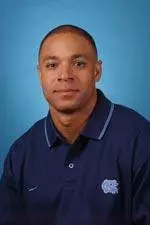
A Q&A With Coach Marvin Sanders: Part I
July 4, 2004 | Football
By: Joe Bray
TarHeelBlue: When you took this job you said you were glad to be joining a 'program on the rise.' Why do you think that?
Coach Sanders: "Because I've seen what John and his staff have done the past two years as far as recruiting. There's some very talented young players in the program now. All the pieces are falling in place.
"As far as facilities, we may have the nicest facility in the country. We have a great community, a great town, a great college. All of these, combined with the recruiting of late, put things in place to have an excellent football program.
"After seeing all of that, I felt this was definitely a program on the rise."
TarHeelBlue: How has it been here so far? Did you have any preconceived notions before you came?

|
| Nebraska's 32 interceptions led the nation last season. |
Coach Sanders: "I really didn't. My main concern was were the ingredients here to build a great program? Then, when I got a chance to meet the players and the coaches I thought 'Man, this is a great opportunity.'
"One thing that has really impressed me, as I've got to meet our fans at various functions, is that the support and belief in John Bunting hasn't waivered very much. They know the type of man he is, they know he bleeds Carolina blue. They know that if there's anybody who wants to see this program excel and reach the next level, it's him.
"Now I've been at some places where, when things weren't going very well, there's a lot of negativity generated. I'm not so naive that I don't realize that there's some of that going on here, but for the most part people believe he's the guy to get it done."
TarHeelBlue: How have you fit in with the other coaches?
Coach Sanders: "We get along well, very well. At Nebraska, the coaches that were there were guys that I had played for, plus the guys they brought in were guys I had played with. I was very familiar with that staff.
"Coming in here, not being from the South, I wondered how I would fit in. ut, Andre' Powell, Gute, Web, Browning, Gunter, all of them, this staff has really been good to me. They're a great bunch of guys to work with. They've taken me in, we've meshed well together.
"Kenny Browning is a man of great integrity, a humble man. He gave me a great book to read, From Good To Great, right after I got here. I love to read, and that book really helped me.
"Coach Tranquill's fire and experience are inspirational. I'll go sit in his office and ask questions all the time, because he has such a plethora of knowledge. There's nothing he hasn't seen on a football field.
"Andre' is teaching me about the South. He gets on me about being from Chicago. He's sure taught me a lot about fishing. The man's a pro.
"Gunter Brewer's a guy who'll give his right arm for you. He'll help you in any way you can.
"Coach Webster has taken me under his wing. He not only knows football, he knows North Carolina. He's from the area which I recruit, so he's really helped me with that. I go to him for advice on both coaching and life. He knows the culture here at Carolina and throughout the state. When you sit down and listen to him and Tranq, you're going to learn a lot.
"It's easy to work with a staff when there's no ulterior motives and there's only one goal in the end that we all have in common, which is to make this place better."
TarHeelBlue: You were a business major at Nebraska and then worked as an SID for a year at Minnesota-Morris. How did that work out?
Coach Sanders: "The things you'll do to get into coaching.
"Actually, it was a great opportunity. It was at a small school, Minnesota-Morris. At the Division II level you have to wear more than one hat. They had never had media guides there in any sport, so I was responsible for putting them together. I had a staff of two, an intern and a graduate assistant. That's all we had, and we had to do all the sports.
"I remember coming back from road games and typing the news release about the game I just coached as we rode back on the bus. (Laughing) I always made the defensive backs look great.
"It was a great learning experience. I think it made me appreciate and understand the media a little better."
TarHeelBlue: Let's take at look at each of your players, starting with the cornerbacks.
Coach Sanders: "Jacoby Watkins is a young man with a lot of talent. People look at how

|
| "Jacoby brings a lot of athletic talent. He's young but he's not afraid." |
thin he is (170), but he's strong. Pound for pound, he's a strong young man. I don't worry about his size because he's so strong.
"Jacoby brings a lot of athletic ability. He's young but he's not afraid. He's a real warrior, he'll try to stick his nose in and make tackles. He's got great character, he's always got a smile on his face. It's always good to be around Jacoby.
"Quinton Person is a good cornerback, he's very athletic, very active and we'll use him some. I liked his progress this spring.
"The young man who got hurt, Cedrick Holt, is going to be a tremendous talent for us. Ced is a bigger corner who can run, he's a very instinctive cornerback. He plays corner like he's a receiver, and that's what I like about him. He reads splits, he's able to determine from the way a guy breaks down what kind of route he's running. He's very intuitive at the cornerback position.
"I'm excited to see him back at 100%.
"Lionell Green has the ability to be one of the top cornerbacks in the ACC. I recruited Lionell when I was at Nebraska, and I wanted him very much. His best days are ahead of him.
"Lionell's biggest problem was that he didn't understand the ability that he has. I sat him down and told him 'Lionell, if you ever realize what you have, you're going to be pretty special.'
"I think something's clicked, and I think I know what it was. I told Darian Durant that with Lionell out at corner on the far side, he should never be able to throw an out route on him. Well, Darian challenged him one time, and Lionell intercepted it. A couple of plays later in that scrimmage Darian tried it again, and Lionell intercepted it again. I think that made him think 'Maybe I can do this at the highest level.' He's responded ever since."
TarHeelBlue: Would you discuss your safeties?
Coach Sanders: "At strong safety Gerald Sensabaugh has a lot of knowledge. He

|
| "Gerald understands the game of football, that's his biggest asset." |
understands the game of football, that's his biggest asset. He's a leader. Even though he's new here, he's taken on a leadership role. He doesn't miss a workout, he doesn't miss class, he's just a guy you can count on. It's great to have a guy like that back there.
"Mahlon Carey is probably the best athlete on defense, he's a talented kid. I know he's played some running back here, and he has a lot of talent. What Mahlon has to work on is not letting his athletic ability be the only thing that guides him out there, because when you're playing the Miami's and the Florida State's of the world, everybody has that kind of athletic ability.
"Mahlon needs to focus more on his concentration level, which will really enhance his game.
"D.J. Walker is a surprise to me. He came over from offense and has a good understanding of the game. He's a very good tackler. D.J. can make the open field tackle, and that's what opened my eyes to him.
"Kareen Taylor had a great spring, but what people don't see is his intelligence. I'd match his intelligence against any quarterback around. He played free safety, strong safety, nickle and corner throughout the spring and never missed a beat.
"Everybody says he had a great spring, and you have to say that because you don't expect someone to play all those positions and play them well, but he never missed a beat. He's a young man you can count on a lot.
"These guys are young, Sensabaugh is the only senior. When I said it's a program on the rise, it's because of young talent like that. Plus, we've got some good ones coming in this fall that will be a great addition to our program. ut you hope that the ones we have here already are good enough that the new guys don't have to contribute right away.
"That's when you start to develop a program, when you can redshirt your freshmen and have them for another three or four years. That's the point at which this program is getting to right now."
TarHeelBlue: Who's going to be the quarterback of the secondary?
Coach Sanders: "I think it could be one of several. D.J., Kareen and Sensabaugh are all

|
| "I'd match Kareen's intelligence against any quarterback around." |
very knowledgeable players. I want to put it on all of them. I want our corners to understand what our safeties are doing, and vice versa.
"Ced Holt and Sensabaugh were in my office talking the other day when Sensabaugh asked a question about a certain adjustment he had seen on film. Ced answered him before I even had a chance to answer. That's exciting when a corner can answer a safety's question.
"You want everyone to assert some leadership out there, but it initially comes from your safeties, the Sensabaughs, Walkers and Taylors."
TarHeelBlue: Take me into the mind of a cornerback as he's lined up against a wide receiver.
Coach Sanders: "First, I tell all my guys they have to go through a mental rolodex. All the things we've gone through over the course of a week should flash through their minds in a matter of seconds. What are his tendencies, what's his split relationship, how fast is he, how does he take his first step out of his break? All of those things have to flash through his mind before the ball is snapped.
"Then, his mentality has to be that 'I'm better than you, and when that ball is up in the air, it's meant for me to have it anyway. I have just as much right to that football as the receiver does.' That's what I'm always telling those corners.
"I want them to be confident, but not cocky. There's a thin line you have to walk. I want my guys to believe that I'm there to beat you, and I'm better than you. That's it. That's the beginning process, I'm better than you, and when that ball's up in the air, it's meant for me."
TarHeelBlue: Let's get inside a safety's head.
Coach Sanders: "I want our safeties to understand the defense to the point that they're interchangeable. They have to be my eyes out on the football field. They may never understand the game the way I do, but at the same time I'm not going to see everything that they see out on the field.
"I want them to be my eyes and ears out on the field so that when they come off I can ask what happened in a certain situation. They can come back and say 'Coach, I saw this and this and this.' and then I can make my adjustments.
"I look for them to be coaches out there as well and to always depict my demeanor. I try to have a calm demeanor about everything. I try not to have too many highs or lows. I like for our safeties to be that way out on the field.
"When a play's over, no matter what happened, I want my safeties' attitude to be 'Let's go on to the next play. Let's get back and refocus.' Those guys have to be my eyes out on the field."
TarHeelBlue: How aggressive do you coach your guys to play at corner?
Coach Sanders: "That all depends on the situation. If we're going to give them safety help, you want them to be very aggressive. If we're not going to give them safety help, I prefer for somebody to make a catch underneath us and try to make a tackle.
"One thing I promise you is that we will be a good tackling team in the secondary, because you're not going to stop everything. What prevents the big plays from happening is to be a good tackling team. Every day we will practice a form of tackling.
"There's never such a thing as a bad tackle in my book, just get the man on the ground. I always tell my guys that once a running back breaks into the secondary and gets to you, he's already gained fifteen yards. Eighteen or twenty yards isn't bad, but if he goes from 15 to 40 yards, now it's bad. Once he's out there, our number one goal is to get him down. Don't let a fifteen yard gain turn into a seventy yard run. Just get him down. There's no such thing as a bad tackle.
"I'm going to teach proper tackling technique, but the bottom line is to get him down."
TarHeelBlue: What are the primary physical differences between corners and safeties?
Coach Sanders: "You rely on your safeties to be a little bigger and to be better tacklers. They also have to be the quarterback of the secondary.
"Cornerbacks have to be faster because the majority of the time they're going to be matched up against the fastest guys on that other team. They not only need to be fast, they have to have great hips because they're always making transitions, either transitions forward or transitions backward. The hips are key element to that.
"I look for guys with looser hips and speed at the cornerback spot, then I look for a little bigger guys who's a good tackler at safety."
TarHeelBlue: Is there any single technique that's the hardest to learn for a kid coming out of high school?
Coach Sanders: "Playing the football, which is a two-fold issue. It's a timing issue, and it's a confidence issue.
"Defensive backs have to have a lot of ability, because it's a two-on-one situation. The quarterback knows where he's going, the receiver knows where he's going and he knows when the ball's coming. He has everything to his advantage. The defensive back has to have the confidence to not only play that receiver but to turn around and feel that ball. The only way he's going to get that confidence is with continued repetitions. We have to rep it over and over again.
"He has to have confidence that not only he can turn around and find that ball, but that he also has the ability to be a better athlete than that receiver and go up and get it before he does. It's hard, it's a timing issue, but timing comes with confidence.
"You have fans saying 'Make that DB turn around and look for the ball.', but he can't do that in all situations. The DB has to get himself in proper position before he can even think about turning and looking for the ball. Now, what really frustrates you as a coach is when he gets in that proper position, but he still doesn't turn around for the football.
"That becomes a confidence issue. I'll correct his technique, he's got to correct his confidence, and you can't play with a guy who's not confident. What helps a DB is to know that if he makes a mistake, he's not coming out of the game right away. That kid has to have a sense of ownership of that position. If you've told a guy that he's beaten out the other guys and he's your corner, he's earned it for a reason, and he can't be looking over his shoulder at me waiting for me to take him out of the game.
"I want my guys to play with the belief that hey, mistakes happen. Repeated mistakes are the ones I'm not going to put up with.
"It's a fine line. I know that fans will yell 'Make him turn around.', but his ability to get in the right position will be the number one goal of mine. If he gets in the proper position, then he can turn around and make a play."
TarHeelBlue: Are former wide receivers who've been moved to defensive back any better at picking up the ball?
Coach Sanders: "It doesn't really make a difference. I always say that defensive backs in general are the best athletes on the field. The reason I say that is we play with our backs to the quarterback the majority of the time, and we have to be able to find the ball, turn around and either make the interception or knock it down.
"We also have to be very instinctive. The receiver always knows where he's going, the defensive back is just reacting. He has to be real instinctive and very reactive, plus he has to have knowledge of what will happen based on where guys are lined up. All of those things come into play.
"Now, as far as your original question, it might help to have a former receiver back there because he may have a better understanding of what a receiver might do. But as far as athletic ability is concerned, a cornerback already has to be the best athlete on the field."
Look for Part II on Wednesday, July 7.