University of North Carolina Athletics
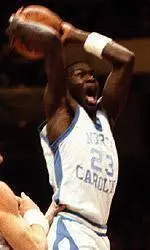
Lucas: Jordan, Williams Two Of A Kind
October 4, 2007 | Men's Basketball
Oct. 4, 2007
The following story appeared originally in the October issue of Tar Heel Monthly. All new THM subscribers receive a free copy of the basketball preview issue, which includes a special cover story on Tyler Hansbrough.
By Adam Lucas
It takes exactly 90 seconds for Roy Williams to make Michael Jordan angry.
That the Carolina head coach accomplishes this by proxy is all the more impressive.
Williams, you see, loves to tell the story of how he whipped Jordan in pool during the latter's undergraduate career. The defeat, according to Williams, sent Jordan into a two-day funk.
So it is only logical to ask Jordan about the episode. When discussing his career, any loss--even if it comes on a felt-covered table rather than hardwood--is notable.
The question comes early in an interview with the basketball superstar. It is ostensibly phrased as harmlessly as possible: "Is it true Coach Williams beat you in pool?"
Until this moment, Jordan has been the consummate charmer. He has used the megawatt smile. He has shaken hands. Now, he is frowning. His eyes flash. You have seen this look before. It is usually followed by some unfortunate soul being the recipient of a slam dunk on the head.
"He told you that lie?" he says in a serious tone.
Then he gives another smile, but it is not the wide one. It is a thin one, with his teeth barely showing.
"He did beat me," Jordan says. "But I don't think he could beat me now."
And how did you handle it?
"Not well. Especially because there was some trash-talking coming with it. It's hard to accept any defeat when you know there's going to be some verbal language coming with it. I was respectful since he was my elder, but I didn't handle it very well." (Much more of Jordan's exclusive interview will be part of Tar Heel Tip-Off, which airs next Friday at 2 p.m.)
There's the quintessential Michael Jordan in a 30-second capsule. Twenty-five years later, he still remembers the details of a meaningless game of pool that he lost.
And here's the quintessential Roy Williams in a 30-second capsule: twenty-five years later, he still remembers the details of a meaningless game of pool that he won.
These two men are starkly different. One is from the coast, the other is from the mountains. One is black, the other is white. One is blessed with phenomenal athleticism, the other saw his playing career peak with the junior varsity team.
And yet these two men are remarkably similar. They both come from humble families that valued hard work. They both prize loyalty and their Tar Heel roots ("Would I draft a Duke player?" Jordan says of his role as Charlotte Bobcats part-owner. "Probably. With some reservations.").
And they both are teeth-gritting competitors. Which might be why they remain such good friends over a quarter century after Williams followed Jordan around the courts of the ABCD camp for high schoolers to make sure no other colleges tempted the Tar Heel recruit.
"He is a fierce competitor," Jordan says. "When we play golf together, his whole attitude about winning is not too far from my attitude about winning. There are a lot of similarities between us. I don't get as angry and frustrated as he does. I channel my energy a little differently than he does. But that doesn't mean we don't hate losing the same."
For a glimpse into just how competitive Williams is, consider that Jordan is the man who famously stormed out of the gym when he believed the score was being kept incorrectly in a practice scrimmage. Pretty intense, right? And Jordan says Williams might be higher up the intensity scale.
That's a large part of the reason why Williams was inducted into the Basketball Hall of Fame last month. Sure, he has a great mind for the game, is one of the college game's best recruiters, and a quality tactician.
But here's his secret: he's never stopped working like the assistant coach who had to sell calendars to feed his family. That's how Williams supplemented his income as a young Carolina assistant, and it's how he has continued to work throughout his career. Other top-rung college coaches leave the bulk of recruiting to their assistants. Williams doesn't. During the season, it's not unusual for him to hop on a plane to personally see a recruit on his one off day a week from practice.
None of Carolina's players were born yet when Jordan played for the Tar Heels, but his legacy still carries significant weight with them. So it matters that Williams and Jordan have a relationship, and Williams still occasionally mentions the game's greatest player. His players will tell you that Williams's most frequent comment is simple:
"I've only had one player who could turn it off and on and still be successful," the head coach will say if he spots a lackadaisical player. "That was Michael Jordan.
"And he never turned it off."
Now maybe you understand why they've formed such a mutual admiration society. In Williams's first exhibition game as Carolina's head coach, twenty seconds remained before his team closed out a 97-59 victory. The game was over and most coaches would have treated it that way.
Not Williams. He saw one of his players, Jonathan Miller, get raked across the face with no call. He was as livid as he would have been if the contact had occurred against Raymond Felton in the game's opening seconds.
That's Roy Williams.
Oh, and this is Jordan--during the course of your conversation, he remembers the comment about the game of pool. At least three separate times, he references the fact that Williams once beat him...but that Jordan is now the superior player. "He was better than me at that particular time," Jordan says. "But right now I don't think he could beat me."
Maybe so. But one thing is certain: somewhere, Roy Williams is chalking a pool cue. A challenge awaits.
Adam Lucas most recently collaborated on a behind-the-scenes look at Carolina Basketball with Wes Miller. The Road To Blue Heaven will be released on October 1. Lucas's other books on Carolina basketball include The Best Game Ever, which chronicles the 1957 national championship season, Going Home Again, which focuses on Roy Williams's return to Carolina, and Led By Their Dreams, a collaboration with Steve Kirschner and Matt Bowers on the 2005 championship team.