University of North Carolina Athletics
Villanova Game Guide
April 3, 2009 | Men's Basketball
April 3, 2009
By Lauren Brownlow
The Basics
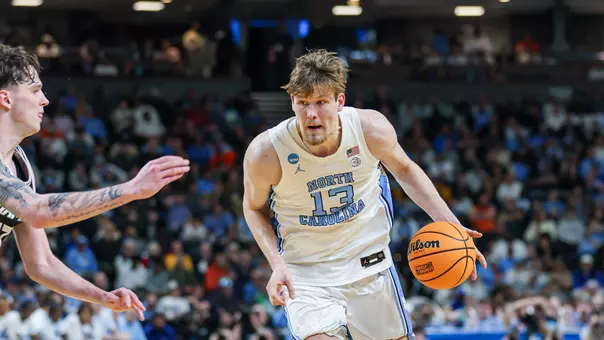
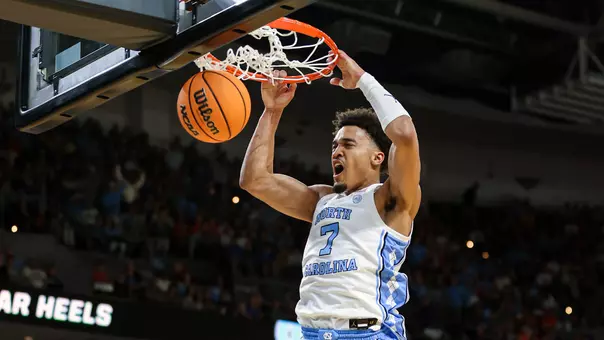
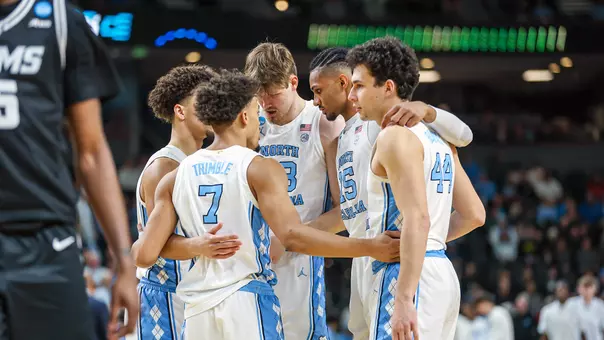
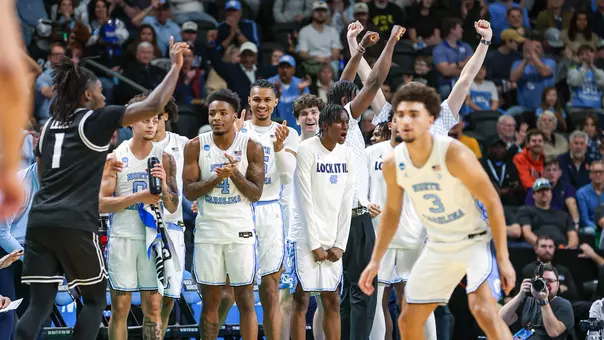
No. 1 seed North Carolina (32-4) will face off against the No. 3 seed Villanova (30-5) in the national semifinal. The Tar Heels are coming off of a 72-60 win over the No. 2 seed, Oklahoma, in the South Regional Finals on Sunday. Villanova is coming off of a 78-76 win over No. 1 seed Pittsburgh on a game-winning shot by Scottie Reynolds on Saturday. Villanova will be the third straight top 12 opponent that Carolina has faced in the Tournament; Carolina will be the second straight No. 1 seed Villanova has faced and the third straight top ten squad.
Carolina is 100-39 in its 41st NCAA Tournament appearance, including a 45-9 record a a No. 1 seed. This will be its first time playing a Tournament game in Detroit. Carolina has an 8-9 record in the national semifinals during its 17 Final Four appearances; Carolina has won the national championship each of the last three times it has won the semifinal game (1982, 1993, 2005). It has lost six of its last eight national semifinal games.
Villanova is 48-29 in the NCAA Tournament and 10-4 under Jay Wright. Villanova is making its fourth appearance in the Final Four and the first since winning the national championship in 1985. The Wildcats have a 2-1 record in the national semifinal. Not only is Villanova the lowest seed remaining, but the Wildcats also have the most wins in NCAA history as a lower seed (15). The Wildcats are 15-12 as a lower seed. This is Carolina's ninth Final Four appearance in the last 19 years.
Carolina leads the all-time series against Villanova, 9-4. The Wildcats have won the last two regular season meetings in 1996, but Carolina holds a 3-1 edge in NCAA Tournament games, winning the last meeting in 2005. Each time that the Tar Heels and Wildcats have played in the NCAA Tournament, the winner has won the national title all but once; the lone exception was the 1991 meeting when Carolina went on to the Final Four after beating the Wildcats but lost to Kansas. Caroline beat Villanova in the Regional Final in 1982 and the Regional Semifinal in 2005. Villanova beat North Carolina in the Regional Final in 1985 on its way to a national championship.
Game Time: North Carolina vs. Villanova, approximately 8:47 PM.
Last Time: Carolina beat Villanova, 67-66, on March 26, 2005 in the Sweet 16 played in Syracuse, New York. Carolina managed to win despite point guard Raymond Felton fouling out with 2:11 to go. Villanova had the ball down two points late in the game but a travel on Allen Ray after Melvin Scott had made two free throws to give Carolina a three-point lead sealed the outcome, although the Wildcats made a three at the buzzer for the final margin. Carolina out-rebounded Villanova, 42-33, but had just 11 assists to 17 turnovers. Villanova led Carolina 33-29 at halftime.
Rashad McCants led Carolina with 17 points (15 in the second half), including 9-of-10 free throws. Marvin Williams had 16 points, Sean May had 14 points and ten rebounds and Felton had 11 points and a career-high 11 rebounds. Melvin Scott, filling in for Felton, hit his only shot (a three-pointer) and two free throws, adding two assists and no turnovers. Randy Foye led Villanova with 28 points on 9-of-21 shooting (5-of-12 from beyond the arc). His teammates made just 3-of-16 three's. Kyle Lowry was the only other Wildcat in double figures with 18 points on 7-of-10 shooting. Villanova's leading scorer Allen Ray had just seven points on 2-of-14 shooting (1-of-10 from beyond the arc).
Radio Coverage: Tar Heel Sports Network coverage begins at 7:30 PM.
Injury Report: Ty Lawson injured his toe in practice on the Friday before the Duke game. He has played in the last three games and the pain is getting to be more manageable. Marcus Ginyard and the Tar Heel medical staff have decided it is best for him to take a medical redshirt this season. He had surgery on October 8th, 2008 to repair a stress fracture in his left foot. He attempted to come back and still had pain. He has gone through nearly a month's worth of intensive rehab to try to get back into game shape, but he still has pain in the foot. Will Graves has been suspended for the remainder of this season.
Storylines
Defending the Wildcats: Carolina allowed Oklahoma to shoot 44.4% from the floor, the lowest percentage it had held a top-100 team to since Duke shot 44% on March 8th. Prior to the Oklahoma game, the idea of having the Carolina guards double team Blake Griffin made many Tar Heel fans nervous, envisioning Griffin dishing it right back out to open teammates who drained three's. His teammates did have some open three's (and made just 2-of-19), but Carolina had arguably its best defensive game of the season considering the opponent and the way it not only double-teamed effectively, but also rotated quickly to find open shooters.
His team played so well that Roy Williams paid them that ultimate - and for this team, elusive - compliment." I think we're better at seeing the big picture, not just staring at our man or staring at the ball. We're seeing what the other team is trying to do," Williams said. "I think we're better at reacting or reacting because we see the big picture. We're a little better denying, but not a great deal. We're a little better at keeping the basketball in front us, but not a great deal. But I think we are better as a team not just a one-on-one kind of thing. You'd love to have five guys that never got beat on the dribble, and I've had a couple of teams like that that were really good and made defense a lot easier. We're a much better team defensively at seeing the big picture."
In Carolina's seven games against the top 23 teams in offensive efficiency (all Carolina wins), opponents shot 44.1% from the floor and 48.9% from two-point range; all other opponents shot 40.7% from the floor and 43.8% from two-point range. The top 23 teams also averaged 19.3 free-throw attempts compared to 15.4 by all other opponents. Also, the seven top-23 opponents scored 62.1% of their points from the foul line and the paint combined; all other opponents scored just 53.9% of points in the paint and at the line.
But Carolina faced its stiffest defensive test of the season in the No. 5 and No. 6 offenses in Gonzaga and Oklahoma, respectively. Prior to that, it had played five games all season (two against Duke) against the top 23 and allowed those teams to average 75.6 points on 43.7% shooting (40% from beyond the arc), averaging an insane 8.8 made three's. But last weekend, the two best offenses Carolina has faced averaged just 68.5 points. Carolina held them to 45.5% shooting and 21.4% from beyond the arc. The biggest difference is that Oklahoma and Gonzaga combined to shoot 60% from two-point range and average 38 points in the paint; the other five games against the top 23, Carolina's opponents averaged 30 points in the paint and shot 45.5% from two-point range.
Villanova is a team that has had issues with teams like Louisville that pressure, trap and force turnovers. After turning it over on average 18.5 times in two losses to Louisville, Villanova faced two teams ranked higher than Louisville in turnover percentage - UCLA (21st) and Duke (30th) and turned it over a combined 23 times in both games. Louisville is 43rd in turnover percentage; Carolina comes in at 160th, forcing opponents into turnovers on 20.4 percent of possessions. Duke and UCLA managed only a combined ten points off of those turnovers.
Carolina has done its best work by forcing opponents into turnovers and then turning those into points, slowly demoralizing opponents and taking their legs away. Carolina has turned 61 opponent turnovers into 80 points in the NCAA Tournament. In the first half, Carolina has averaged 13.0 points off of 9.0 turnovers; the 13 points off turnovers are a number that many teams would be happy to score in a single game. But that's how Carolina has set the tone and it seems to have given Carolina early defensive confidence that it builds on throughout the game.
But of course, Villanova is a different test for this Carolina defense. For example, Duke scored 52 points in the first half of the first game against Carolina. To put it in perspective, Villanova held the Blue Devils to 54 total points in the game. Certainly that says as much about Villanova's defense, but it also shows that Carolina has at times had trouble containing perimeter-oriented teams. Some have made a comparison between Villanova and Duke; the only real similiarity is a propensity to penetrate and kick to a teammate or finish at the rim. The difference - and an important one - is the speed and finishing ability of the Villanova guards, plural. There is not necessarily a guard as talented as a Toney Douglas or a Jeff Teague, but the fact that there are 3-4 guards capable of doing damage makes it a unique challenge.
"We've faced guards this whole ACC season. We haven't had the best of performances sometimes, but to play so well against Oklahoma's guards kind of gives us a boost," Bobby Frasor said. "We know we've just got to contain the ball because if they're getting in the lanes and kicking for three's or if people are open or dropping it off to the big guys for dunks, it's going to be a long day."
Still, Carolina has faced talented guards that can create in the last three rounds and held them relatively in check. Most of Willie Warren's 18 points came when the game was decided and Gonzaga's Matt Bouldin (who killed the Tar Heels two years ago) shot just 3-of-10.
Ty Lawson says the difference between these games and games against Wake Forest and Boston College has been partly defensive improvement and part strategy. "Those two games, we had different types of game plans because we went under ball screens and allowed them to shoot over it and then they had to come out and they went around us," Lawson said. "Right now we're playing like we normally do. We didn't do any changes to our defensive game plan. We're stepping out on ball screens. It's easier to not let the guards get in the lane. If we keep playing like this, things will be pretty good."
If there is a concern with Carolina, it's defensive rebounding. Gonzaga sent its team back on defense most of the time and nabbed only four offensive rebounds, grabbing just 12.9% of its missed field goals. But Carolina's other three NCAA opponents have averaged 16 offensive rebounds per game and 16.3 second-chance points. That's nothing compared to Villanova, a team that has averaged just 13 offensive rebounds but has converted those into a whopping 19 points. Against Duke, a team that Carolina averaged 20 second-chance points against, the Wildcats turned 13 offensive rebounds into 25 second-chance points.
Carolina can play the best half-court defense for 34.5 seconds of a shot clock, but if it doesn't box out on the ensuing shot, it will have all been for nothing. It was a problem against Oklahoma against admittedly one of the nation's best rebounders, but it has been a problem against less gifted teams like Radford and against LSU, a team with height but also athletic guards. "I do believe defensively in the first half (against Oklahoma) we were really good. Second half, Tyler (Hansbrough) was really good," Williams said. "We did a sorry job of boxing out, and they kept getting offensive rebounds for baskets. We blocked the shot, and they got the rebound and put it in. They shot an air ball, they got the rebound and put it in. The ball wasn't really bouncing quite as good for us."
Maintaining offense composure against a tough defense: The rough start against Kansas in last year's Final Four will be mentioned in this game guide for the first and last time here. The reason it is being mentioned is because of its relevance - Villanova has been doing to other teams what Kansas did to the Tar Heels. In a little less than seven minutes, Carolina went from facing a seven-point deficit to a 28 point-deficit, scoring just two foul shots and shooting 0-of-10 from the floor. Carolina did not get a single offensive rebound in that stretch and committed three turnovers. Kansas scored eight of its 23 points in that stretch on Carolina's three turnovers alone. The Tar Heels began to look frustrated, taking quick shots and it affected their play on the other end of the court as well. "We don't want to come out sluggish or lackadaisical and let them jump on us because we know how hard it is to dig yourself out of a hole and waste a lot of energy doing that," Danny Green said.
It's relevant to this year's team only in the sense that many of them can't stop thinking about it. But it's also relevant because Villanova has shown that it is capable of dominating on the defensive end in such a way that it can really frustrate opponents. Villanova has been demoralizing some very talented opponents early and often in this Tournament, particularly UCLA. The Bruins looked shocked from the start of the game at how fearlessly aggressive the Wildcats' style was. It took them some time to recover and really, the Bruins never did.
During the NCAA Tournament this year, Carolina's opponents have really made significant runs to make things close, runs that aren't always affected in the final margin because of the way the Tar Heels have been able to adjust. Oklahoma made a run late at the Tar Heels and played much better defense on Carolina in the second half, but the Tar Heels were able to pull away. "In the LSU game, they put pressure on us when we came out in the second half. This game, we were used to it," Lawson said. "You can't get uncomfortable or feel pressured or rush stuff in the NCAA tournament because that leaves turnovers and bad shots and things like that. When times are tough, just call a play and relax everybody and just get a good shot."
But Villanova has been able to be effective consistently on the defensive end, rebounding much better than a team with its size disadvantage should and going after loose balls with reckless abandon. Villanova has faced the No. 2, No. 3 and No. 11 offenses per Ken Pomeroy (Pitt, UCLA, and Duke, respectively). Pitt shot 48.1% against the Wildcats in the narrow loss, but managed just 40.7% in a regular-season loss to Villanova. Duke shot its lowest field-goal percentage in its NCAA history, 26.7 percent. UCLA shot 42.6% from the floor but managed just 69 points and committed 20 turnovers. Carolina is rated the No. 1 most efficient offense.
Marquette is the highest-ranked team (9th) that Villanova has faced in the regular season besides Pittsburgh. The Golden Eagles shot 46% against Villanova in a win, 50.9% in a loss and 33.3% in a narrow loss in the Big East Tournament. Syracuse was the tenth-most efficient offense; the Orange lost twice to the Wildcats and shot a combined 42.1% from the floor, attempting over half of its shots (68 of 133) from beyond the arc and making just 32.4% of those. Connecticut (No. 13) shot 47.4 percent and West Virginia (No. 19) shot 50 percent.
Another thing Villanova has been very good at doing is getting opponents to attempt most of their shots from the three-point line. In fact, opponents rank 340th of 344 teams in percentage of points from two-point range (44.2 percent) and 17th in points from the three-point line (34.2 percent). Carolina has faced teams that force teams to score from beyond the arc already in this Tournament - Gonzaga's opponents needed to score 34.6% of their points from there (12th), Radford was 22nd at 33.2 percent and Oklahoma was 37th at 32.2 percent. Carolina scored just 23.4% of its points against those three teams from the three-point line; the highest was 33.7% against Gonzaga. But Gonzaga wasn't allowing teams to put up 98 points as Carolina did.
Carolina has also faced nine other teams in the bottom 100 in terms of opponents' points scored from two-point range. Three of those opponents have come in the NCAA Tournament. Oklahoma allowed opponents to score just 50% of their points from two-point range; Carolina scored 42 of its 72 (58.3%) from inside the arc. Gonzaga allowed just 48.6% of points from inside the arc; Carolina scored 51% from two-point range. Radford allowed 48.3% and Carolina scored 65.3% of its points from two-point range. It was against teams like Miami and Florida State that Carolina struggled the most against; Carolina managed just 43.7% of its points from inside the arc against the Hurricanes and 46.7% against Florida State. Miami's opponents are 287th in points inside the arc; Florida State's are 316th.
The battle at the foul line: Here's an interesting tidbit - despite dominating three of its first four NCAA Tournament opponents, Villanova has been out-shot from the foul line in each of its last three games. In fact, opponents have scored 22.9% of points from the foul line; the last three opponents have scored 29.1% of their points from the charity stripe. On the season, nearly a quarter of Villanova's points have come from the free-throw line. The Wildcats average 24.4 attempts per game and make 75.3 percent of them. Opponents have averaged 21.2 attempts and made just 68.2 percent.
Of the four Final Four teams, Carolina and Connecticut are in the bottom 11 in points allowed from the foul line. Carolina is 333rd of 344 teams, allowing 15.5 percent. Connecticut is last, allowing just 13.7 percent. Carolina has averaged 15.8 fouls per game but in the last two games, it has averaged 18 fouls. Carolina has had success when it can keep opponents off the foul line. In 28 games that Carolina won fairly comfortably this season, opponents averaged 14.9 free-throw attempts, making ten. In eight close games (four losses), opponents averaged 15.1 made free throws and 20.4 attempts. In losses alone, opponents have attempted 21.8 free throws.
Even though Carolina has won its last two games relatively comfortably, the Tar Heels have averaged just a +1.5 differential in fouls the last two games and opponents have attempted only four fewer free throws, averaging 18.5 attempts while Carolina has averaged 21.5. In four losses this season, Carolina's opponents have actually averaged more fouls (21.8) than in Carolina wins (20.1). But the foul differential drops from +4.7 in Carolina's favor in 32 wins to just +1.5. Carolina's fouls also jump from 15.6 in wins to 20.3 in losses. Carolina might have some added depth but for awhile against Oklahoma, things looked a little dicey as Carolina's entire front line seemed to be in foul trouble.
Villanova has managed to have a fantastic season despite averaging 19.2 fouls per game. That is largely because the Wildcats play a tough, physical defense designed not only to intimidate opponents but also to tire them out. Villanova has averaged 23 fouls in the last three games, but opponents have averaged 21. Opponents are also converting on just 69.9% of those attempts in the last three games while Villanova has made 82.2%, including 95.7% (22-of-23) in a tight contest against Pittsburgh. Carolina needs to take advantage of every chance it gets at the line and do its best to stop Villanova's penetration without fouling.
At The Game
Listening to the Tar Heel Sports Network at the game: The in-stadium frequency at Ford Field will be 90.3 FM.
Watching At Home
Turn down the sound: If you're watching at home while listening to the radio or over the computer via Carolina All-Access, there will inevitably be some delay. For the reason - and a possible solution - click here.
A full list of THSN affiliates can be found here.
CBS coverage: The game will be available on CBS. Jim Nantz and Clark Kellogg will have the call.
Names To Know
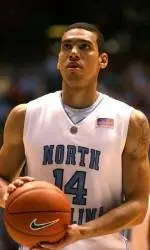
Danny Green: As predicted, Green was Carolina's wild card against Oklahoma, particularly in the first half. When his teammates were struggling offensively in the first half, shooting 9-of-25 from the floor (36 percent), Green carried the Tar Heels, shooting 4-of-5 from the floor. In fact, Green had nearly half of Carolina's first-half points (14 of 32) and had made both of Carolina's three-pointers (2-of-3). He has quietly come out of a shooting slump that plagued the normally-confident Green, but he has made Carolina that much more lethal as he regains that confidence. In the last two games, Green has made 11-of-20 field goals (55%) and 5-of-10 three's (50%), averaging 15.5 points, four assists, 2.5 steals, 1.5 blocks and just one turnover.
Green is also a wildcard for Carolina against Villanova because of his perimeter defense. Roy Williams has said that Green is perhaps Carolina's best help-side defender but one of the worst on the ball, often losing track of either his man or the ball. He has had performances on both ends of the spectrum, harassing Gerald Henderson in the final game of the season, allowing A.D. Vassallo to seemingly score at will in the ACC Tournament against Virginia Tech, then helping hold Matt Bouldin to 3-of-10 shooting against Gonzaga. Carolina needs that good Green, the one who can make a game-changing steal or block, that gamble that pays off, rather than committing a foul or leaving his man wide open. Green has fouled out of two of Carolina's four losses this season and the Tar Heels need him on the court.
Tyler Hansbrough: Prior to the Oklahoma game, Tyler Hansbrough had failed to make at least one field goal in the second half while at full health just twice all season. Carolina lost one game (at Wake Forest) and nearly lost another (at Miami). In fact, his one shot attempt marked his fewest second-half attempts since Miami. That game seems now to have represented a bit of a turning point for Hansbrough. He attempted just one second-half shot but picked up a key charge at the end of the game that pretty much won it for the Tar Heels. He took just one shot - an ill-advised dunk attempt - in the second half and made all four free-throw attempts against Oklahoma. But he had three assists and in fact has averaged 1.5 in his NCAA Tournament career, 1.3 in this NCAA Tournament. He also won his first Defensive Player of the Game Award of the season for his hard work in the post against Blake Griffin and company.
Since and including the aforementioned Miami game, Hansbrough has averaged 1.4 assists; 17 of his 31 assists have come in the last 12 games and 21 have come in the last 15 games. He has also averaged 2.8 steals, 8.0 rebounds and 3.3 offensive rebounds in six postseason games compared to seven rebounds, 2.6 offensive rebounds and 0.7 steals in 30 regular-season games. His shot attempts also went down from 15.0 in three postseason games without Lawson to 8.7 with him in the last three games. He appears to have fully embraced the idea that his teammates are capable of stepping up and making big plays; it doesn't always have to be Hansbrough that takes over a game. The transition for him this year from struggling to finding his groove has been rough at times, but it appears to have completely smoothed over as Hansbrough has his first three-game stretch shooting 50% or higher from the field this season, all against quality teams.
"If anything, I've learned more this year than I have any other year and that's how to stay within this team and do my part and whatever else," Hansbrough said. "When guys are stepping up like Wayne stepped up big for us in a couple stretches and Ty has been pretty big for us when we need some baskets, when guys like that are playing well, sometimes you have to spread the ball around and do your part, which my part is get some rebounds and play some defense."
Still, Hansbrough's low-post prowess and ability to foul out the opponents' front lines is something that Carolina will need on Saturday. The senior has had four or more fouls seven times this season; Carolina has lost three of those games and almost a fourth at Florida State. Hansbrough showed in that Florida State game and in other games that he can move his feet and stay in front of a quick guard on the perimeter if necessary. But he will need to beware of the quick Villanova guards trying to get to the basket; it will likely be their goal to get him in foul trouble quickly and that's something Carolina tries to avoid.
Ty Lawson: While it's unfair to say that Carolina goes only as Ty Lawson goes, the statistics seem to somewhat back that up. The only Tar Heel shooting a higher percentage in Carolina's wins is Ty Lawson, making 57.6% of his field goals and 51.1% of his three-pointers in Carolina's 30 wins this season. In the three losses he has played in, he has shot 35.3% from the floor and 30.8% from beyond the arc. He also has 11 assists to 12 turnovers in the three losses compared to a ridiculous 205 assists to 49 turnovers (4.2 ratio) in 30 wins. In the NCAA Tournament so far, Lawson leads Carolina in field-goal percentage (57.1%), three-point percentage (63.6%) and has an insane 20 assists to just two turnovers.
Oklahoma had cut a 21-point Carolina lead to 12 points when Lawson responded by draining two free throws and blocking a shot to stem the tide. But he will face a tough test in the Villanova defense, a unit that has recently faced two of the best point guards in the country in Levance Fields and Darren Collison. In two games against them, Fields - the only point guards in the nation with a better assist-turnover ratio than Lawson - had 10 assists, three turnovers and five fouls. Collison, an early front-runner for the Cousy Award and a consistent performer all season, was frustrated into one assist and five turnovers.
Lawson has shot 2-of-13 from two-point range and 4-of-17 from the floor in the two NCAA Tournament losses he has played in. In the wins, he has shot 54.1% from the floor and 54.7% from two-point range. Villanova will not give up anything to Lawson easily but he has shown his growth on the court not only through his newfound leadership abilities, but also by his ability to feel out a game early on, get his teammates involved and comfortable and then take over down the stretch if necessary. It won't be as easy as that, but he has shown he can do it against some very good defenses this season.
Scottie Reynolds: Before the 6-2 junior guard hit the game-winner against Pitt, he had made just 3-of-10 shots (0-of-3 three-pointers) but had made all seven free throws. Still, that play showed just how much Reynolds' penetration, skill and finishing ability around the basket can change any game. His performance in Villanova's wins and losses make it easy to see why the Wildcats win or lose most games - 31.8% shooting in losses, including 6-of-31 from beyond the arc (19.4%) to go along with three assists, 3.4 fouls and 4.6 turnovers. But in the Wildcats' 30 wins, he has shot 42% from the floor and 38.2% from beyond the arc, averaging 16.2 points, 3.4 assists and just 2.2 turnovers, committing only 2.1 fouls and adding 1.5 steals.
In the NCAA Tournament so far, he hasn't struggled but he hasn't played as he would want to, averaging 12.5 points (third on the team) on 35.7% shooting, 22.2% from beyond the arc. He also has five assists, ten turnovers and five steals. Reynolds has shown what he is capable of, averaging 22.3 points in the three games following Villanova's final regular-season loss to go along with five rebounds, 3.3 assists and 2.7 steals. He turned it over just four times in that span and shot 22-of-38 from the floor (57.9%), making 12-of-21 three's. Then in the next two games, he showed that he is capable of struggling as well. Against Louisville in the Big East Tournament and in the first round when Villanova struggled with American, he had ten points combined on 3-of-13 shooting (2-of-9 from beyond the arc), adding five assists to ten turnovers.
The Wildcats' success or how well they are going doesn't depend completely on Reynolds, but he is a guy who can win games for them seemingly on his own, dominating opponents. Carolina can't let a guy like that get confidence early on.
Dante Cunningham: The 6-8 senior forward has been incredibly important to Villanova this season. Normally a guard-heavy team, Cunningham has given Villanova a consistent low-post presence capable of both scoring against and defending opposing post players. Cunningham has shot 50% or better in 26 of the Wildcats' 37 games this season. He has scored in single digits just four times; Villanova lost two of the four games and won one narrowly. He has ten double-doubles this season and two of those have come in the NCAA Tournament.
Cunningham leads the Wildcats in the NCAA Tournament in scoring (17.8 points per game) and rebounding (8.3 per game). He has shot 52.9% from the floor (first on the team) and is second in both offensive rebounds (ten), free throws attempted (22) and blocked shots (six). In the Pitt win, Cunningham had 14 points on 6-of-11 shooting, adding five rebounds, two assists, one block and four fouls in 30 minutes. If there has been a problem for Cunningham this season, it has been foul trouble. He has had four or more fouls in 14 of 37 games this season for the Wildcats; of those, Villanova has lost three. He has had three or more fouls in five of Villanova's losses.
He has been fairly consistent, even in Villanova's losses, shooting 52.1% in losses to 53% in wins and averaging 14.7 points in the losses compared to 16.7 points in the wins. The biggest difference is that foul trouble has limited him significantly in the losses - he has averaged 3.4 fouls in seven losses compared to 2.5 fouls in the 30 wins. He's not the only Wildcat that can rebound, but he is the most effective post-up player and Carolina will need to go at Cunningham early and often if it really wants to limit the junior star.
Dwayne Anderson: Danny Green has always been on his own as an x-factor in the NCAA Tournament. Anderson has been that ingredient for Villanova, particularly down the stretch. Both Green and Anderson are 6-6 senior guard/forward players who bring a lot of energy to their teams. In the NCAA Tournament, Anderson leads Villanova in steals (eight) and three-point percentage (35.3 percent). He is also second in scoring with 15.0 per game and is second in rebounds, right behind Cunningham, with eight per game. He is also second in NCAA field-goal percentage, shooting 52.4 percent from the floor and is leading the team in offensive rebounds with 11.
But the most important thing about Anderson is that he just makes plays when Villanova needs them. With Pitt up 67-63 with 2:54 to go in the East Regional Final, Anderson stole the ball, laid it in and converted a three-point play. It was a play that Pitt head coach Jamie Dixon said changed the momentum of the game. Then Anderson drained a three-pointer with 1:51 to go that turned a one-point Villanova deficit into a two-point lead.
In the last two minutes of games this season, Anderson is 9-of-9 from the floor, 3-of-3 from beyond the arc and 11-of-12 (91.7%) from the foul line. Of the 35 field goals the Wildcats have made in the final two minutes, he has scored nine of them and assisted three. He has an uncanny ability to come up big in all situations that the Wildcats need him; in the two close NCAA Tournament games (American and Pitt), he shot 14-of-24 from the floor and 6-of-11 from beyond the arc, making all eight of his foul shots and averaging 21 points. In the other two easier games (in terms of margin), he averaged nine points and shot 8-of-22 from the floor, 0-of-6 from beyond the arc.
In the Villanova wins decided by five points or fewer this season (the Wildcats have seven such wins), Anderson has averaged 11.9 points and shot 45.8% (37.9% from beyond the arc) and averaged 6.7 rebounds; in all other games, he has averaged 8.1 points and 5.8 rebounds, making just 30.3% of his three-pointers. His steals also go up from 1.4 to 2.0 in close games. It's clear he becomes much more aggressive when the game is on the line; his shot attempts go up from 6.6 to 8.4 and his free-throw attempts go from 1.6 to 2.7; he also makes a ridiculous 94.7% of his foul shots in close wins compared to 78.4% in all other games.
Quotables
"Before games, halftime, you look at Ty (Lawson) and it's like, `Is he going to fall asleep right now?' Then he'll hit a three to start the half, pounding his chest, flexing and it's like, `Wow, where did that come from?'" -Bobby Frasor
"I'm one of those guys, when I was born I had no money and when I die, I hope the last check that we write is to the guy that gave us the casket and I hope the check bounces." -Roy Williams
"Every basketball coach in America should have wanted Tyler Hansbrough to never miss a shot and have the greatest year of any player in the history of the world because every time he missed a shot, an agent's getting ready to tell somebody, `You saw what happened to him. You shouldn't come back.' His whole deal about coming back was because he loved to play and he loved college." -Roy Williams
"There's one version they might have decided not to use. When Metallica, who I wouldn't know from a blindside pick, yells something about `Put your pants on.' They had this girl - at one point it was going to be Heidi Klum, and another point it was going to be somebody else - the choreographer, who taught me how to slide so gracefully on the stage, is standing right there beside of me and so they said, `Put your pants on,' and she says, `Me, too?' I look over and I said, `You're good.' It got a standing ovation from the 75 people there, spontaneously like that. ... They evidently decided not to use it." -Roy Williams on his experience filming the Guitar Hero commercial
"They've got five players and one coach up there, and they've got all of these waters and you've got to pour them in these little cups that's got their logo that they make their money. ... But back there they have this holding room for us, and we walk back in there and they've got one dadgum cookie. I'm not talking about a big cookie, I'm talking about one little cookie, and it's me and five players. So I chastised them a little bit, and the next day it was great - we had three dozen cookies back there. It was a good deal." -Roy Williams
"There was nothing unusual playing in a big building - nothing. What's unusual is you're sitting there and you're looking at people's shinbones. I could give a darn if we played on the moon, but when the court is up above you, that is extremely different than anything I've ever encountered. I've almost fallen off a lot of places, but never off of the court." -Roy Williams on Ford Field
"I've seen him (strength and conditioning coach Jonas Sahratian) get Coach (Dean) Smith pulling a dadgum sled, so I don't give a darn what he does to Tyler Hansbrough. ... Coach hasn't worked out since the day after he was born, so it was a big change for Coach. Getting Coach Smith up at 8:00 in the morning, those old-timers around here know that's not easy either. I was gone one day recruiting and somebody told me that he had Coach Smith pulling a sled. So I said, `Jonas, don't be doing that. I don't know what I'm talking about, but I don't want to hear about Coach Smith pulling a sled anymore.'" -Roy Williams
Lauren Brownlow is the managing editor of Tar Heel Monthly.