University of North Carolina Athletics

Lucas: Sophomore Surge?
October 27, 2011 | Men's Basketball, Featured Writers, Adam Lucas
Oct. 27, 2011
By Adam Lucas
It doesn't matter if Dean Smith really ever said it (although he did). The maxim that college basketball players show the most improvement between their freshman and sophomore years has become an accepted part of Carolina basketball life.
There are facts to back it up, even among players who had very productive freshman campaigns. Kenny Smith was perhaps on his way to guiding the Tar Heels to the 1984 national title before being sidelined by a wrist injury; during his sophomore season, he improved his assist/turnover ratio by almost fifty percent. The Hubert Davis who looked lost as a freshman, earning just 7.3 minutes per game and scoring 3.3 points per outing, turned into a reliable 20+ minute per game player as a sophomore, boosting his scoring average near double figures.
Even later in Smith's career, the philosophy held true. Jerry Stackhouse and Rasheed Wallace had good but uneven freshman seasons for a 1993-94 team stocked with talent. They led their less talented sophomore team to the Final Four, with Stackhouse boosting his shooting percentage over 50 percent from the field and Wallace nearly doubling his scoring output while hitting an incredible 65.4% of his shots from the field.
But are those numbers just relics from the musty pre-high definition era? It used to be that a typical career arc spanned four seasons. Now, impatience begins immediately after the first regular-season game, or in Harrison Barnes's case, immediately after a subpar freshman exhibition against Barton College. In 2011, maybe development is noticeably different.
At least one player with experience doesn't think so.
"Last year's freshmen could make phenomenal jumps this year," Tyler Zeller says. "At the end of the year, they showed people what they are capable of doing. If they can be close to that same point at the start of the year, and then show that same improvement over the course of the season, by the end of the year they will be phenomenal players."
Some of the progress is intangible. A greater comfort level with college basketball means more minutes--and more productive minutes. Already, Barnes has been notably more vocal in practice. Last October, he was just trying to endure from practice to practice. This October, he's taking on a leadership role.
Teammates say that's to be expected as underclassmen adjust to the expectations.
"We know what to expect," Reggie Bullock says. "My freshman year, I was worried about what practice would be like, how much running we'd have to do, whether practice would kill us. Now I know what to do and I can guide the freshmen and tell them things they don't have to worry about that I know I was worried about. I know the game better and I know the tendencies of our players."
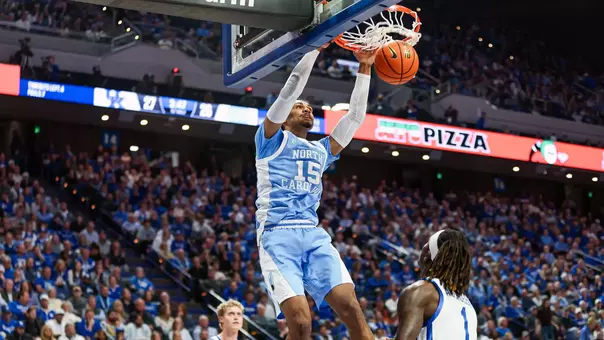
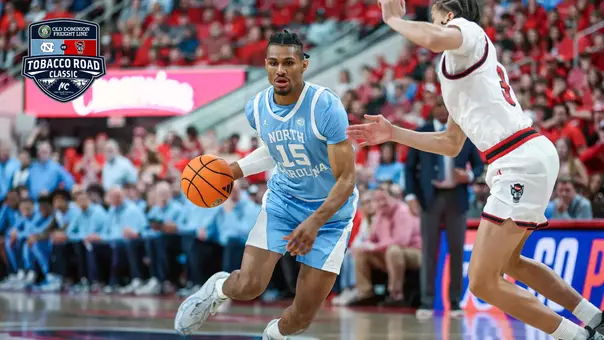
That, of course, is giddy news for Tar Heel fans. There is even an optimistic case study already on the roster, as John Henson evolved from a sometimes overmatched freshman to a sophomore who controlled games defensively and more than doubled his scoring and rebounding output. The prospects of a better Barnes, or a wiser Kendall Marshall, or a more productive Bullock are the foundation of much of the optimistic speculation surrounding the 2011-12 team. Williams himself contributed to the buzz, saying in the Tar Heel Monthly basketball preview issue he expects to see a "more dominant" Barnes because of the sophomore's 15-pound weight gain.
The Iowa native is typically understated about the expected progression. "We're going to be bigger and faster and stronger and more skilled," Barnes says. "We know how to play the game. To say there's one specific area that could jump up as a sophomore, I don't think that's right. I think it's our entire game that will be different."
Barnes was a first-team All-ACC pick as a rookie, with Marshall a third-team All-ACC selection and first-team freshman All-America by The Sporting News. Dramatic improvement from that starting point, as the legendary Smith's theorem suggests could happen, is a heady proposition.
From court level, Marshall believes he and his classmates will follow what feels like a natural curve.
"Our main goal is improvement all the way to a national championship," the point guard said. "Reggie, Harrison and myself have all made great strides since the end of last season. Reggie is healthy now and his confidence is high. Harrison is more efficient. He's using less dribbles and taking less shots to get the same output. He's realizing how strong he is and that he can use his body to his advantage. My confidence is a lot higher. I know what I can do on the court."
Adam Lucas is the publisher of Tar Heel Monthly. He is also the author or co-author of six books on Carolina basketball, including the official chronicle of the first 100 years of Tar Heel hoops, A Century of Excellence, which is available now. Get real-time UNC sports updates from the THM staff on Twitter and Facebook.