University of North Carolina Athletics
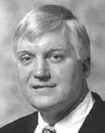
A Conversation With Ken Browning
April 5, 2000 | Football
April 5, 2000
Ken Browning was one of the most successful high school coaches in North Carolina high school football history. His Northern Durham teams had a record of 178-35 during his 18-year tenure as head coach.
His 1993 team won the state 4-A championship, and he was twice named North Carolina coach of the year. He is one of only three coaches to win both the state title and Shrine Bowl in the same year.
Former head coach Mack Brown lured Browning to Chapel Hill in 1994, and Coach Browning has played a very big role in Carolina's defense since arriving at Carolina. This past February coach Carl Torbush tabbed Browning to replace him as Defensive Coordinator.
rowning talks about his defensive squad as well as what it takes to produce a championship football team.
y: Joe Bray
TarHeelBlue.com
TarHeelBlue: How has your job changed, both on the field and off, since you became the defensive coordinator?
Coach Browning: "Now I'm not only worried about my position, but I have to be more concerned and involved with the entire defense. Not that I haven't tried to pay attention to the whole defense in the past, which I have, but it is different to be involved in every aspect of it.
"Obviously you have to have confidence in the position coaches, and I think they're doing a great job this spring.
"Sometimes I have to scrip a certain part of practice ahead of time, say a skeleton passing drill where we work six on offense against seven on defense with no down linemen and no pass rush. If I'm working with my defensive linemen, I will have scripted the coverages I want to feature, then Coach Case and Rucker will handle the guys who are in the drill."
TarHeelBlue: You mentioned Coach Case. Are you comfortable with the aggressive style of defense he prefers?
Coach Browning: "He's not only extremely qualified, but I think he's got a gift for teaching that type of coverage, plus he's got great courage. He feels that that's the best way to play.
"Not that you don't need to have change ups off of that. Nobody plays one coverage anymore for a whole game. It's a variety of coverages that you mix, but we do want to be good at man-to-man.
"When we've been really good here, we majored in it, playing it probably 65 or 70% of the time. A lot of that depends on how good you can rush. The better you are at coverage, the easier it is to rush. The better you are at man coverage the more people you can put in the box and get the running game slowed down."
TarHeelBlue: Do you favor a 4-3 scheme or a 5-2 scheme?
Coach Browning: "We'll be somewhat multiple. A lot of that depends on our personnel, plus part of it is the offensive personnel grouping that you're playing against. We'll do both."
TarHeelBlue: Who moves up in the 5-2?
Coach Browning: "The guy who moves up most of the time for us is called the Rover. More often than not this spring it's been Sedrick Hodge and/or Quincy Monk. They come up on the edge most of the time and the other guys slide over.
"Now we do have a front where we bring Brandon (Spoon) up in the middle some. We worked on that some this spring. I think we'll continue to do it both ways."
TarHeelBlue: What dictates your choice?
Coach Browning: "Offensive personnel grouping, maybe a coverage or a certain pressure that you want, if you want to bring in an extra rusher. If you want to get to the quarterback, you don't want to start from four yards back.
"Sometimes we change just for variety. I don't know that you really have to be that multiple to be good, because if you can play a few things well usually that's better than playing a lot of things not very well. But we do want to be multiple.
"We've probably worked more 4-3 this spring that we have anything else. We've worked some Shaded 50, but we didn't do too much of the Bear type package, which is usually like a five-man front. Today (Tuesday) was really the first time we've worked on that package this spring."
TarHeelBlue: Who's your "quarterback" on the defense?
Coach Browning: "You really want to have two of them. You want to have one at middle backer, and this past week we've worked Brandon in there. The past couple of weeks he wasn't involved in contact, but this week he has been. He coordinates the front part of it.
"Then normally one of your safeties, usually for us the free safety, does the same thing in terms of coverage."
TarHeelBlue: How much leeway do they have in calling a coverage?
Coach Browning: "They get a call from the sideline, a front call and a coverage call. I give the call to the linebacker, and Coach Case gives the call to the safety. I tell him what to call. I'll say 'strong bear up, one up', and I'll signal the first part of that, and he'll signal the second part.
"Sometimes you may make the call off a wristband. If it's too wordy a call then you may use a band call. If it's too many words, I may just signal 'band 3' for example. If we're playing against a no-huddle team, all our defensive players may have the plays on their wristband and look to you for the call."
TarHeelBlue: Are there any special talents required to play defense?
Coach Browning: "A great deal of playing defense involves good vision and being able to react to a key. Knowing what a key is and how to react to it is one of the more important parts to playing defense. Having great physical talent helps if you know how to react to keys. I told someone the other day that if you don't read your key and you're going the wrong way, being fast isn't going to do anything but get you further out of position.
"Every position on defense has to know how to read keys. A major focus for us this spring has been on identifying and reacting to keys.
"There's no silver bullet, no one key that tells you everything you need to know. Usually it's a combination. For example, for a linebacker it's what a back and a lineman do. You may get your primary key off the back, but the lineman will give you a secondary key, or vice versa.
"For a defensive back it's important to be able to see the receiver and the quarterback. It's hard to be real good if you don't have the vision to see both. That was one thing that made Dre' Bly special. He could play man coverage and see the quarterback so well.
"Defensive linemen usually have a visual key of a lineman, and then there's always a pressure key involved. That's where somebody from a side you might not see can angle block you. You've got to be able to feel it and react to it.
"There are multiple keys that guys have to develop and learn to read. Some guys are more instinctive with it than others, but with proper teaching it can be learned. If they get enough repetitions at it, it's something they can master.
"Until they get to that point they don't play as fast as you want them to play, because it takes them too long to sort something out."
TarHeelBlue: What do you consider the strengths of our defense?
Coach Browning: "Up to this point this spring our attitude has been much improved. Our approach to practice and the willingness to play harder for longer periods of time has been good. We've had some long, hard practices where I thought we gave a good, sustained effort.
"I'm not sure if we're as fanatical about pursuit as we need to be, but there's been a big improvement. We've got some guys that have to get better. That's where it becomes a peer pressure thing. That's where leadership starts to emerge.
"We're developing a broader base of leaders than we've had the last couple of years. I think Brandon has leadership ability. This last week he's meant a lot to us.
"Other guys don't respect leadership unless that guy's doing what he's supposed to do. They don't listen to what a guy says, they watch what he does.
"On the front part of the defense, I think all those guys will be better leaders than they were last year. Ryan Sims has the chance to be an outstanding leader. His improvement and his ability to make plays in scrimmage are earning him a lot of respect.
"Anthony Perkins will be a good leader for us because he plays and practices so hard. Ross McAllister and Joey Evans are doing well. Stephon McQueen is having by far a better spring than he did last year.
"At linebacker, we've got guys in Hodge and Perry who can develop even more as leaders. We should have an oustanding group of linebackers. We've raised the ante for them as far as what we expect out of them, and I think they've responded.
"There's some work from a conditioning standpoint that these guys can do that will make them better players next fall. If you're just a little tired on the football field, you can't play as hard as you need to.
"I think we're in better shape right now than we were during the season last year. There's been a real emphasis on conditioning, and I think it helps their confidence. Once they pay the price to get to that level of conditioning it means more to them. They don't try to save themselves. They know they're able to go harder for longer periods of time.
"In the secondary Billy Dee (Greenwood) is making strides to being a more physical tackler, which for him has been a point of emphasis this spring. Errol Hood has emerged as a leader back there. David Bomar is going to play hard, he commands respect from his teammates because he's a physical guy."
TarHeelBlue: What are you most worried about defensively?
Coach Browning: "(Laughing) Probably the defensive coordinator.
"Actually, I don't think in terms of weaknesses. Right now I'm just trying to improve every player on defense. If you're trying to maximize every one's game, and if the kids are working and playing hard, it doesn't do you much good to worry about anything else.
"You do what you can to help the players become as good as they can be, because when it comes down to it they're the ones who are going to win the games for them. I've told them that the defensive coordinator isn't going to win any games for them, they're going to have to execute.
"What you hope to do as a coordinator is to get them into the best position where they can make a play. You like to minimize putting them in a position where they're at a disadvantage or where you ask them to do something they're not quite capable of doing. You want to put them in an advantageous position, and have them execute and make plays."
TarHeelBlue: Are you comfortable with Bomar's speed in pass coverage?
Coach Browning: "I think there are some things he does extremely well as a player, and one-on-one pass coverage is not the best thing he does as a player, although he's been pretty effective this spring.
"Usually your corners are your best at pass protection, then the strong safety usually is not quite as good in one-on-one coverage as the corners so you match him usually on their third best receiver.
"Sometimes in the past if we didn't feel good about that matchup we'd insert another cornerback and play a nickel. We'll do that some this fall, we worked on it some today. Having depth at corner is crucial if you're going to play man coverage. You've got to match the skill level the offense puts on the field at wide receiver."
TarHeelBlue: At what position do we have the least depth?
Coach Browning: "I think we're thin in having guys who have played effectively at defensive tackle. We've made progress there this spring, but it's going to take a lot more hard work. The first two, Sims and Perkins, have had outstanding springs.
"Even though Anthony came here as a walk-on as a 215 pound tight end, he's developing into a good defensive tackle. He's up to 260 plus. He's always giving you effort. His teammates gave him the nickname 'Full Tilt' because he's always going all out.
"Ryan is really developing into a good player, he's had a good spring.
"Willie Quick has had some physical problems that have slowed him down some, but I'm hoping a spring and summer of lifting and conditioning can raise his level another notch or two.
"Eric Davis is a strong guy who has made a lot of progress at defensive end. He should help our depth somewhat.
"Donti Coats has made some progress, but he still has a ways to go to get to the level I want him to be at. Last Friday Darryl Grant had his best scrimmage to date.
"Jeb Terry has not been able to practice this spring, so it's given these other guys an opportunity to get even more work.
"Another guy who's got a chance to contribute at either tackle or end, or maybe at both, is Will Chapman, a walk-on. He plays hard, he's got a lot of toughness about him. I see him being a factor in some fashion in the fall if he handles the spring and summer conditioning the way he should.
"Defensive end is a position where we've gotten better this spring, even without Julius (Peppers) being here.
"Isaac Mooring has made progress this spring. I don't know if he's physically ready to help us a lot in the fall, but I haven't been disappointed in his performance. He's really come a long way since the fall, he's had a very good spring.
"At linebacker we've got Hodge, Perry and Spoon back, and Quincy Monk has played some, so we expect those four to step their game up another notch. ut we've got some younger guys who have to keep improving. Last year showed we can't get by with just three or four linebackers.
"At corner Michael Waddell has the tools to be a really good player as he develops confidence in the technique of using your hands in man coverage. He's got the speed, it's more a matter of some technical improvements. He's a tough player who's stronger and tougher than he looks. He'll add to our ability to play man coverage, and he's just scratching the surface right now.
"Michael can work on his technique this summer when it's just the players out there, working on their own. That's really what separates champions from the others. When you're on the field working when you're not being made to work out. Self motivation helps differentiate between the good ones and the great ones, and I think Michael has some of those intangibles.
"Errol is going to be good. He finished well last year. Anthony Anderson has a chance to be good if we can just keep him healthy.
"A guy who's really had an outstanding spring compared to last fall is Kevin Knight. He's really made a step forward. Kevin didn't play defensive back in high school, he was a running back with great speed. It's hard to learn that position as a true freshman. He's made a lot of big plays this spring.
"We moved DeFonte Coleman from receiver to safety, and he's had a good spring. He's a guy who's just starting to get a handle on what to do, but physically he's made some plays. He's a big-time hitter, the kind of guy you want at safety as a tackler.
"We've moved Dexter Reid to strong safety from corner, and I think he'll be a factor. He's smart, he's very serious about the game, and he's got good athletic skills. He wasn't exactly what we were looking for at corner, but he's going to be a good strong safety."
TarHeelBlue: Will we see Waddell returning kicks?
Coach Browning: "Michael Waddell is definitely one of the guys who can effectively return kicks for us. Kory Bailey has done it before. Kevin Knight has worked at it and gives you outstanding speed. Dexter Reid has done it in high school and is good at it. Bosley Allen is also good at it.
"We've got several guys who are physically capable of making something happen in our kick return game."
TarHeelBlue: Has Waddell worked any on the offensive side of the ball?
Coach Browning: "Not this spring, other than returning kicks."
TarHeelBlue: How's the overall speed of the defense?
Coach Browning: "I think it's a little better than last year. Part of that is conditioning. If you run a forty in 4.6 and your condition level is not good, you're not going to run a 4.6 very long over the course of the game.
"What you want is to be able to run 4.6 in the fourth quarter, and I think we're closer to that. I don't know that we're faster in just dash times, but in the fourth quarter we're going to be a faster football team."
TarHeelBlue: I thought the defense picked up its level of play the last couple of games last season. Did they, and is there and particular reason for it?
Coach Browning: "I think there's truth in that. I think we played better the last three games, we really picked up our intensity.
"I think it was a matter of some guys finally starting to develop some confidence in their ability to make plays. We may have simplified some things at the end of the year and tried to speed them up. We did fewer things but did them better.
"Coach Torbush did a great job of keeping everyone's head in the game. I think the confidence gained in those last few games carried over into our spring conditioning drills as well as our spring practice. I hope we finish our last two practices with the same intensity we've had and let that be a springboard into our summer conditioning program."
TarHeelBlue: When you were coaching at Northern Durham did you have any desire to be a college coach?
Coach Browning: "The game has always intrigued me at all levels. My job in coaching has always been to do the best job I could do, wherever I was. I've never been very good a saying, this is where I want to be in five years.
"I felt like if I did the best job I could of coaching my guys, that was plenty of reward. If becoming a college coach happened, it happened. I've seen too many coaches at every level who are always thinking about the next job, and I'm not sure if they've enjoyed the player-coach relationship as much as they could have or should have.
"As a high school head coach you have to be responsible for so many things. If you lose a secondary coach, you can't just expect to go out and find a good secondary coach. You better be able to coach coaches, and to do that you've got to learn a lot about the game.
"Being a high school head coach has helped me in my role as a coordinator."
TarHeelBlue: How would you rate the quality of high school football in North Carolina?
Coach Browning: "I think it's good. North Carolina has good athletes. The schools that are having the most success are the ones who are getting those athletes on the field. If they're walking the halls and not playing, they're not helping the program.
"You've got a lot of small schools in the state, and sometimes that hurts your football program in terms of finances and resources, but that doesn't prevent that school from having good players. Some of the best players who've ever played at UNC were from 1-A high schools in North Carolina.
"Right now what concerns me is that some districts are making players be above average students to be able to play and taking away a potential educational experience, playing football. You learn a lot of life skills playing football that you can't learn in the classroom.
"I don't want some average student to be denied the opportunity to play football just because he's an average student. The dropout rate is lower for kids that play than for kids that don't play.
"Kids are going to be a part of some group. If you tell a kid, 'hey, you can't play football,' then he's liable to join a gang or some other undesirable group.
"I know you have to have some standards, but coaches can help with that as long as they're on the team. If they're not on the team, then you can't help them."
TarHeelBlue: What did you teach when you were at Northern Durham?
Coach Browning: "I was a double major at Guilford. I majored in history and physical education, with a minor in biology. I took about 22 hours a semester for five or six semesters. I didn't want an inability to teach hamper my chances of getting a coaching position.
"I taught history and biology my first few years, then taught physical education my last few years.
"I still enjoy history a lot. I love historical novels, and I love studying the detail of history."
TarHeelBlue: When did you first realize that you might want to coach?
Coach Browning: "When I was in high school. My senior year I broke a bone in my leg during the third game of the season. During the time I was healing the head coach asked me if I would help coach the freshman.
"I did that for about 3 1/2 weeks, then I cut the cast off myself because I wanted to play so bad. They caught me and put it back on for one week, then I cut it back off, and they went ahead and let me play. (Laughing) I'd skin a player today if he did that.
"The game I broke my leg (Northern Durham vs. Chapel Hill High) I finished the game playing. I got the doctor to give me a shot of novocaine. I was crazy back then.
"That experience coaching the freshmen had a big impact on me.
"Football always made sense to me for some reason. I've always been able to understand the game. I could tell when my teammates didn't know what to do, and I could usually tell them. The Lord just blessed me with an aptitude and a love for the game.
"I grew up on a farm where you had to work really hard, so two-a-days in August were more fun to me than priming tobacco or picking up rocks.
"When I was very young my father said if I can't give you anything else, I want you to understand the value of hard work. At least I can give you that.
"I've never been a coach who worried much about messing up. All I know how to do is work hard at it and let the chips fall where they may."
TarHeelBlue: Was there ever a time last year when the players weren't playing as hard as they could?
Coach Browning: "Yes, I think there was. I think the Georgia Tech game took a lot out of our football team. It was like being stabbed in the heart the way we lost that game at the end. We put a lot into that game.
"The fact that we lost Ronald and Merceda was another blow on top of how we lost the game. I don't think we recovered. Part of that maybe was immaturity. A more mature team may have had the leadership that could snap the guys out of it.
"We weren't good enough to win physically if we didn't have great attitude, effort and focus."
TarHeelBlue: At this level of football, who's responsibility is it to motivate a player, the player or the coach?
Coach Browning: "I've got a sign up in my meeting room downstairs that says 'For learning to take place, it has to be important to the teacher and the student.' ut ultimately, when it's time to play, I think the responsibility is more on the player.
"I don't think it's his responsibility to the coach to be motivated. It's more his responsibility to himself and his teammates.
"Now the coach has the responsibility to demand effort, that's part of what I owe them. That's not something I do to them, it's something I do for them. You do players a disservice if you allow them to practice at less than full speed.
"What must happen for you to have a good team is that your players must feel ownership in that team. If the only reason a player plays hard is fear for the coach, he's not going to be a very good football player.
"If that's the only way a player will respond, he's not a champion. Champions expect to work hard, so when you ask them to do something they want to do it.
"When you get a group like this, then you're on to something and have a chance to have a great football team. It has to be something that they want themselves.
"Football is so demanding both physically and emotionally. You have to invest so much energy to be really good. The fun you get comes from winning, plus winning gives you more confidence.
"If we had won the Virginia game that would have helped last year's team tremendously."
TarHeelBlue: Where did you get your competitive nature?
Coach Browning: "I got it both from my parents and having such a large family.
"You know we didn't have too much money, so us kids would have to share gifts at Christmas. One year my brother and I got one of these basketball games where you put the ball in a little hole, then flip the ball towards the basket. I was really good at it. I almost never missed.
"Sometimes my brother would slide the goal over a little bit when I wasn't looking, and I would get so mad when I started missing.
"Not long ago we found a letter that my mother, who passed away three years ago, had written about forty years ago. In that letter she said, 'Kenny, he's always got to find a way to win.'
Players Mentioned