


University of North Carolina Athletics
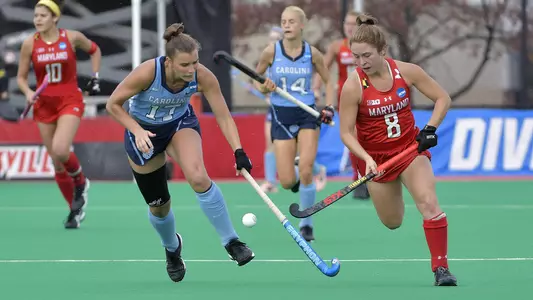
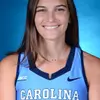
After winning a national championship at UNC, Morgan Goetz has gone on to gradaute school at Harvard.
Photo by: Jeffrey A. Camarati
Born & Bred: The Complete Experience
August 28, 2019 | Field Hockey, Academics
This story originally appeared in the Born & Bred, a publication of the Rams Club.
The writer, Margaret High, was a member of the UNC rowing team and, like her subject, graduated in May. She now works for Public Impact, an educational policy and consulting firm in Chapel Hill.
Goetz moved to Cambridge, Mass., this summer and started graduate school classes at Harvard this week.
The Complete Experience: Morgan Goetz Won a National Title While Also Developing a Unique Path in a Difficult Field
by Margaret High
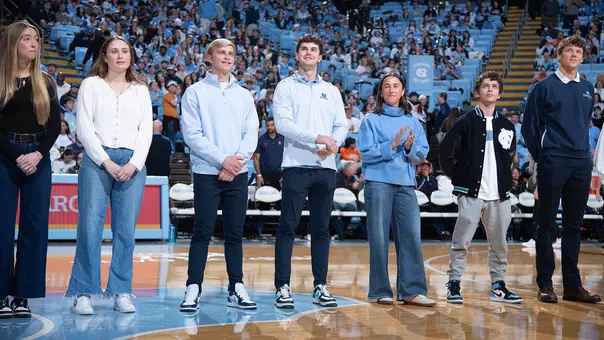
Morgan Goetz stands as a crowd of Carolina scholar-athletes murmur. Usually she gets this response on the field hockey pitch, where she's been a starter for the past three years.
Today it's because she's graduating with a GPA that is one of the five highest among female student-athletes at Carolina. She plans to attend Harvard in the fall for a PhD in bioengineering.
While Goetz's accolades in school and athletics are impressive by themselves – she's a member of Phi Beta Kappa and won a national championship – her success has been largely dependent on her relationship with mentors and advisors over the years.
Since her sophomore year at UNC, Goetz has met regularly with Dr. Frances Ligler, a renowned biochemist and bioengineer, and recent inductee in the National Inventors Hall of Fame.
"With Dr. Ligler, I really just lucked out," Goetz says. "I looked up her name and it's ridiculous. I was so intimidated. But I was like, 'She's here, she's available to me and she's been my most effective resource in college.'"
Goetz and Ligler would meet when their schedules synced up to talk about more than biomedical engineering and post-grad plans. Ligler played field hockey in high school and kept up with Goetz's national championship run this past fall. With the mix of coffee, sports, research and life, the two minds became more than just mentor, mentee but genuinely friends.
Goetz's name has become immutable from UNC's biomedical engineering program, one of the most challenging majors offered at the University. Teachers took notice of her eagerness in learning the material and subsequent mastery of it.
Dr. Naji Husseini says Goetz quickly stood out in his sophomore level classroom of 70 to 85 students.
"It was a fairly large class but early on people start to differentiate themselves, usually by asking questions," Husseini says. "And that was her. They were really astute questions, not just kind of were you paying attention type questions."
The same can be said for Goetz on the field, where head coach Karen Shelton saw her potential as a member of the Carolina field hockey team. Despite starting club field hockey years later than some of her teammates, Goetz learned the game quickly and made up for lost time.
She always knew she wanted to play a sport in college, and usually it was whatever sport was in season, like soccer, lacrosse, or track and field. UNC was always the dream but never on her radar, Goetz says. It wasn't until her club coach told her she had potential to play for Shelton that she actually saw her dream could be realized.
"You can think that you have a lot of potential and people can say you have a lot of potential," Goetz says. "But unless you try to do something about it, then potential doesn't mean anything."
Realizing her potential became part of Shelton's mission the past four years, as well as Ligler's for the past two.
While competing for a national championship this past fall, Goetz was also working on developing relationships with graduate school professors in order to secure her place at their university. The biomedical engineering post-graduate process relies heavily on finding a certain professor in a program whose research is compatible with the student's interests, but also relies on the traditional application process to get into the university's graduate schools.
"It was hard to be like, 'Okay, I'm going to do all this extra stuff on the side in addition to the year,'" Goetz says. "I was way more mentally engaged in my senior field hockey season. It was harder my last season because I wanted the national championship so bad that it was difficult to separate myself."
That's when Goetz's relationship with Ligler, Husseini and Shelton came into full force. While Ligler was helping write letters of recommendations and connecting Goetz to some of her colleagues, Husseini was helping Goetz schedule the required biomedical engineering courses with her demanding practice schedule, and Shelton was allowing some flexibility with practice to let Goetz get it all done.
Shelton knew how academically engaged Goetz was and had to acquiesce to class at times during Goetz's career. But for her senior year, Shelton was able to reap the benefits of developing Goetz as a field hockey player. The internal drive to succeed never faltered; it only took Shelton providing the right program for Goetz to help deliver an undefeated season.
At the same time, Ligler was connecting Goetz to Dr. Samir Mitragotri at Harvard's School of Engineering and Applied Sciences. In between class, practice and homework, Goetz was developing a relationship at the direction of Ligler.
"She's going to work with a friend of mine who is one of the most outstanding people in the country," Ligler says. "He is the youngest person ever inducted into the National Academy of Engineering in the bioengineering section, and just a super, super nice person."
Throughout it all, Husseini made sure Goetz completed her major.
"I think in most cases, under the right guidance, having an athletic experience will enhance your academic experience," Husseini says. "I did tell Morgan at some point you're going to have to choose biomedical engineering or field hockey. By junior year, it'd have to be one or the other. And she definitely made me eat my words."
Behind the hours of watching field hockey film, completing physics homework and conducting lab research with the UNC Eshelman School of Pharmacy, Goetz had the valuable support of a mentor, academic advisor and coach.
Those relationships reached further than their respective fields, especially after Goetz's mother was diagnosed with leukemia in December of her sophomore year. It was another reason Goetz's interest in science and medicine had a personal touch. A few years prior, Goetz's older sister was diagnosed with thyroid cancer at age 13. Her grandfather was an oncologist.
Because of her family history, Goetz always knew she was interested in medicine but began gravitating toward drug distribution research instead of becoming a doctor.
"With sports and my schedule, I really had to get to the point where I was going to choose if I wanted to do the pre-med recs and spend summers and do stuff like that, so then I really started to evaluate why I wanted to be a doctor," Goetz says. "Then I realized I never wanted to diagnose. I wanted to be kind of in front of the field instead of moving along with it."
Husseini helped Goetz plan both possible career paths, medical school and graduate school, which guided Goetz's decision to pursue a PhD in bioengineering.
Ligler told Goetz about her experiences in graduate school during their meetings, allowing Goetz to see what her future would be like without the traditional path of medical school. Shelton continued to teach Goetz discipline and determination through sport, stoking the core belief of hard work and grit.
"The coaches were great," Goetz says. "They never asked about my mother unless I brought it up. They helped me use field hockey as an escape."
It wasn't always easy to show up to practice, Goetz admits. At the start of junior year, her father called to say her mother had a 1 in 5 chance of not surviving the chemotherapy needed before being able to receive a bone marrow transplant. Holding back sobs, Goetz hung up the phone and completed the infamous field hockey run test.
"We all knew she was hurting. She handled it as well as she could have," Shelton says. "I wouldn't say it affected her performance. She handled it great. Sometimes sports are a distraction, so that was her time to get away from thinking about it. I don't think she carried that on the field, although I'm sure she did, but she never showed it."
The field hockey team's temporary placement at Duke's practice facilities in 2017 while the new Karen Shelton Stadium was being constructed had an unintended benefit for Goetz. She would stay at Duke after practice her junior year and go to the hospital to visit her mother. While there, Goetz would see firsthand the ways chemotherapy and other drugs affected her mother.
"Throughout this time, I found solace in approaching my situation and my mom's sickness as an opportunity to really understand what cancer treatment can look like, and how I could potentially improve it," wrote Goetz in her personal statement sent to graduate school admissions.
As she navigated her mother's sickness, Ligler helped her navigate graduate school, Husseini helped her navigate undergrad and Shelton helped her navigate athletics. While she could have handled these things on her own, the meaningful relationships she created in college helped lighten the load.
Even now as she's completed the perfect field hockey season, accepted at Harvard researching under Mitragotri, and with her mother responding positively to the bone marrow transplant surgery, Goetz still anticipates keeping up with her mentors from college.
Both Husseini and Shelton say Goetz is one of the best ever in their respective program's history. Ligler predicts Goetz will be a forerunner in the field.
Perfectly capable to excel by herself, Goetz knew to reach out to others in order to reach the next tier and those relationships have made all the difference.
The writer, Margaret High, was a member of the UNC rowing team and, like her subject, graduated in May. She now works for Public Impact, an educational policy and consulting firm in Chapel Hill.
Goetz moved to Cambridge, Mass., this summer and started graduate school classes at Harvard this week.
The Complete Experience: Morgan Goetz Won a National Title While Also Developing a Unique Path in a Difficult Field
by Margaret High
Morgan Goetz stands as a crowd of Carolina scholar-athletes murmur. Usually she gets this response on the field hockey pitch, where she's been a starter for the past three years.
Today it's because she's graduating with a GPA that is one of the five highest among female student-athletes at Carolina. She plans to attend Harvard in the fall for a PhD in bioengineering.
While Goetz's accolades in school and athletics are impressive by themselves – she's a member of Phi Beta Kappa and won a national championship – her success has been largely dependent on her relationship with mentors and advisors over the years.
Since her sophomore year at UNC, Goetz has met regularly with Dr. Frances Ligler, a renowned biochemist and bioengineer, and recent inductee in the National Inventors Hall of Fame.
"With Dr. Ligler, I really just lucked out," Goetz says. "I looked up her name and it's ridiculous. I was so intimidated. But I was like, 'She's here, she's available to me and she's been my most effective resource in college.'"
Goetz and Ligler would meet when their schedules synced up to talk about more than biomedical engineering and post-grad plans. Ligler played field hockey in high school and kept up with Goetz's national championship run this past fall. With the mix of coffee, sports, research and life, the two minds became more than just mentor, mentee but genuinely friends.
Goetz's name has become immutable from UNC's biomedical engineering program, one of the most challenging majors offered at the University. Teachers took notice of her eagerness in learning the material and subsequent mastery of it.
Dr. Naji Husseini says Goetz quickly stood out in his sophomore level classroom of 70 to 85 students.
"It was a fairly large class but early on people start to differentiate themselves, usually by asking questions," Husseini says. "And that was her. They were really astute questions, not just kind of were you paying attention type questions."
The same can be said for Goetz on the field, where head coach Karen Shelton saw her potential as a member of the Carolina field hockey team. Despite starting club field hockey years later than some of her teammates, Goetz learned the game quickly and made up for lost time.
She always knew she wanted to play a sport in college, and usually it was whatever sport was in season, like soccer, lacrosse, or track and field. UNC was always the dream but never on her radar, Goetz says. It wasn't until her club coach told her she had potential to play for Shelton that she actually saw her dream could be realized.
"You can think that you have a lot of potential and people can say you have a lot of potential," Goetz says. "But unless you try to do something about it, then potential doesn't mean anything."
Realizing her potential became part of Shelton's mission the past four years, as well as Ligler's for the past two.
While competing for a national championship this past fall, Goetz was also working on developing relationships with graduate school professors in order to secure her place at their university. The biomedical engineering post-graduate process relies heavily on finding a certain professor in a program whose research is compatible with the student's interests, but also relies on the traditional application process to get into the university's graduate schools.
"It was hard to be like, 'Okay, I'm going to do all this extra stuff on the side in addition to the year,'" Goetz says. "I was way more mentally engaged in my senior field hockey season. It was harder my last season because I wanted the national championship so bad that it was difficult to separate myself."
That's when Goetz's relationship with Ligler, Husseini and Shelton came into full force. While Ligler was helping write letters of recommendations and connecting Goetz to some of her colleagues, Husseini was helping Goetz schedule the required biomedical engineering courses with her demanding practice schedule, and Shelton was allowing some flexibility with practice to let Goetz get it all done.
Shelton knew how academically engaged Goetz was and had to acquiesce to class at times during Goetz's career. But for her senior year, Shelton was able to reap the benefits of developing Goetz as a field hockey player. The internal drive to succeed never faltered; it only took Shelton providing the right program for Goetz to help deliver an undefeated season.
At the same time, Ligler was connecting Goetz to Dr. Samir Mitragotri at Harvard's School of Engineering and Applied Sciences. In between class, practice and homework, Goetz was developing a relationship at the direction of Ligler.
"She's going to work with a friend of mine who is one of the most outstanding people in the country," Ligler says. "He is the youngest person ever inducted into the National Academy of Engineering in the bioengineering section, and just a super, super nice person."
Throughout it all, Husseini made sure Goetz completed her major.
"I think in most cases, under the right guidance, having an athletic experience will enhance your academic experience," Husseini says. "I did tell Morgan at some point you're going to have to choose biomedical engineering or field hockey. By junior year, it'd have to be one or the other. And she definitely made me eat my words."
Behind the hours of watching field hockey film, completing physics homework and conducting lab research with the UNC Eshelman School of Pharmacy, Goetz had the valuable support of a mentor, academic advisor and coach.
Those relationships reached further than their respective fields, especially after Goetz's mother was diagnosed with leukemia in December of her sophomore year. It was another reason Goetz's interest in science and medicine had a personal touch. A few years prior, Goetz's older sister was diagnosed with thyroid cancer at age 13. Her grandfather was an oncologist.
Because of her family history, Goetz always knew she was interested in medicine but began gravitating toward drug distribution research instead of becoming a doctor.
"With sports and my schedule, I really had to get to the point where I was going to choose if I wanted to do the pre-med recs and spend summers and do stuff like that, so then I really started to evaluate why I wanted to be a doctor," Goetz says. "Then I realized I never wanted to diagnose. I wanted to be kind of in front of the field instead of moving along with it."
Husseini helped Goetz plan both possible career paths, medical school and graduate school, which guided Goetz's decision to pursue a PhD in bioengineering.
Ligler told Goetz about her experiences in graduate school during their meetings, allowing Goetz to see what her future would be like without the traditional path of medical school. Shelton continued to teach Goetz discipline and determination through sport, stoking the core belief of hard work and grit.
"The coaches were great," Goetz says. "They never asked about my mother unless I brought it up. They helped me use field hockey as an escape."
It wasn't always easy to show up to practice, Goetz admits. At the start of junior year, her father called to say her mother had a 1 in 5 chance of not surviving the chemotherapy needed before being able to receive a bone marrow transplant. Holding back sobs, Goetz hung up the phone and completed the infamous field hockey run test.
"We all knew she was hurting. She handled it as well as she could have," Shelton says. "I wouldn't say it affected her performance. She handled it great. Sometimes sports are a distraction, so that was her time to get away from thinking about it. I don't think she carried that on the field, although I'm sure she did, but she never showed it."
The field hockey team's temporary placement at Duke's practice facilities in 2017 while the new Karen Shelton Stadium was being constructed had an unintended benefit for Goetz. She would stay at Duke after practice her junior year and go to the hospital to visit her mother. While there, Goetz would see firsthand the ways chemotherapy and other drugs affected her mother.
"Throughout this time, I found solace in approaching my situation and my mom's sickness as an opportunity to really understand what cancer treatment can look like, and how I could potentially improve it," wrote Goetz in her personal statement sent to graduate school admissions.
As she navigated her mother's sickness, Ligler helped her navigate graduate school, Husseini helped her navigate undergrad and Shelton helped her navigate athletics. While she could have handled these things on her own, the meaningful relationships she created in college helped lighten the load.
Even now as she's completed the perfect field hockey season, accepted at Harvard researching under Mitragotri, and with her mother responding positively to the bone marrow transplant surgery, Goetz still anticipates keeping up with her mentors from college.
Both Husseini and Shelton say Goetz is one of the best ever in their respective program's history. Ligler predicts Goetz will be a forerunner in the field.
Perfectly capable to excel by herself, Goetz knew to reach out to others in order to reach the next tier and those relationships have made all the difference.

Players Mentioned
Back
/ Field HockeyUNC Baseball: Diamond Heels Sweep Series at Cal with 10-2 Win
Monday, March 16
UNC Softball: Tar Heels Take Series at Cal with 13-5 Win in Game 3
Monday, March 16
UNC Men's Lacrosse: Tar Heels Earn Gritty Win Over Penn State, 10-8
Sunday, March 15
UNC Baseball: Lynch Strikes Out 7 in 6-2 Win at Cal
Saturday, March 14